Best MoEngage Alternatives for Omnichannel Customer Engagement (2026)
Compare the top MoEngage competitors and alternatives for 2026 — Sortment, Braze, CleverTap, and WebEngage — for automation, retention, and pricing.
Prabhat
·
Blogs
·
If you’re searching for MoEngage alternatives, you’re likely not just comparing tools - you’re trying to fix gaps in execution.
In high-frequency businesses like food delivery, quick commerce, or marketplaces, engagement is not about sending campaigns. It’s about triggering actions in real time, increasing repeat usage, and driving revenue consistently.
This guide breaks down the top MoEngage competitors based on real use cases - so you can choose a platform that actually fits how your business operates.
When teams evaluate MoEngage alternatives, it’s about understanding what actually improves execution, speed, and retention.
Most teams switch because of friction - slow campaign setup, dependency on engineering, or limited flexibility in scaling engagement. The right platform should remove that friction, not add to it.
Here are the key areas that matter:
Scalability
As your product grows, your engagement platform should handle higher user volume and campaign complexity without slowing execution or increasing operational overhead.
Omnichannel capabilities
Users interact across multiple touchpoints. A strong alternative should support coordinated messaging across push, email, SMS, and in-app - without creating fragmented workflows.
Ease of use
Speed directly impacts results. If campaigns take too long to build or require constant technical support, experimentation and iteration suffer.
Analytics depth
Retention improves when you understand behavior. Look for platforms that offer strong cohort analysis, segmentation, and lifecycle visibility.
AI capabilities
Automation should simplify decisions. Features like predictive targeting and send-time optimization should improve outcomes without making workflows more complex.
What are the best MoEngage alternatives in 2026?
Most tools like MoEngage promise omnichannel engagement - but in reality, they often slow teams down with setup complexity, fragmented workflows, or delayed execution.
The real difference shows up in how fast you can go live, how well you can react to user behavior, and how directly your campaigns impact retention and revenue.
Here are the best MoEngage alternatives based on how modern teams actually operate:
Tool | Best For | Why it stands out |
Sortment | Mobile apps, PLGs, subscription brands | Fast execution, retention-first, outcome-driven |
CleverTap | Mobile-first engagement | Strong analytics + segmentation |
Braze | Enterprise real-time engagement | Advanced event-based personalization |
WebEngage | Mid-market B2C brands | Balanced omnichannel workflows |
OneSignal | Startups | Simple, fast, and cost-effective |
Table: Top MoEngage alternatives compared by use case, speed, and engagement capabilities
Sortment - Built Around Proactive Lifecycle Intelligence
Most omnichannel marketing tools like MoEngage are built to cover everything under execution. Sortment takes a different starting point: instead of waiting for your team to decide what to run, the platform identifies where your user lifecycle has gaps and tells you what to do about it.
When to choose Sortment over MoEngage:
You want the platform to surface behavioral shifts (cohort drop-offs, conversion gaps, upsell windows) before your team thinks to look for them
You’re evaluating tools with a specific metric in mind, such as retention or activation rate, and want a 30-day proof of concept tied to that outcome
You want campaign strategy and execution handled in one place, not split between your data team and your marketing team
What actually stands out:
Sortment works as both a strategy function and an execution arm. It identifies which segments to target, decides what campaigns to run, builds the audience, writes the content, and monitors results. Your team reviews and approves rather than configuring from scratch. Teams that come from MoEngage often note that the shift is less about features and more about where decisions get made: with Sortment, the platform takes on more of the analytical and planning work.
Best for: Teams with high-frequency mobile engagement needs that want an AI-native platform to drive lifecycle decisions, not just execute them.
Sortment - Best for High-Frequency App Retention Without Complexity
Most omnichannel marketing tools like MoEngage are built to cover everything. That usually means slower execution, longer setup cycles, and more reliance on engineering. For high-frequency apps, that delay directly impacts revenue. Sortment flips that.
Sortment is built with one goal: drive repeat usage and retention without operational friction.
When to choose Sortment over MoEngage:
You care about repeat usage and LTV, not just sending campaigns
Your team wants to move fast without developer dependency
You don’t want long implementation cycles before seeing results
You run a mobile app, subscription business, or high-frequency platform
What actually stands out:
Fast, clean workflows built for execution
Quicker time-to-value compared to heavy platforms
Designed around retention loops, not just messaging
Best for: Mobile apps, subscription brands, and high-frequency businesses
CleverTap - Best for Product Analytics + Engagement
MoEngage focuses heavily on engagement, but teams that need deeper visibility into user behavior often look for stronger analytics. CleverTap bridges that gap.
It combines product analytics with engagement, helping teams understand before they act.
When to choose CleverTap over MoEngage:
You need deeper insight into user journeys and cohorts
You rely heavily on segmentation and funnel analysis
Your product and marketing teams work closely
What actually stands out:
Strong analytics layer integrated with campaigns
Advanced cohort and behavioral segmentation
Better visibility into lifecycle patterns
Best for: Mobile-first product and growth teams
Braze - Best for Real-Time Engagement at Scale
MoEngage supports automation, but real-time execution at scale requires stronger infrastructure. That’s where Braze stands out.
Braze is built for instant, event-based engagement across large user bases.
When to choose Braze over MoEngage:
You need real-time, behavior-triggered engagement
You operate at scale across regions or markets
You have the resources to manage a complex system
What actually stands out:
Advanced real-time triggers and automation
Deep personalization capabilities
Infrastructure built for scale
Best for: Enterprise teams with real-time needs
WebEngage - Best for Balanced Omnichannel Execution
Not every team needs enterprise-level complexity. Some just need a system that works across channels without slowing them down. WebEngage fits that middle ground.
It offers usable omnichannel execution without heavy overhead.
When to choose WebEngage over MoEngage:
You want similar capabilities with easier onboarding
You’re a growing B2C brand
You need omnichannel workflows without complexity
What actually stands out:
User-friendly journey builder
Balanced feature set
Faster adoption for mid-sized teams
Best for: Mid-market B2C companies
OneSignal - Best for Simple, Low-Cost Engagement
For early-stage teams, complexity is a blocker. You don’t need full automation - you need something that works immediately.
OneSignal focuses on core messaging without platform overhead.
When to choose OneSignal over MoEngage:
You want a lightweight, affordable solution
You’re early-stage and prioritizing speed
You mainly rely on push notifications
What actually stands out:
Quick setup and implementation
Simple, easy-to-use interface
Cost-effective pricing
Best for: Startups and small teams
Which MoEngage competitor is best for your use case?
Most tools look similar on paper, but the difference shows up in execution. The right platform depends on how frequently users interact with your product and how quickly you need to respond to behavior.
Best for startups → Sortment
If you’re early-stage, your priority is speed. Sortment helps you launch basic engagement without complexity or high costs.
Best for enterprise → Braze
At scale, infrastructure matters. Braze supports real-time engagement across large user bases but requires technical ownership.
Best for omnichannel execution → CleverTap / WebEngage
If your omnichannel strategy spans push, email, SMS, and in-app, these tools help coordinate messaging across channels effectively.
Best for PLGs, mobile apps, high-frequency apps → Sortment
High-frequency apps don’t rely on campaigns - they rely on behavior loops.
User browses → no action → trigger reminder
Order completed → trigger reorder nudges
User inactive → trigger win-back
Sortment is built for this layer of execution.
Teams switching from traditional engagement tools typically reduce setup time and move faster because workflows are simpler and closer to outcomes. The focus shifts from sending messages to driving repeat usage and revenue.
Best for real-time engagement → Braze
If reacting instantly to user behavior is critical, Braze offers one of the strongest real-time systems available.
What should you look for in a MoEngage alternative?
MoEngage works well for omnichannel engagement, but many teams outgrow it due to slower execution, setup complexity, or limited flexibility. The alternatives below are better suited for faster workflows, stronger retention focus, or more scalable real-time engagement - depending on your use case.
Scalability
Your platform should handle spikes in traffic, events, and campaigns - especially during peak usage.
Omnichannel capabilities
You should be able to manage push, email, SMS, and in-app messaging from one place without fragmentation.
Ease of use
If marketers depend on engineers for every campaign, execution slows down. The tool should enable independence.
Analytics depth
You need visibility into what drives repeat usage, where users drop off, and what converts.
AI capabilities
Predictive triggers and automated segmentation help improve timing and campaign performance.
How to migrate from MoEngage without losing data or campaigns?
A smooth migration is less about moving everything quickly and more about moving the right things carefully. By prioritizing critical data, validating each step, and phasing the transition, you can switch platforms without breaking campaigns or losing user insights.
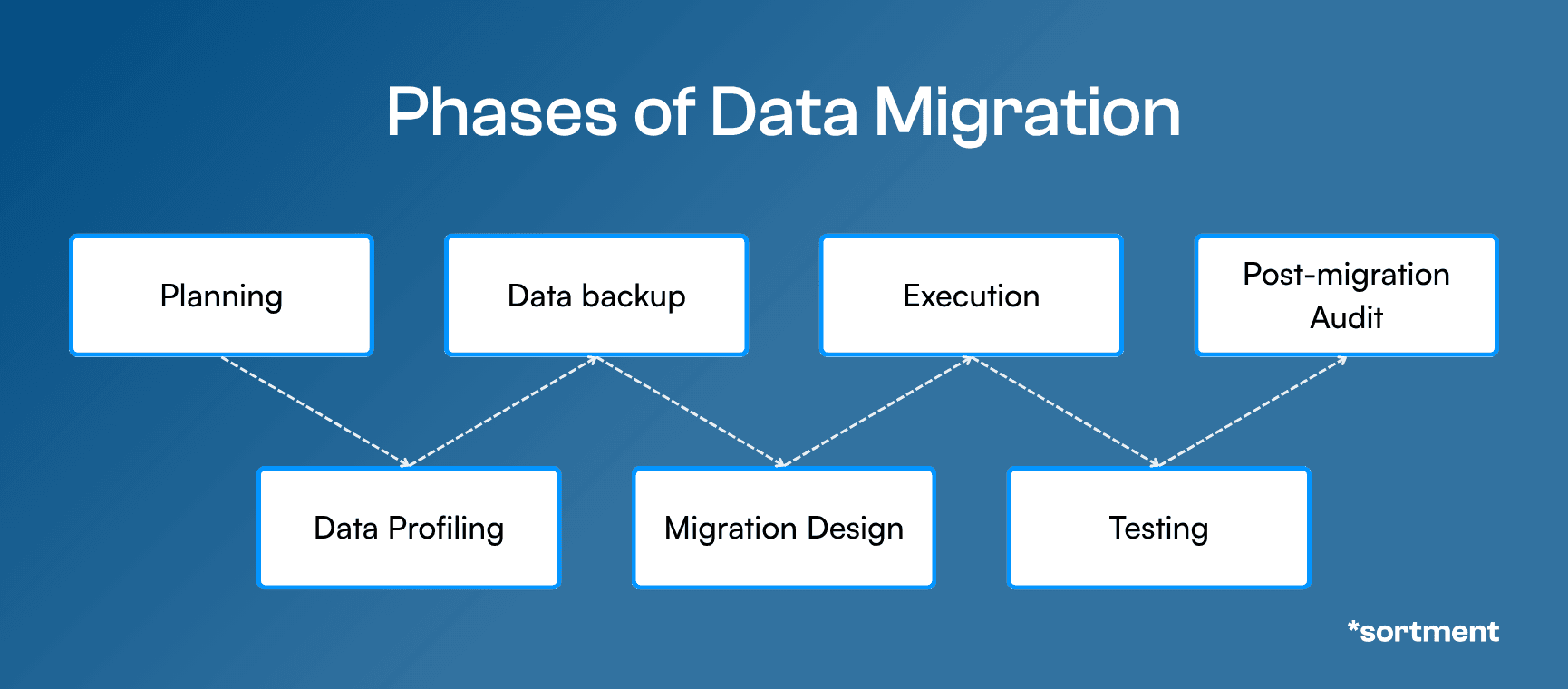
Figure: A structured migration approach helps avoid data loss and campaign disruption
Data migration checklist:
Export user data, events, and attributes
Clean and validate before importing
Test accuracy after migration
Campaign replication strategy:
Identify high-impact campaigns
Rebuild core journeys first
Test before going live
Customer segmentation transfer:
Map segment logic carefully
Recreate targeting conditions accurately
Validate before activation
Avoiding downtime:
Run both platforms in parallel temporarily
Shift campaigns gradually
Monitor performance closely
Common migration mistakes:
Migrating everything at once
Skipping validation
Ignoring priority workflows
Still Not Sure Which MoEngage Alternative Suits Your Business?
If your current tool slows down execution or doesn’t support real-time engagement effectively, it becomes a bottleneck.
If you’re evaluating platforms for health & fitness or gaming apps — two industries where MoEngage is widely used — see how lifecycle marketing actually works in those verticals: health and fitness lifecycle marketing and lifecycle marketing for real money gaming.
Sortment helps mobile apps and high-frequency businesses move faster, reduce setup time, and focus on what actually drives growth - repeat usage and retention.
Book a call to see how you can simplify your engagement stack and scale efficiently.
Frequently Asked Questions (FAQs) About MoEngage Alternatives
What is the closest competitor to MoEngage?
CleverTap and WebEngage are often considered close alternatives due to similar omnichannel capabilities and segmentation features.Is Braze better than Iterable?
Is Braze better than MoEngage?
Braze is stronger for real-time, large-scale engagement but comes with higher complexity. The better option depends on your team and use case.
Which MoEngage alternative is cheapest?
Sortment and OneSignal are one of the most cost-effective options, especially for startups.
What is best for high-frequency apps like Swiggy?
Tools that support real-time triggers and fast execution - like Sortment or Braze - work better for high-frequency engagement models.
Can I migrate from MoEngage easily?
Yes, if you follow a structured migration approach with proper validation and phased rollout.
See also
5 Best WebEngage Alternatives for Customer Engagement & Retention (2026)
5 Best WebEngage Alternatives for Customer Engagement & Retention (2026)
5 Best WebEngage Alternatives for Customer Engagement & Retention (2026)
Compare the top WebEngage alternatives and competitors for 2026 — Sortment, CleverTap, MoEngage, and Braze — for segmentation, journeys, and retention.
Compare the top WebEngage alternatives and competitors for 2026 — Sortment, CleverTap, MoEngage, and Braze — for segmentation, journeys, and retention.
See what Sortment can do for your goals.
See what Sortment can do for your goals.
Book a 30-minute call. We'll show you how the pilot works with your data and your stack.
Book a 30-minute call. We'll show you how the pilot works with your data and your stack.
AGENTS
CASE STUDIES
RESOURCES
AGENTS
CASE STUDIES
RESOURCES
If you’re searching for MoEngage alternatives, you’re likely not just comparing tools - you’re trying to fix gaps in execution.
In high-frequency businesses like food delivery, quick commerce, or marketplaces, engagement is not about sending campaigns. It’s about triggering actions in real time, increasing repeat usage, and driving revenue consistently.
This guide breaks down the top MoEngage competitors based on real use cases - so you can choose a platform that actually fits how your business operates.
When teams evaluate MoEngage alternatives, it’s about understanding what actually improves execution, speed, and retention.
Most teams switch because of friction - slow campaign setup, dependency on engineering, or limited flexibility in scaling engagement. The right platform should remove that friction, not add to it.
Here are the key areas that matter:
Scalability
As your product grows, your engagement platform should handle higher user volume and campaign complexity without slowing execution or increasing operational overhead.
Omnichannel capabilities
Users interact across multiple touchpoints. A strong alternative should support coordinated messaging across push, email, SMS, and in-app - without creating fragmented workflows.
Ease of use
Speed directly impacts results. If campaigns take too long to build or require constant technical support, experimentation and iteration suffer.
Analytics depth
Retention improves when you understand behavior. Look for platforms that offer strong cohort analysis, segmentation, and lifecycle visibility.
AI capabilities
Automation should simplify decisions. Features like predictive targeting and send-time optimization should improve outcomes without making workflows more complex.
What are the best MoEngage alternatives in 2026?
Most tools like MoEngage promise omnichannel engagement - but in reality, they often slow teams down with setup complexity, fragmented workflows, or delayed execution.
The real difference shows up in how fast you can go live, how well you can react to user behavior, and how directly your campaigns impact retention and revenue.
Here are the best MoEngage alternatives based on how modern teams actually operate:
Tool | Best For | Why it stands out |
Sortment | Mobile apps, PLGs, subscription brands | Fast execution, retention-first, outcome-driven |
CleverTap | Mobile-first engagement | Strong analytics + segmentation |
Braze | Enterprise real-time engagement | Advanced event-based personalization |
WebEngage | Mid-market B2C brands | Balanced omnichannel workflows |
OneSignal | Startups | Simple, fast, and cost-effective |
Table: Top MoEngage alternatives compared by use case, speed, and engagement capabilities
Sortment - Built Around Proactive Lifecycle Intelligence
Most omnichannel marketing tools like MoEngage are built to cover everything under execution. Sortment takes a different starting point: instead of waiting for your team to decide what to run, the platform identifies where your user lifecycle has gaps and tells you what to do about it.
When to choose Sortment over MoEngage:
You want the platform to surface behavioral shifts (cohort drop-offs, conversion gaps, upsell windows) before your team thinks to look for them
You’re evaluating tools with a specific metric in mind, such as retention or activation rate, and want a 30-day proof of concept tied to that outcome
You want campaign strategy and execution handled in one place, not split between your data team and your marketing team
What actually stands out:
Sortment works as both a strategy function and an execution arm. It identifies which segments to target, decides what campaigns to run, builds the audience, writes the content, and monitors results. Your team reviews and approves rather than configuring from scratch. Teams that come from MoEngage often note that the shift is less about features and more about where decisions get made: with Sortment, the platform takes on more of the analytical and planning work.
Best for: Teams with high-frequency mobile engagement needs that want an AI-native platform to drive lifecycle decisions, not just execute them.
Sortment - Best for High-Frequency App Retention Without Complexity
Most omnichannel marketing tools like MoEngage are built to cover everything. That usually means slower execution, longer setup cycles, and more reliance on engineering. For high-frequency apps, that delay directly impacts revenue. Sortment flips that.
Sortment is built with one goal: drive repeat usage and retention without operational friction.
When to choose Sortment over MoEngage:
You care about repeat usage and LTV, not just sending campaigns
Your team wants to move fast without developer dependency
You don’t want long implementation cycles before seeing results
You run a mobile app, subscription business, or high-frequency platform
What actually stands out:
Fast, clean workflows built for execution
Quicker time-to-value compared to heavy platforms
Designed around retention loops, not just messaging
Best for: Mobile apps, subscription brands, and high-frequency businesses
CleverTap - Best for Product Analytics + Engagement
MoEngage focuses heavily on engagement, but teams that need deeper visibility into user behavior often look for stronger analytics. CleverTap bridges that gap.
It combines product analytics with engagement, helping teams understand before they act.
When to choose CleverTap over MoEngage:
You need deeper insight into user journeys and cohorts
You rely heavily on segmentation and funnel analysis
Your product and marketing teams work closely
What actually stands out:
Strong analytics layer integrated with campaigns
Advanced cohort and behavioral segmentation
Better visibility into lifecycle patterns
Best for: Mobile-first product and growth teams
Braze - Best for Real-Time Engagement at Scale
MoEngage supports automation, but real-time execution at scale requires stronger infrastructure. That’s where Braze stands out.
Braze is built for instant, event-based engagement across large user bases.
When to choose Braze over MoEngage:
You need real-time, behavior-triggered engagement
You operate at scale across regions or markets
You have the resources to manage a complex system
What actually stands out:
Advanced real-time triggers and automation
Deep personalization capabilities
Infrastructure built for scale
Best for: Enterprise teams with real-time needs
WebEngage - Best for Balanced Omnichannel Execution
Not every team needs enterprise-level complexity. Some just need a system that works across channels without slowing them down. WebEngage fits that middle ground.
It offers usable omnichannel execution without heavy overhead.
When to choose WebEngage over MoEngage:
You want similar capabilities with easier onboarding
You’re a growing B2C brand
You need omnichannel workflows without complexity
What actually stands out:
User-friendly journey builder
Balanced feature set
Faster adoption for mid-sized teams
Best for: Mid-market B2C companies
OneSignal - Best for Simple, Low-Cost Engagement
For early-stage teams, complexity is a blocker. You don’t need full automation - you need something that works immediately.
OneSignal focuses on core messaging without platform overhead.
When to choose OneSignal over MoEngage:
You want a lightweight, affordable solution
You’re early-stage and prioritizing speed
You mainly rely on push notifications
What actually stands out:
Quick setup and implementation
Simple, easy-to-use interface
Cost-effective pricing
Best for: Startups and small teams
Which MoEngage competitor is best for your use case?
Most tools look similar on paper, but the difference shows up in execution. The right platform depends on how frequently users interact with your product and how quickly you need to respond to behavior.
Best for startups → Sortment
If you’re early-stage, your priority is speed. Sortment helps you launch basic engagement without complexity or high costs.
Best for enterprise → Braze
At scale, infrastructure matters. Braze supports real-time engagement across large user bases but requires technical ownership.
Best for omnichannel execution → CleverTap / WebEngage
If your omnichannel strategy spans push, email, SMS, and in-app, these tools help coordinate messaging across channels effectively.
Best for PLGs, mobile apps, high-frequency apps → Sortment
High-frequency apps don’t rely on campaigns - they rely on behavior loops.
User browses → no action → trigger reminder
Order completed → trigger reorder nudges
User inactive → trigger win-back
Sortment is built for this layer of execution.
Teams switching from traditional engagement tools typically reduce setup time and move faster because workflows are simpler and closer to outcomes. The focus shifts from sending messages to driving repeat usage and revenue.
Best for real-time engagement → Braze
If reacting instantly to user behavior is critical, Braze offers one of the strongest real-time systems available.
What should you look for in a MoEngage alternative?
MoEngage works well for omnichannel engagement, but many teams outgrow it due to slower execution, setup complexity, or limited flexibility. The alternatives below are better suited for faster workflows, stronger retention focus, or more scalable real-time engagement - depending on your use case.
Scalability
Your platform should handle spikes in traffic, events, and campaigns - especially during peak usage.
Omnichannel capabilities
You should be able to manage push, email, SMS, and in-app messaging from one place without fragmentation.
Ease of use
If marketers depend on engineers for every campaign, execution slows down. The tool should enable independence.
Analytics depth
You need visibility into what drives repeat usage, where users drop off, and what converts.
AI capabilities
Predictive triggers and automated segmentation help improve timing and campaign performance.
How to migrate from MoEngage without losing data or campaigns?
A smooth migration is less about moving everything quickly and more about moving the right things carefully. By prioritizing critical data, validating each step, and phasing the transition, you can switch platforms without breaking campaigns or losing user insights.
Figure: A structured migration approach helps avoid data loss and campaign disruption
Data migration checklist:
Export user data, events, and attributes
Clean and validate before importing
Test accuracy after migration
Campaign replication strategy:
Identify high-impact campaigns
Rebuild core journeys first
Test before going live
Customer segmentation transfer:
Map segment logic carefully
Recreate targeting conditions accurately
Validate before activation
Avoiding downtime:
Run both platforms in parallel temporarily
Shift campaigns gradually
Monitor performance closely
Common migration mistakes:
Migrating everything at once
Skipping validation
Ignoring priority workflows
Still Not Sure Which MoEngage Alternative Suits Your Business?
If your current tool slows down execution or doesn’t support real-time engagement effectively, it becomes a bottleneck.
If you’re evaluating platforms for health & fitness or gaming apps — two industries where MoEngage is widely used — see how lifecycle marketing actually works in those verticals: health and fitness lifecycle marketing and lifecycle marketing for real money gaming.
Sortment helps mobile apps and high-frequency businesses move faster, reduce setup time, and focus on what actually drives growth - repeat usage and retention.
Book a call to see how you can simplify your engagement stack and scale efficiently.
Frequently Asked Questions (FAQs) About MoEngage Alternatives
What is the closest competitor to MoEngage?
CleverTap and WebEngage are often considered close alternatives due to similar omnichannel capabilities and segmentation features.Is Braze better than Iterable?
Is Braze better than MoEngage?
Braze is stronger for real-time, large-scale engagement but comes with higher complexity. The better option depends on your team and use case.
Which MoEngage alternative is cheapest?
Sortment and OneSignal are one of the most cost-effective options, especially for startups.
What is best for high-frequency apps like Swiggy?
Tools that support real-time triggers and fast execution - like Sortment or Braze - work better for high-frequency engagement models.
Can I migrate from MoEngage easily?
Yes, if you follow a structured migration approach with proper validation and phased rollout.