What Is Omnichannel Marketing? Strategy and Examples [2026]
What is omnichannel marketing and how does it improve customer retention and revenue? Learn the strategy, real examples, and steps to build a seamless customer journey.
What is omnichannel marketing, and why is everyone suddenly talking about it?
You’ve probably experienced it without realizing it. You browse a product on your phone. Later, you see a reminder email. Then you walk into a store, and the brand already knows your preferences. That smooth, connected experience? That’s omnichannel marketing.
Instead of treating email, social media, ads, websites, and stores as separate efforts, omnichannel marketing connects them into one continuous customer journey.
Today’s customers jump between devices and platforms constantly. If your marketing feels disconnected, they notice. And they leave.
At Sortment, we help brands build unified marketing systems that keep messaging consistent, personalized, and revenue-focused.
Sortment is trusted by leading brands
In this guide, you’ll learn what omnichannel marketing really means, how it’s different from multichannel marketing, real examples of brands doing it right, and how to build a strategy that actually works.
What Does Omnichannel Marketing Mean?
Omnichannel marketing is a strategy where all marketing channels are integrated and share customer data to deliver a seamless, personalized experience across the entire customer journey.
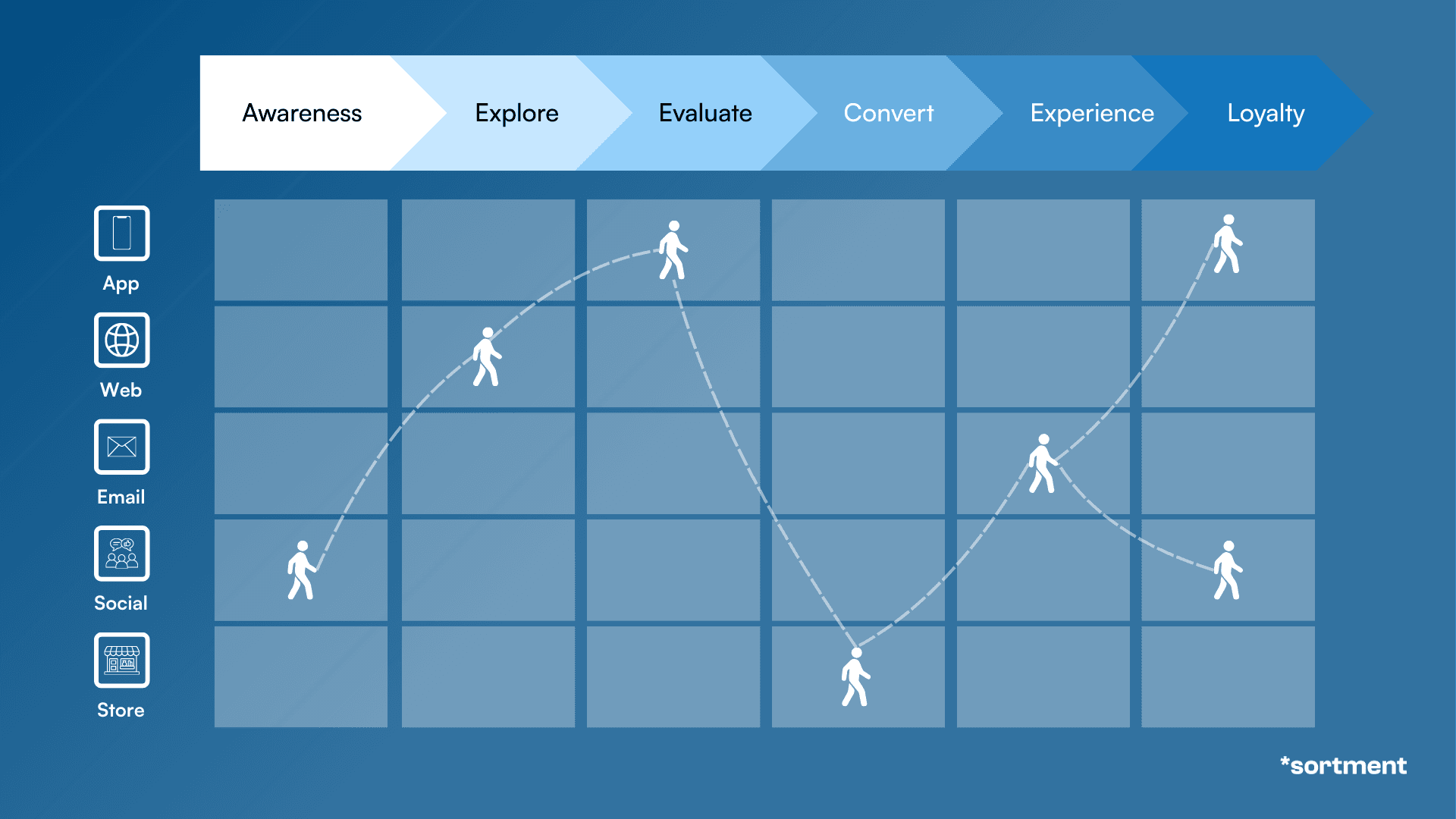
Figure: Example of a unified omnichannel customer journey across awareness to loyalty.
Let’s break it down simply.
Omnichannel marketing means creating one connected experience for your customer across every channel they use: email, social media, website, mobile app, SMS, ads, and even physical stores.
It’s not about being everywhere. It’s about making every channel work together.
If someone clicks a Facebook ad, visits your website, abandons their cart, and later opens your email, the experience should feel like one ongoing conversation, not four separate campaigns.
That’s the core idea behind omnichannel marketing: continuity.
And that’s how customer engagement platforms help you retain customers longer - because they strengthen the game through omnichannel marketing!
Imagine this:
You search for running shoes online.
You browse a few options but don’t buy.
Later, you receive an email with the exact pair you viewed.
The next day, you see a retargeting ad offering free shipping.
That’s not random marketing.
That’s omnichannel marketing working behind the scenes. Every interaction builds on the last one.
What Is an Omnichannel Marketing Strategy?
An omnichannel marketing strategy is the structured plan behind how all your marketing channels work together.
It’s not just running email campaigns, social media ads, and mobile app notifications separately.
It’s designing them to support the same customer journey.
Companies with strong omnichannel strategies retain 89% of customers, compared to just 33% for those with weak efforts (Aberdeen Group research cited in multiple analyses).
For example, if someone installs your mobile app but doesn’t complete onboarding, your strategy might trigger:
- A push notification reminder
- A follow-up email
- A retargeting ad on social media
- A personalized homepage, the next time they visit
Every touchpoint builds on the last one. That’s a strategy, not scattered marketing.
“Sortment is basically a system that is watching over your users so you don't have to. It identifies patterns, comes up with next steps, and even writes the content to reach those users.”
— Jatin, Co-founder, Topdog
Why Mobile Apps Matter in Omnichannel Marketing?
Mobile apps play a critical role in omnichannel marketing because they offer direct, real-time communication. When your mobile app connects with your CRM, website, and ad platforms, you create a truly unified customer experience.
Without integration, it’s just another channel. With integration, it becomes a powerful conversion engine.
With an app, you can:
- Send personalized push notifications
- Track in-app behavior
- Connect browsing history to email campaigns
- Sync loyalty programs across online and offline purchases
Core Elements of a Strong Omnichannel Marketing Strategy
To build an effective omnichannel marketing strategy, you need:
- Unified customer data
- Consistent messaging across channels
- Marketing automation workflows
- Behavioral tracking
- Clear performance metrics
Omnichannel Marketing vs Multichannel Marketing: What’s the Real Difference?
People often use these terms interchangeably, but they’re not the same. The difference comes down to connection, not just presence.
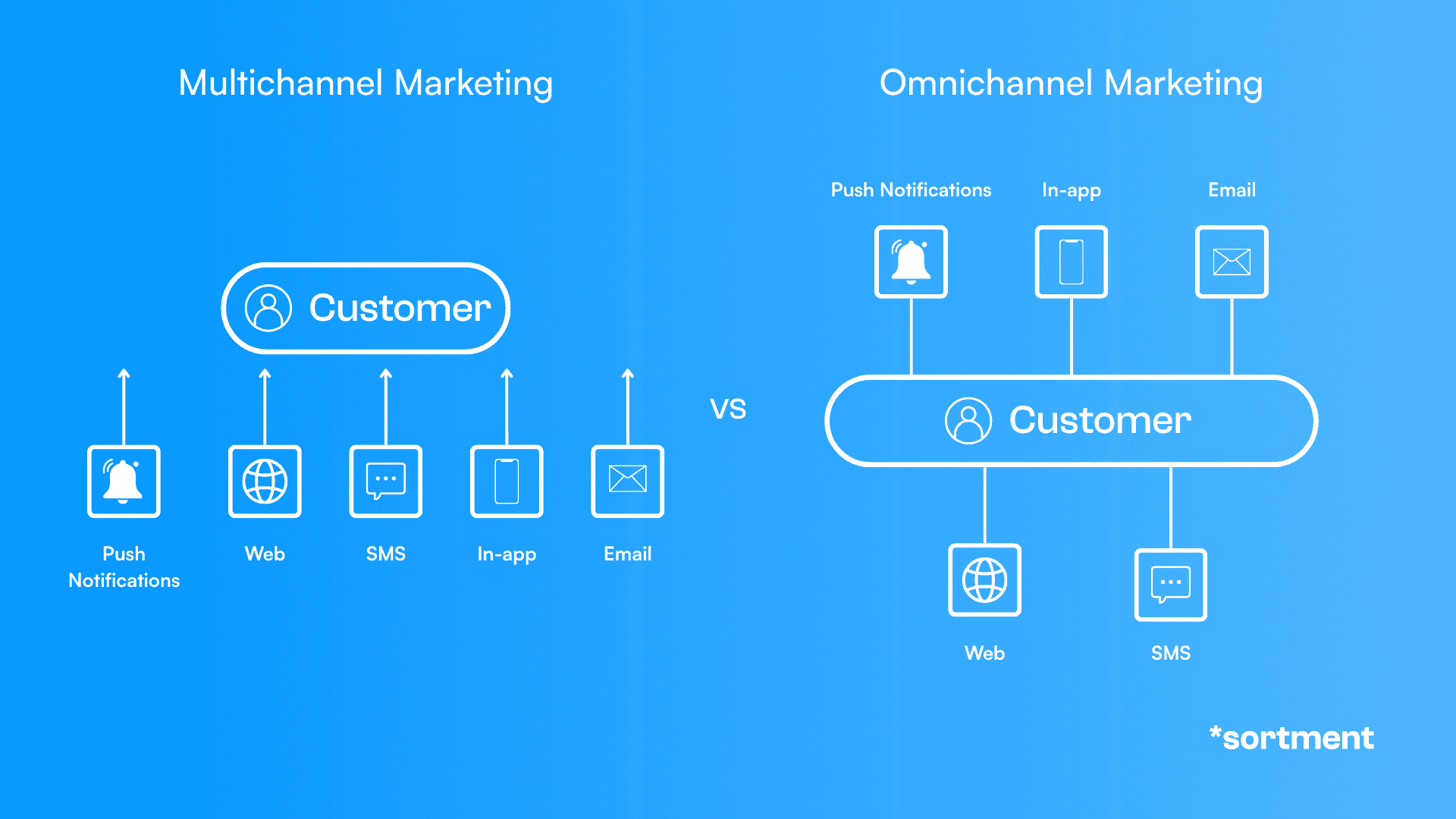
Figure: Multichannel Marketing vs Omnichannel Marketing
Here you go with the difference between omnichannel marketing and multichannel marketing:
| Aspect | Multichannel Marketing | Omnichannel Marketing |
|---|---|---|
| Goal | Be present on multiple platforms | Create one seamless customer experience |
| Channel Integration | Channels operate separately | Channels are fully connected |
| Customer Data | Stored in silos | Unified across all platforms |
| Messaging | Can vary by channel | Consistent and personalized everywhere |
| Mobile App Role | Treated as an independent channel | Fully synced with email, ads, and website |
| Customer Journey | Disconnected touchpoints | Continuous, unified journey |
| Personalization | Limited | Behavior-driven and real-time |
| Attribution | Fragmented reporting | Full cross-channel visibility |
How Does Omnichannel Marketing Work?
Omnichannel marketing works by connecting your channels through shared customer data. Every interaction updates a single, unified customer profile.
When your systems talk to each other, your marketing stops guessing and starts responding.
1. Unified Customer Data
Everything starts with data.
When someone clicks an ad, browses your website, opens an email, or uses your mobile app, that behavior gets recorded in one central system, usually a CRM or customer data platform.
Instead of scattered insights, you get one complete view of the customer journey.
2. Integrated Tools and Platforms
Your email platform, ad accounts, website, SMS tool, and mobile app must connect.
If someone makes a purchase, retargeting ads should stop automatically.
If they abandon a cart, a reminder email should trigger instantly.
Integration is what turns separate campaigns into omnichannel marketing.
3. Marketing Automation
Automation makes the experience real-time.
Instead of manually sending campaigns, you build workflows based on behavior:
- Viewed product → Send follow-up email
- Downloaded app → Trigger onboarding push
- Inactive for 30 days → Send re-engagement offer
The system reacts to customer actions.
4. Consistent Messaging Across Channels
No matter where customers interact, the brand voice and offer remain aligned.
Your Instagram ad shouldn’t say one thing while your email says another.
Consistency builds trust. Trust drives conversions.
Set up omnichannel journeys with Sortment
Watch how omni-channel journeys can improve customer engagement and improve business outcomes.
What Are Real Examples of Omnichannel Marketing?
It’s easier to understand omnichannel marketing when you see it in action. The brands doing it well don’t just market across channels, they connect them.
Here are three clear omnichannel marketing examples.
Nike: App + Store + Online Sync
When you use the Nike app, your preferences, purchase history, and activity sync across their ecosystem.
If you reserve a product online, you can try it in-store.
If you engage with workout content in the app, you receive personalized product recommendations.
Everything connects from digital behavior to physical shopping.
That’s omnichannel marketing done right.
Starbucks: Rewards That Follow You Everywhere
Starbucks links its mobile app, loyalty program, email campaigns, and in-store purchases.
You can:
- Reload your card in the app
- Earn points in-store
- Receive personalized offers by email
- Get push notifications based on buying habits
Your rewards balance updates instantly across every touchpoint.
The experience feels continuous, not channel-based.
Sephora: Online Behavior Influences In-Store Experience
Sephora tracks what customers browse and save online.
When they visit a physical store, beauty advisors can access purchase history and preferences. The loyalty program, mobile app, and website all share the same customer data.
That unified system creates a highly personalized omnichannel experience.
How to Build an Omnichannel Marketing Strategy?
Omnichannel marketing doesn’t happen by accident. You need a clear strategy that connects your tools, teams, and messaging.
It is best to get help from the best customer engagement platform for omnichannel marketing of your brand. If you are a mobile app, ensure to select the best customer engagement platform for mobile apps.
Here’s how to build one step by step.
1. Map Your Entire Customer Journey
Start by understanding how customers actually interact with your brand.
Where do they discover you?
What channels do they use before buying?
Where do they drop off?
List every touchpoint ads, website, email, mobile app, SMS, in-store visits. You can’t connect the journey if you don’t see the full picture.
2. Centralize Customer Data
If your data lives in silos, omnichannel marketing won’t work.
Use a CRM or customer data platform to unify:
- Website behavior
- Email engagement
- Purchase history
- App activity
- Support interactions
One customer. One profile. All channels.
3. Align Messaging Across Channels
Your campaigns should feel coordinated, not random.
If you’re running a promotion on social media, your email, website banners, and mobile app should reflect the same offer.
Consistency builds trust. Mixed messaging creates friction.
4. Use Automation for Real-Time Responses
Set up behavior-based workflows:
- Cart abandonment reminders
- Post-purchase follow-ups
- Re-engagement campaigns
- Loyalty rewards notifications
Automation makes the experience timely and personal.
5. Track the Right Metrics
Measure performance across the full journey, not just one channel.
Focus on:
- Customer lifetime value
- Cross-channel conversion rate
- Retention rate
- Repeat purchase rate
If customers move smoothly between channels and convert faster, your omnichannel strategy is working.
Find lifecycle growth opportunities with Sortment
See how Strategy AI monitors your customer data, surfaces growth opportunities, and recommends campaigns tied to activation, retention, or monetization.
What Are the Benefits of Omnichannel Marketing?
Omnichannel marketing isn’t just about better organization. It directly impacts revenue, retention, and customer satisfaction.
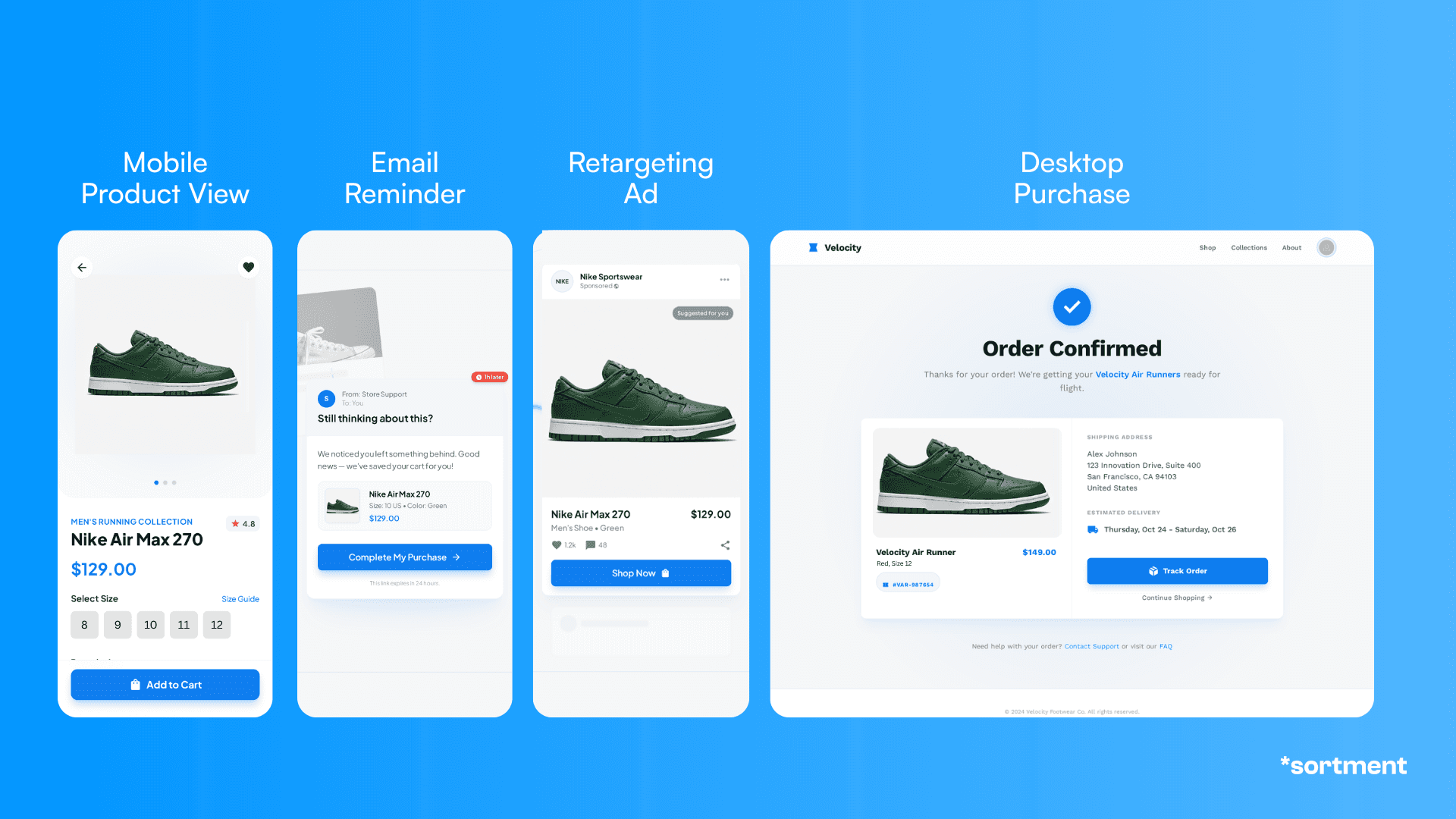
Figure: Unified ecommerce journey across mobile, email, ads, and desktop.
Here’s what brands gain when they connect their channels.
1. Higher Customer Retention
When experiences feel smooth and personalized, customers come back.
Research from Harvard Business Review shows that customers who engage across multiple connected channels spend more and remain loyal longer than single-channel shoppers.
Consistency builds familiarity. Familiarity builds trust.
2. Increased Customer Lifetime Value (CLV)
When data connects across email, ads, mobile apps, and website behavior, you can personalize offers more effectively.
Better personalization leads to higher repeat purchases.
Higher repeat purchases increase lifetime value.
3. Stronger Brand Consistency
Disconnected marketing confuses customers.
Omnichannel marketing ensures that your messaging, offers, and tone stay aligned across every platform, which strengthens brand recall and credibility.
4. Better Attribution and Insights
Instead of guessing which channel drove the sale, omnichannel systems track the full journey.
You see:
- Where customers first discovered you
- What influenced the purchase
- Which channels assist conversions
That clarity improves budget allocation.
5. Improved Customer Experience
Modern buyers expect convenience.
They want to switch from mobile to desktop to in-store without repeating steps. Omnichannel marketing removes friction and makes interactions feel effortless.
And frictionless experiences convert.
What one marketer built in a year
BryteBridge scaled a new brand from 2 states to 20 with one lifecycle marketer, no data engineering team, and Sortment.
10x Revenue, year-over-year
2,000+ Campaigns shipped in 12 months
1 Marketer. No engineers.
Is Omnichannel Marketing Worth It for Small Businesses?
Yes, because customers don’t think in channels.
Even small businesses use multiple touchpoints like websites, email marketing, social media, paid ads, and sometimes mobile apps. If those channels feel disconnected, conversions drop, and retention suffers.
Omnichannel marketing simply means connecting the tools you already use so the customer experience feels smooth and consistent. You don’t need a massive budget, you need integration.
Start small, sync your core channels, and scale as your customer data grows.
What are the Common Omnichannel Marketing Mistakes to Avoid?
Many brands say they’re doing omnichannel marketing, but they’re really just running campaigns on multiple platforms.
Here are the most common mistakes that break the experience.
1. Treating It Like “Being Everywhere”
Omnichannel marketing isn’t about adding more channels. It’s about connecting the ones you already use.
2. Keeping Customer Data in Silos
If your email tool, ad platform, and website don’t share data, personalization won’t work. Integration is non-negotiable.
3. Inconsistent Messaging Across Channels
If your ads promote one offer and your email pushes another, customers feel confused. Alignment builds trust.
4. Ignoring Mobile Experience
Most customer journeys start on mobile. If your website, emails, or mobile app aren’t optimized and synced, the journey breaks.
5. Not Measuring Cross-Channel Performance
Tracking only email opens or ad clicks misses the full picture. Omnichannel marketing requires visibility across the entire customer journey.
Frequently Asked Questions About Omnichannel Marketing
What is omnichannel marketing in simple terms?
Omnichannel marketing means connecting all your marketing channels: email, social media, website, mobile app, ads, and even physical stores, so customers experience one seamless journey instead of separate interactions. The goal is consistency, personalization, and continuity across every touchpoint.
What is the difference between omnichannel and multichannel marketing?
Multichannel marketing uses multiple platforms, but they operate independently. Omnichannel marketing connects those platforms through shared customer data, aligned messaging, and synchronized campaigns to create a unified customer experience.
Why is omnichannel marketing important?
Customers move between devices and platforms before making decisions. Omnichannel marketing ensures your messaging stays consistent and relevant at every stage, which improves retention, increases customer lifetime value, and drives higher conversions.
What tools are needed for omnichannel marketing?
Most businesses need: A CRM or customer data platform Email marketing software Marketing automation tools Ad platforms with retargeting capabilities Analytics tools for cross-channel tracking. The key is integration. Your tools must share data.
Is omnichannel marketing expensive?
Omnichannel marketing does not require enterprise-level budgets. Small businesses can start by connecting core channels like website, email, and paid ads. As revenue grows, they can add deeper personalization and mobile app integration. Integration matters more than scale.