Customer Engagement Automation: How to Scale Personalized Customer Journeys
Learn what customer engagement automation is and how to use it to scale personalized messaging across email, push, and SMS. Explore tools, strategies, and real examples.
Prabhat
·
New York
·
Still relying on manual campaigns to engage your customers?
That approach breaks the moment you try to scale.
As your user base grows, so does the complexity of communication. Customers expect timely, relevant interactions across email, push notifications, SMS, and in-app messages. But manually managing all of this leads to delays, missed opportunities, and generic messaging that fails to convert.
This is where customer engagement automation becomes essential.
In fact, automated emails alone can generate 300%+ more revenue than one-off campaigns, because they respond to user behavior in real time.
Instead of sending campaigns one by one, businesses can automate communication based on real-time user behavior, lifecycle stage, and intent. Every message is triggered at the right moment - whether it’s a welcome email, a cart reminder, or a re-engagement nudge.
Companies like Netflix, Amazon, and Spotify have set the benchmark here.
The result?
Higher engagement
Better retention
Increased revenue without increasing effort

What Is Customer Engagement Automation?
Customer engagement automation is the process of using technology to automatically send personalized messages to customers based on their behavior, actions, and lifecycle stage.
Instead of relying on one-time campaigns, businesses create automated systems that continuously engage users across channels. This is why it’s often supported by tools featured in Best Omnichannel Marketing Platforms.
Customer Engagement Automation Definition
Customer engagement automation refers to the use of data, triggers, and workflows to deliver timely, relevant communication without manual effort.
How It Differs from Traditional Marketing Automation
Traditional marketing automation focuses on scheduled campaigns.
Customer engagement automation is behavior-driven.
Instead of asking what campaign to send, it focuses on what the user just did - making communication more relevant and effective. This aligns closely with Customer Lifecycle Marketing.
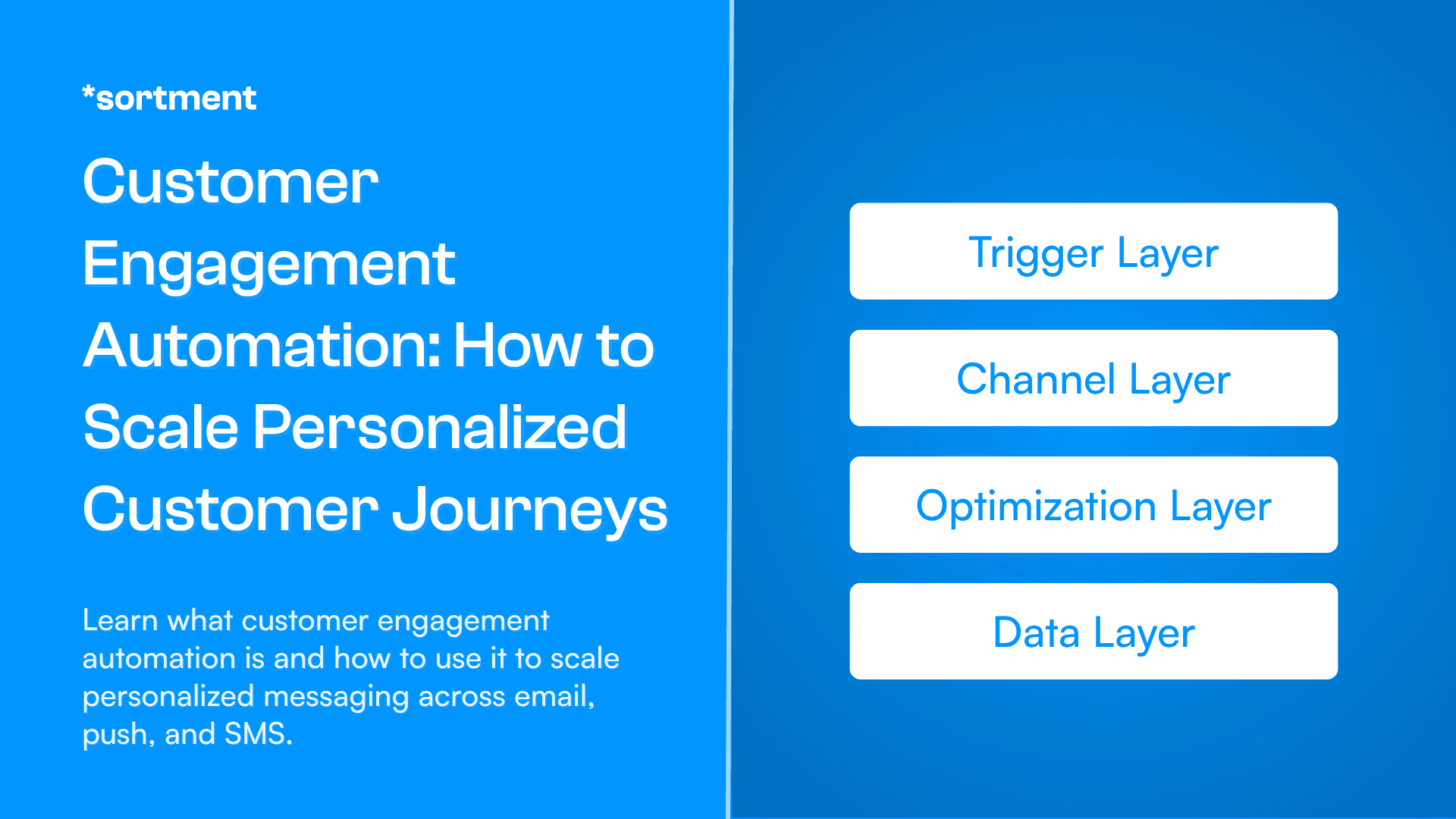
The 4-Layer Customer Engagement Automation Framework
To truly scale engagement, businesses need more than tools - they need a system.
Here’s a simple framework that high-performing teams use:
1. Data Layer: Collect user behavior, preferences, and interaction data.
2. Trigger Layer: Identify key actions like signups, purchases, or inactivity.
3. Channel Layer: Deliver messages across email, push, SMS, and in-app.
4. Optimization Layer: Continuously improve messaging using performance data and AI.
This framework ensures that engagement is not random - it’s structured, scalable, and continuously improving.
What one marketer built in a year
BryteBridge scaled a new brand from 2 states to 20 with one lifecycle marketer, no data engineering team, and Sortment.
10x
Revenue, year-over-year
2,000+
Campaigns shipped in 12 months
1
Marketer. No engineers.
What one marketer built in a year
BryteBridge scaled a new brand from 2 states to 20 with one lifecycle marketer, no data engineering team, and Sortment.
10x
Revenue, year-over-year
2,000+
Campaigns shipped in 12 months
1
Marketer. No engineers.
What one marketer built in a year
BryteBridge scaled a new brand from 2 states to 20 with one lifecycle marketer, no data engineering team, and Sortment.
10x
Revenue, year-over-year
2,000+
Campaigns shipped in 12 months
1
Marketer. No engineers.
Why Customer Engagement Automation Matters
Scaling Personalized Communication
Automation ensures every user gets relevant messaging - no matter how large your audience becomes.
Improving Retention and Lifetime Value
Consistent engagement keeps users active and increases long-term revenue.
Reducing Manual Marketing Effort
Automation eliminates repetitive execution, allowing teams to focus on strategy.
Key Components of Customer Engagement Automation
Customer Data and Segmentation
Segmentation ensures messages are tailored to user behavior and lifecycle stage.
Behavioral Triggers
Triggers like signup, purchase, or inactivity ensure messages are sent at the right moment.
Multi-Channel Messaging
Customers interact across multiple platforms. This is why businesses rely on 5 Best Customer Engagement Platforms to manage engagement across channels.
Automation Workflows
Workflows connect triggers to actions, creating structured customer journeys.
Real-Time Personalization
Modern systems adapt messaging dynamically based on user behavior.
How Customer Engagement Automation Works
Capture Customer Behavior
Track actions like clicks, purchases, and inactivity
Trigger Automated Workflows
Activate journeys based on those actions
Deliver Personalized Messages
Send relevant communication instantly
Optimize Based on Performance
Continuously improve results using data
Customer Engagement Automation Examples
Welcome and Onboarding Automation
New users receive guided onboarding immediately after signup.
Often powered by Lifecycle Email Marketing, these flows help users experience value quickly.
Cart Abandonment Automation (Deep Example)
Let’s break this down:
Trigger: User adds product but doesn’t checkout
Data Used: Product viewed, price sensitivity, past behavior
Message: Reminder + urgency or incentive
Outcome: Recovers lost revenue
Ecommerce companies like Amazon use this extensively to increase conversions.
Product Recommendation Automation
Platforms like Netflix analyze user behavior (watch history, preferences) to send highly personalized recommendations - increasing engagement and session time.
Re-Engagement Automation
Apps like Spotify send reminders when users become inactive, bringing them back into the product.
Find lifecycle growth opportunities with Sortment
See how Strategy AI monitors your customer data, surfaces growth opportunities, and recommends campaigns tied to activation, retention, or monetization.
Find lifecycle growth opportunities with Sortment
See how Strategy AI monitors your customer data, surfaces growth opportunities, and recommends campaigns tied to activation, retention, or monetization.
Find lifecycle growth opportunities with Sortment
See how Strategy AI monitors your customer data, surfaces growth opportunities, and recommends campaigns tied to activation, retention, or monetization.
How to Build a Customer Engagement Automation Strategy?
Map the Customer Journey
Identify key touchpoints across the lifecycle
Identify Key Engagement Triggers
Define actions that should trigger communication
Design Automated Workflows
Create journeys that guide users forward
Choose the Right Automation Platform
Most tools require teams to manually set up workflows and continuously optimize them.
Platforms like Sortment take a different approach.
Instead of just providing automation tools, Sortment uses AI to automatically identify user behavior, launch lifecycle campaigns, and optimize engagement in real time. This reduces manual effort while improving performance - especially for growing teams that don’t have large marketing ops resources.
Best Practices for Customer Engagement Automation
Focus on Behavior, Not Campaigns
Trigger-based messaging outperforms scheduled campaigns
Personalize Every Interaction
Tailor communication to user context
Avoid Over-Automation
Too many messages reduce engagement
Continuously Optimize
Refine workflows using performance data
Frequently Asked Questions (FAQs) About Customer Engagement Automation
What is customer engagement automation?
It is the use of automation to send personalized messages based on user behavior and lifecycle stage.
How does customer engagement automation work?
It tracks user actions, triggers workflows, and delivers relevant messages automatically.
What are examples of customer engagement automation?
Examples include onboarding emails, cart reminders, product recommendations, and re-engagement campaigns.
What tools are used for customer engagement automation?
Tools like Klaviyo, HubSpot, and Mailchimp help automate workflows.
How does automation improve retention?
By delivering timely, relevant communication, it keeps users engaged and reduces churn.
See also
Lifecycle Marketing Strategy: How to Turn Customer Journeys Into Growth?
Lifecycle Marketing Strategy: How to Turn Customer Journeys Into Growth?
Lifecycle Marketing Strategy: How to Turn Customer Journeys Into Growth?
Learn how to build a lifecycle marketing strategy that drives activation, retention, and revenue. Explore lifecycle stages, automation, examples, and best practices for modern marketing teams.
Learn how to build a lifecycle marketing strategy that drives activation, retention, and revenue. Explore lifecycle stages, automation, examples, and best practices for modern marketing teams.
See what Sortment can do for your goals.
See what Sortment can do for your goals.
Book a 30-minute call. We'll show you how the pilot works with your data and your stack.
Book a 30-minute call. We'll show you how the pilot works with your data and your stack.
AGENTS
CASE STUDIES
RESOURCES
AGENTS
CASE STUDIES
RESOURCES
Still relying on manual campaigns to engage your customers?
That approach breaks the moment you try to scale.
As your user base grows, so does the complexity of communication. Customers expect timely, relevant interactions across email, push notifications, SMS, and in-app messages. But manually managing all of this leads to delays, missed opportunities, and generic messaging that fails to convert.
This is where customer engagement automation becomes essential.
In fact, automated emails alone can generate 300%+ more revenue than one-off campaigns, because they respond to user behavior in real time.
Instead of sending campaigns one by one, businesses can automate communication based on real-time user behavior, lifecycle stage, and intent. Every message is triggered at the right moment - whether it’s a welcome email, a cart reminder, or a re-engagement nudge.
Companies like Netflix, Amazon, and Spotify have set the benchmark here.
The result?
Higher engagement
Better retention
Increased revenue without increasing effort
What Is Customer Engagement Automation?
Customer engagement automation is the process of using technology to automatically send personalized messages to customers based on their behavior, actions, and lifecycle stage.
Instead of relying on one-time campaigns, businesses create automated systems that continuously engage users across channels. This is why it’s often supported by tools featured in Best Omnichannel Marketing Platforms.
Customer Engagement Automation Definition
Customer engagement automation refers to the use of data, triggers, and workflows to deliver timely, relevant communication without manual effort.
How It Differs from Traditional Marketing Automation
Traditional marketing automation focuses on scheduled campaigns.
Customer engagement automation is behavior-driven.
Instead of asking what campaign to send, it focuses on what the user just did - making communication more relevant and effective. This aligns closely with Customer Lifecycle Marketing.
The 4-Layer Customer Engagement Automation Framework
To truly scale engagement, businesses need more than tools - they need a system.
Here’s a simple framework that high-performing teams use:
1. Data Layer: Collect user behavior, preferences, and interaction data.
2. Trigger Layer: Identify key actions like signups, purchases, or inactivity.
3. Channel Layer: Deliver messages across email, push, SMS, and in-app.
4. Optimization Layer: Continuously improve messaging using performance data and AI.
This framework ensures that engagement is not random - it’s structured, scalable, and continuously improving.
What one marketer built in a year
BryteBridge scaled a new brand from 2 states to 20 with one lifecycle marketer, no data engineering team, and Sortment.
10x
Revenue, year-over-year
2,000+
Campaigns shipped in 12 months
1
Marketer. No engineers.
What one marketer built in a year
BryteBridge scaled a new brand from 2 states to 20 with one lifecycle marketer, no data engineering team, and Sortment.
10x
Revenue, year-over-year
2,000+
Campaigns shipped in 12 months
1
Marketer. No engineers.
What one marketer built in a year
BryteBridge scaled a new brand from 2 states to 20 with one lifecycle marketer, no data engineering team, and Sortment.
10x
Revenue, year-over-year
2,000+
Campaigns shipped in 12 months
1
Marketer. No engineers.
Why Customer Engagement Automation Matters
Scaling Personalized Communication
Automation ensures every user gets relevant messaging - no matter how large your audience becomes.
Improving Retention and Lifetime Value
Consistent engagement keeps users active and increases long-term revenue.
Reducing Manual Marketing Effort
Automation eliminates repetitive execution, allowing teams to focus on strategy.
Key Components of Customer Engagement Automation
Customer Data and Segmentation
Segmentation ensures messages are tailored to user behavior and lifecycle stage.
Behavioral Triggers
Triggers like signup, purchase, or inactivity ensure messages are sent at the right moment.
Multi-Channel Messaging
Customers interact across multiple platforms. This is why businesses rely on 5 Best Customer Engagement Platforms to manage engagement across channels.
Automation Workflows
Workflows connect triggers to actions, creating structured customer journeys.
Real-Time Personalization
Modern systems adapt messaging dynamically based on user behavior.
How Customer Engagement Automation Works
Capture Customer Behavior
Track actions like clicks, purchases, and inactivity
Trigger Automated Workflows
Activate journeys based on those actions
Deliver Personalized Messages
Send relevant communication instantly
Optimize Based on Performance
Continuously improve results using data
Customer Engagement Automation Examples
Welcome and Onboarding Automation
New users receive guided onboarding immediately after signup.
Often powered by Lifecycle Email Marketing, these flows help users experience value quickly.
Cart Abandonment Automation (Deep Example)
Let’s break this down:
Trigger: User adds product but doesn’t checkout
Data Used: Product viewed, price sensitivity, past behavior
Message: Reminder + urgency or incentive
Outcome: Recovers lost revenue
Ecommerce companies like Amazon use this extensively to increase conversions.
Product Recommendation Automation
Platforms like Netflix analyze user behavior (watch history, preferences) to send highly personalized recommendations - increasing engagement and session time.
Re-Engagement Automation
Apps like Spotify send reminders when users become inactive, bringing them back into the product.
Find lifecycle growth opportunities with Sortment
See how Strategy AI monitors your customer data, surfaces growth opportunities, and recommends campaigns tied to activation, retention, or monetization.
Find lifecycle growth opportunities with Sortment
See how Strategy AI monitors your customer data, surfaces growth opportunities, and recommends campaigns tied to activation, retention, or monetization.
Find lifecycle growth opportunities with Sortment
See how Strategy AI monitors your customer data, surfaces growth opportunities, and recommends campaigns tied to activation, retention, or monetization.
How to Build a Customer Engagement Automation Strategy?
Map the Customer Journey
Identify key touchpoints across the lifecycle
Identify Key Engagement Triggers
Define actions that should trigger communication
Design Automated Workflows
Create journeys that guide users forward
Choose the Right Automation Platform
Most tools require teams to manually set up workflows and continuously optimize them.
Platforms like Sortment take a different approach.
Instead of just providing automation tools, Sortment uses AI to automatically identify user behavior, launch lifecycle campaigns, and optimize engagement in real time. This reduces manual effort while improving performance - especially for growing teams that don’t have large marketing ops resources.
Best Practices for Customer Engagement Automation
Focus on Behavior, Not Campaigns
Trigger-based messaging outperforms scheduled campaigns
Personalize Every Interaction
Tailor communication to user context
Avoid Over-Automation
Too many messages reduce engagement
Continuously Optimize
Refine workflows using performance data
Frequently Asked Questions (FAQs) About Customer Engagement Automation
What is customer engagement automation?
It is the use of automation to send personalized messages based on user behavior and lifecycle stage.
How does customer engagement automation work?
It tracks user actions, triggers workflows, and delivers relevant messages automatically.
What are examples of customer engagement automation?
Examples include onboarding emails, cart reminders, product recommendations, and re-engagement campaigns.
What tools are used for customer engagement automation?
Tools like Klaviyo, HubSpot, and Mailchimp help automate workflows.
How does automation improve retention?
By delivering timely, relevant communication, it keeps users engaged and reduces churn.