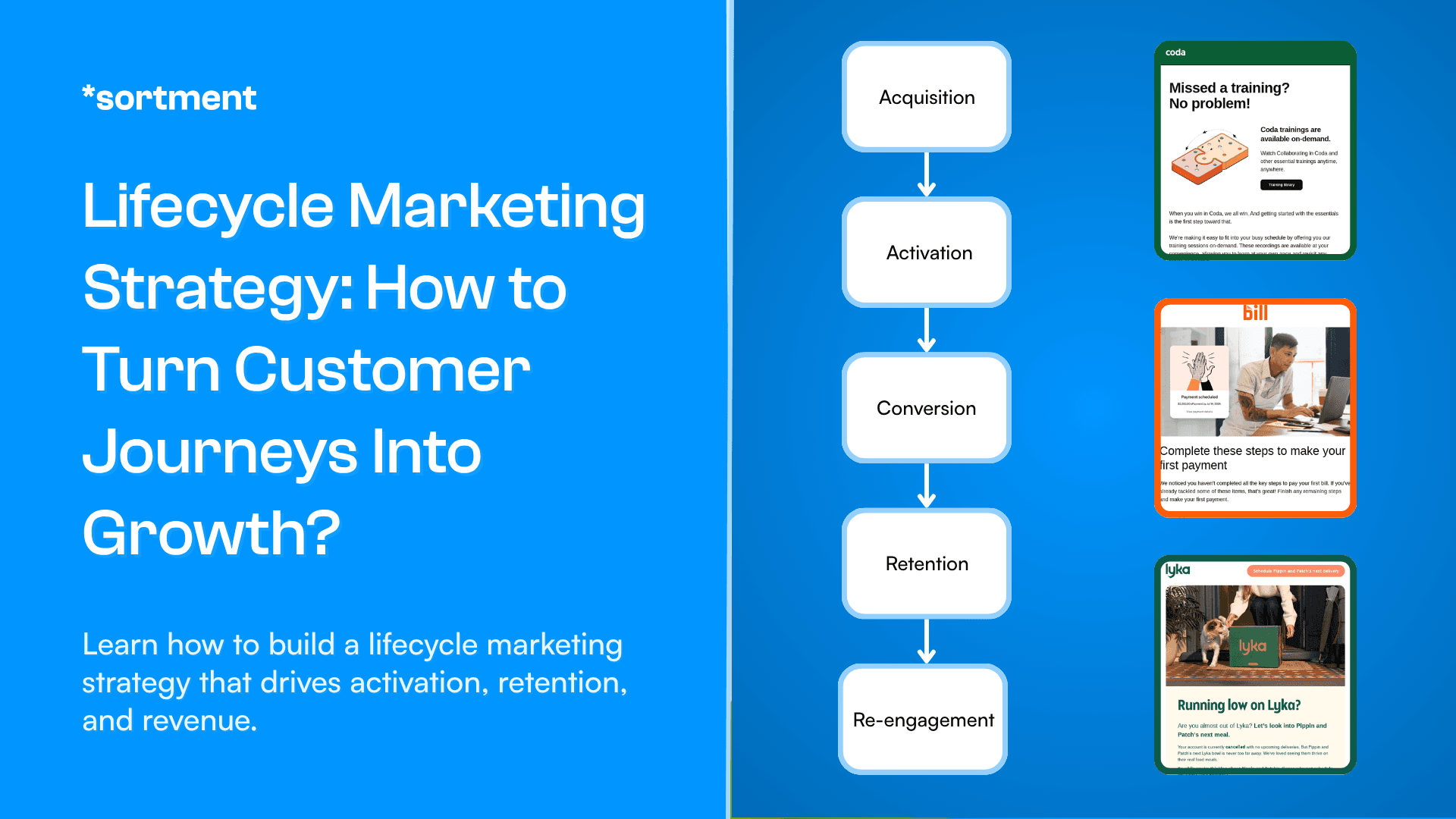
Lifecycle Marketing Strategy: How to Turn Customer Journeys Into Growth?
Learn how to build a lifecycle marketing strategy that drives activation, retention, and revenue. Explore lifecycle stages, automation, examples, and best practices for modern marketing teams.
Abhimanyu
·
New York
·
Most marketing teams focus heavily on acquiring new customers.
But acquisition alone doesn’t drive sustainable growth. What truly determines long-term success is how well a business engages customers after they arrive.
This is where a lifecycle marketing strategy becomes essential.
Instead of treating marketing as a series of disconnected campaigns, lifecycle marketing focuses on guiding customers through every stage of their journey - from their first interaction with a brand to becoming loyal, repeat buyers.
Companies like Spotify, Airbnb, and Duolingo use lifecycle marketing strategies to deliver timely messages, product education, and personalized offers that keep users engaged over time. This is what we help you achieve at Sortment.
The goal is simple: send the right message, at the right moment, through the right channel.
When done well, a lifecycle marketing strategy helps businesses:
Improve product adoption
Increase repeat purchases
Reduce churn
Grow customer lifetime value
In this guide, we’ll break down what a lifecycle marketing strategy is, the key stages involved, and how businesses can design lifecycle programs that drive consistent engagement and long-term revenue.




What Is a Lifecycle Marketing Strategy?
A lifecycle marketing strategy is a structured approach to engaging customers across every stage of their journey using personalized, behavior-driven communication.
Email flows generate nearly 41% of total email revenue from just 5.3% of sends, with revenue per recipient up to 18x higher than campaigns; top 10% flows hit $7.79 RPR.
Unlike traditional marketing, which focuses on campaigns, lifecycle marketing focuses on relationships.
It combines channels like email, push notifications, SMS, and in-app messaging to create a seamless experience. This is why it often overlaps with Omnichannel Marketing Platforms, where consistent messaging across channels becomes critical.
At its core, lifecycle marketing is about:
Understanding where the customer is in their journey
Identifying what they need at that moment
Delivering communication that moves them forward
This approach is also deeply connected to Customer Lifecycle Marketing, where every interaction is mapped to a lifecycle stage and optimized for engagement and retention.
Customer Lifecycle Stages in a Lifecycle Marketing Strategy
Every lifecycle marketing strategy is built around a set of stages that reflect how users interact with a product or brand.
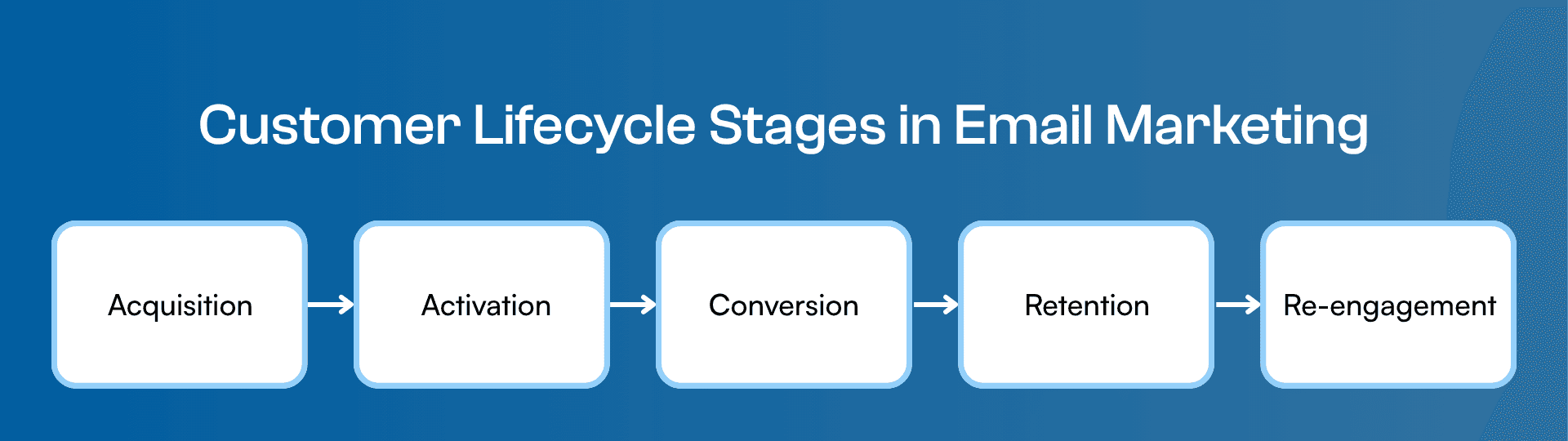
Figure: Stages of Customer Lifecycle
Acquisition
This is the stage where users first discover your brand.
Marketing efforts here focus on awareness and signups, often supported by paid ads, content marketing, and landing pages.
Activation
Activation is about helping users experience value for the first time.
This stage heavily relies on onboarding flows and Lifecycle Email Marketing, which guide users through product features and encourage early engagement.
Conversion
Once users understand the product, the goal is to convert them into paying customers.
This may include trial reminders, pricing nudges, and targeted offers.
Retention
Retention ensures that customers continue using the product or making repeat purchases.
Emails, recommendations, and product updates play a key role in keeping users engaged.
Re-Engagement
Not all users stay active.
Re-engagement campaigns aim to bring inactive users back through reminders, incentives, or new feature announcements.
Find lifecycle growth opportunities with Sortment
See how Strategy AI monitors your customer data, surfaces growth opportunities, and recommends campaigns tied to activation, retention, or monetization.
Find lifecycle growth opportunities with Sortment
See how Strategy AI monitors your customer data, surfaces growth opportunities, and recommends campaigns tied to activation, retention, or monetization.
Find lifecycle growth opportunities with Sortment
See how Strategy AI monitors your customer data, surfaces growth opportunities, and recommends campaigns tied to activation, retention, or monetization.
What are The Key Components of a Successful Lifecycle Marketing Strategy?
A strong lifecycle email marketing system is not built on guesswork. It relies on a few core components working together.
Stage | Goal | Key Triggers | Channels | Example Action | KPI |
Acquisition | Convert visitors into users | Signup, app install | Email, Push | Welcome email with value proposition | Conversion Rate |
Activation | Help users experience value | First login, feature usage | Email, In-app | Onboarding sequence guiding key features | Activation Rate |
Engagement | Keep users active | Session activity, content interaction | Push, Email | Personalized content or product recommendations | DAU / MAU |
Conversion | Drive purchase or upgrade | Cart addition, pricing page visit | Email, SMS | Cart abandonment reminder or limited-time offer | Conversion Rate |
Retention | Bring users back | Inactivity, drop in usage | Push, Email | Re-engagement campaign with incentives | Retention Rate |
Loyalty | Increase repeat actions | Repeat purchases, high usage | Email, In-app | Rewards, exclusive offers, referrals | Customer Lifetime Value |
Customer Data and Segmentation
Effective lifecycle marketing starts with understanding your users.
Segmentation allows businesses to group users based on behavior, preferences, and lifecycle stage, making communication more relevant.
Behavioral Triggers
Triggers are events that initiate lifecycle communication.
These could include actions like signing up, abandoning a cart, completing a purchase, or becoming inactive.
Behavior-driven messaging ensures communication is timely and contextually relevant.
Cross-Channel Messaging
Customers interact with brands across multiple touchpoints.
This is why lifecycle strategies often rely on tools listed under 5 Best Customer Engagement Platforms, which enable consistent messaging across email, push notifications, SMS, and in-app channels.
Lifecycle Automation
Automation allows businesses to scale lifecycle marketing without manual effort.
Modern tools, including Best Customer Engagement Platform for Mobile Apps, help automate journeys based on user behavior and engagement patterns.
Performance Measurement
To improve lifecycle marketing, businesses must track performance.
Key metrics include:
Open and click rates
Conversion rates
Retention rates
Customer lifetime value
These insights help refine campaigns and improve results over time.
How to Build a Lifecycle Marketing Strategy?
Building a lifecycle marketing strategy requires a structured approach.
Map the Customer Journey
Start by outlining how users interact with your brand from the first touchpoint to long-term engagement.
Identify key moments where communication can influence behavior.
Identify Lifecycle Triggers
Define the actions that should trigger emails, notifications, or messages.
For example:
Signup → Welcome email
Inactivity → Re-engagement campaign
Purchase → Post-purchase email
Design Lifecycle Campaigns
Create campaigns for each stage of the lifecycle. Focus on helping users move forward, not just promoting products.
Automate Customer Journeys
Use automation tools to connect triggers with campaigns and create continuous customer journeys.
This is where platforms like Sortment stand out. Instead of manually building complex workflows, Sortment uses AI-driven lifecycle orchestration to identify user behavior, launch campaigns, and optimize engagement automatically. It allows teams to scale lifecycle marketing without increasing operational complexity.
Setup omni-channel journeys with Sortment
Watch how omni-channel journeys can improve customer engagement and improve business outcomes.
Setup omni-channel journeys with Sortment
Watch how omni-channel journeys can improve customer engagement and improve business outcomes.
Setup omni-channel journeys with Sortment
Watch how journeys can improve customer engagement and improve business outcomes.
Lifecycle Marketing Strategy Examples
Different industries apply lifecycle marketing differently, but the goal remains the same: move users from acquisition to retention with structured engagement.
Here’s how it plays out across key business models.
SaaS Lifecycle Marketing Strategy
SaaS companies focus heavily on activation and retention.
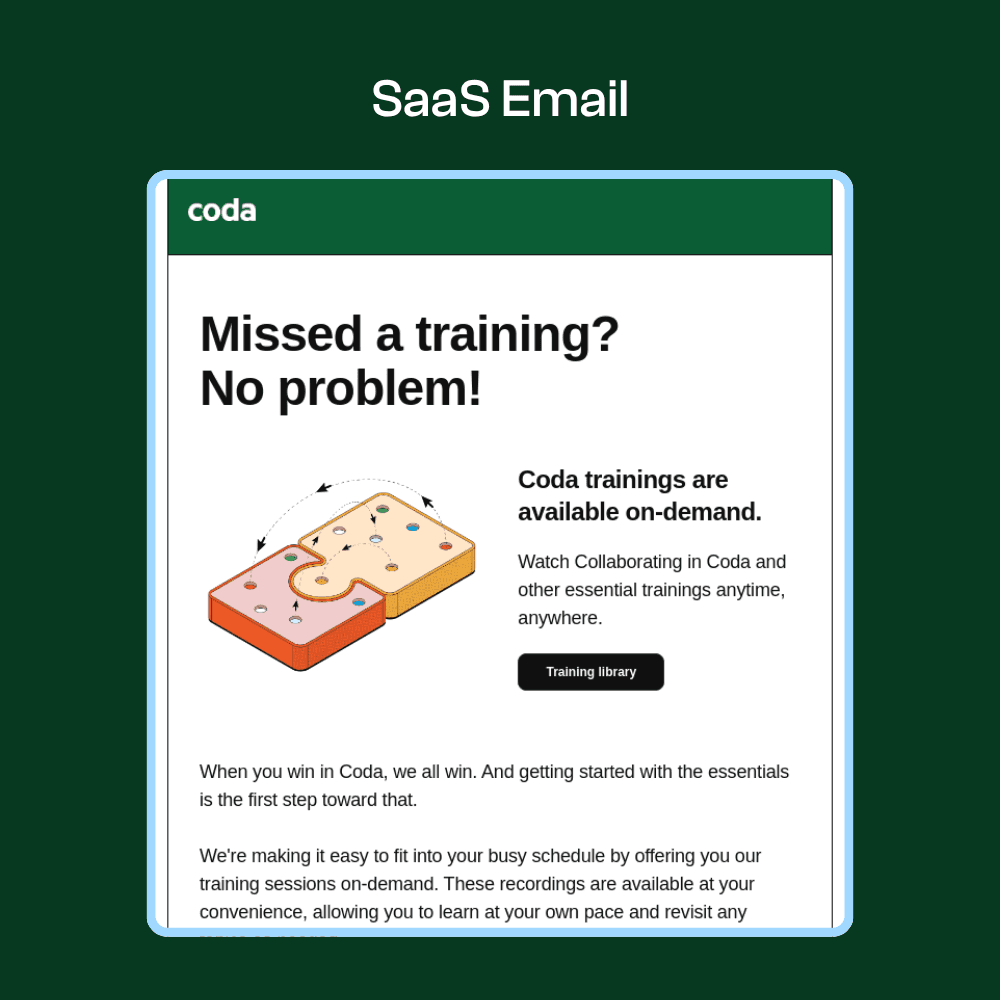
Figure: Feature education email from Coda (Source: Really Good Emails)
They use onboarding emails, feature education, and usage insights to help users experience product value quickly.
Ecommerce Lifecycle Marketing Strategy
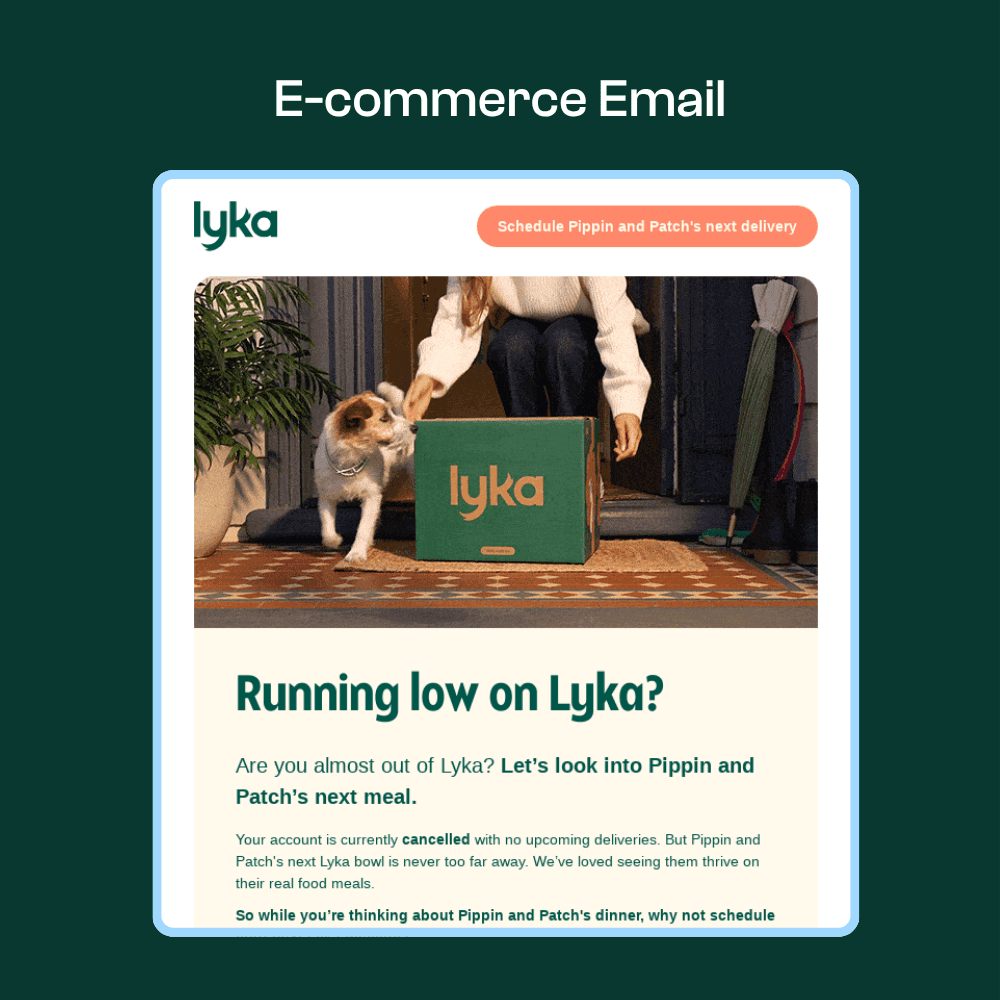
Figure: Win-back email from Lyka (Source: Really Good Emails)
E-commerce brands rely on cart abandonment emails, product recommendations, and post-purchase engagement to drive repeat purchases.
Subscription Business Lifecycle Strategy
Subscription businesses prioritize retention and churn prevention.
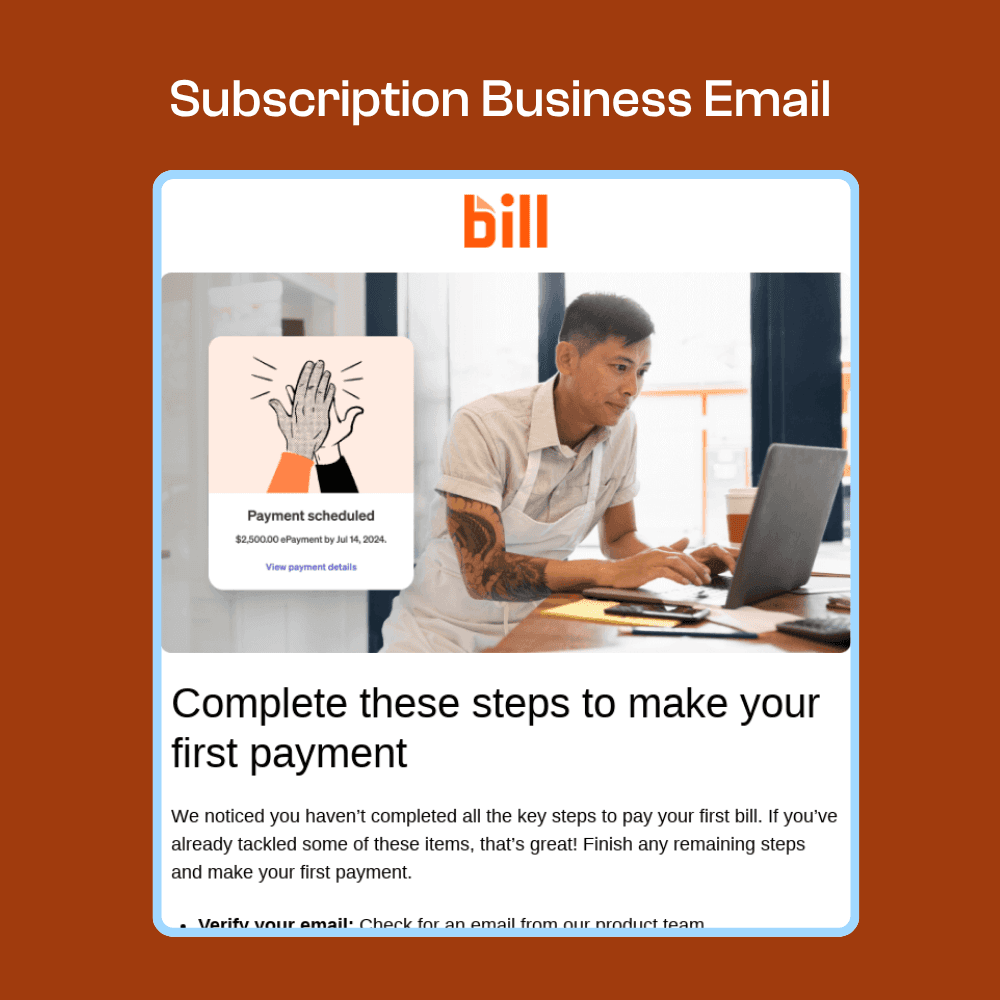
Figure: Payment email from a subscription business
They use renewal reminders, usage reports, and win-back campaigns to maintain recurring revenue.
What one marketer built in a year
BryteBridge scaled a new brand from 2 states to 20 with one lifecycle marketer, no data engineering team, and Sortment.
10x
Revenue, year-over-year
2,000+
Campaigns shipped in 12 months
1
Marketer. No engineers.
What one marketer built in a year
BryteBridge scaled a new brand from 2 states to 20 with one lifecycle marketer, no data engineering team, and Sortment.
10x
Revenue, year-over-year
2,000+
Campaigns shipped in 12 months
1
Marketer. No engineers.
What one marketer built in a year
BryteBridge scaled a new brand from 2 states to 20 with one lifecycle marketer, no data engineering team, and Sortment.
10x
Revenue, year-over-year
2,000+
Campaigns shipped in 12 months
1
Marketer. No engineers.
Final Takeaway: What are The Best Practices for Lifecycle Marketing Strategy?
A strong lifecycle marketing strategy isn’t about sending more messages - it’s about sending the right message at the right time. Here are the practices that consistently drive results:
Best Practice | What It Means | Why It Matters |
Focus on Customer Value | Every message helps users take a meaningful action | Builds trust and improves conversions |
Personalize Every Stage | Tailor messaging based on behavior, preferences, and lifecycle stage | Increases engagement and relevance, especially in Customer Lifecycle Marketing |
Use Behavior-Driven Triggers | Send messages based on real-time user actions, not schedules | Delivers the right message at the right moment |
Continuously Optimize Journeys | Test, analyze, and improve workflows regularly | Drives long-term performance gains |
Build Multi-Channel Engagement | Engage users across email, push, SMS, and in-app | Ensures consistent experience across touchpoints |
Automate Execution | Use tools to reduce manual campaign effort | Helps teams scale without increasing workload |
Focus on Customer Value
Every lifecycle message should help the customer achieve something - not just promote a product.
Personalize Every Stage
Generic messaging reduces engagement.
Personalization based on behavior and preferences improves performance significantly.
Continuously Optimize Journeys
Lifecycle marketing is not a one-time setup.
Regular testing and optimization are required to improve results over time.
Frequently Asked Questions (FAQs) About Lifecycle Marketing Strategy
What is a lifecycle marketing strategy?
A lifecycle marketing strategy is a structured approach to engaging customers at every stage of their journey using personalized, behavior-driven communication.
Why is lifecycle marketing important?
It helps improve retention, increase conversions, and maximize customer lifetime value by delivering relevant messages at the right time.
What are the stages of lifecycle marketing?
The main stages include acquisition, activation, conversion, retention, and re-engagement.
What tools support lifecycle marketing strategy?
Tools like Klaviyo, HubSpot, and Mailchimp help automate lifecycle campaigns and manage customer journeys.
How does lifecycle marketing improve retention?
By continuously engaging users with relevant content and timely communication, lifecycle marketing keeps customers active and reduces churn.
See also
Customer Lifecycle Marketing: The Complete Guide to Turn Users Into Loyal Customers
Customer Lifecycle Marketing: The Complete Guide to Turn Users Into Loyal Customers
Customer Lifecycle Marketing: The Complete Guide to Turn Users Into Loyal Customers
Learn customer lifecycle marketing from start to finish. Discover lifecycle stages, real campaign examples, automation strategies, and tools that boost retention, conversions, and customer lifetime value.
Learn customer lifecycle marketing from start to finish. Discover lifecycle stages, real campaign examples, automation strategies, and tools that boost retention, conversions, and customer lifetime value.
See what Sortment can do for your goals.
See what Sortment can do for your goals.
Book a 30-minute call. We'll show you how the pilot works with your data and your stack.
Book a 30-minute call. We'll show you how the pilot works with your data and your stack.
AGENTS
CASE STUDIES
RESOURCES
AGENTS
CASE STUDIES
RESOURCES
Most marketing teams focus heavily on acquiring new customers.
But acquisition alone doesn’t drive sustainable growth. What truly determines long-term success is how well a business engages customers after they arrive.
This is where a lifecycle marketing strategy becomes essential.
Instead of treating marketing as a series of disconnected campaigns, lifecycle marketing focuses on guiding customers through every stage of their journey - from their first interaction with a brand to becoming loyal, repeat buyers.
Companies like Spotify, Airbnb, and Duolingo use lifecycle marketing strategies to deliver timely messages, product education, and personalized offers that keep users engaged over time. This is what we help you achieve at Sortment.
The goal is simple: send the right message, at the right moment, through the right channel.
When done well, a lifecycle marketing strategy helps businesses:
Improve product adoption
Increase repeat purchases
Reduce churn
Grow customer lifetime value
In this guide, we’ll break down what a lifecycle marketing strategy is, the key stages involved, and how businesses can design lifecycle programs that drive consistent engagement and long-term revenue.
What Is a Lifecycle Marketing Strategy?
A lifecycle marketing strategy is a structured approach to engaging customers across every stage of their journey using personalized, behavior-driven communication.
Email flows generate nearly 41% of total email revenue from just 5.3% of sends, with revenue per recipient up to 18x higher than campaigns; top 10% flows hit $7.79 RPR.
Unlike traditional marketing, which focuses on campaigns, lifecycle marketing focuses on relationships.
It combines channels like email, push notifications, SMS, and in-app messaging to create a seamless experience. This is why it often overlaps with Omnichannel Marketing Platforms, where consistent messaging across channels becomes critical.
At its core, lifecycle marketing is about:
Understanding where the customer is in their journey
Identifying what they need at that moment
Delivering communication that moves them forward
This approach is also deeply connected to Customer Lifecycle Marketing, where every interaction is mapped to a lifecycle stage and optimized for engagement and retention.
Customer Lifecycle Stages in a Lifecycle Marketing Strategy
Every lifecycle marketing strategy is built around a set of stages that reflect how users interact with a product or brand.
Figure: Stages of Customer Lifecycle
Acquisition
This is the stage where users first discover your brand.
Marketing efforts here focus on awareness and signups, often supported by paid ads, content marketing, and landing pages.
Activation
Activation is about helping users experience value for the first time.
This stage heavily relies on onboarding flows and Lifecycle Email Marketing, which guide users through product features and encourage early engagement.
Conversion
Once users understand the product, the goal is to convert them into paying customers.
This may include trial reminders, pricing nudges, and targeted offers.
Retention
Retention ensures that customers continue using the product or making repeat purchases.
Emails, recommendations, and product updates play a key role in keeping users engaged.
Re-Engagement
Not all users stay active.
Re-engagement campaigns aim to bring inactive users back through reminders, incentives, or new feature announcements.
Find lifecycle growth opportunities with Sortment
See how Strategy AI monitors your customer data, surfaces growth opportunities, and recommends campaigns tied to activation, retention, or monetization.
Find lifecycle growth opportunities with Sortment
See how Strategy AI monitors your customer data, surfaces growth opportunities, and recommends campaigns tied to activation, retention, or monetization.
Find lifecycle growth opportunities with Sortment
See how Strategy AI monitors your customer data, surfaces growth opportunities, and recommends campaigns tied to activation, retention, or monetization.
What are The Key Components of a Successful Lifecycle Marketing Strategy?
A strong lifecycle email marketing system is not built on guesswork. It relies on a few core components working together.
Stage | Goal | Key Triggers | Channels | Example Action | KPI |
Acquisition | Convert visitors into users | Signup, app install | Email, Push | Welcome email with value proposition | Conversion Rate |
Activation | Help users experience value | First login, feature usage | Email, In-app | Onboarding sequence guiding key features | Activation Rate |
Engagement | Keep users active | Session activity, content interaction | Push, Email | Personalized content or product recommendations | DAU / MAU |
Conversion | Drive purchase or upgrade | Cart addition, pricing page visit | Email, SMS | Cart abandonment reminder or limited-time offer | Conversion Rate |
Retention | Bring users back | Inactivity, drop in usage | Push, Email | Re-engagement campaign with incentives | Retention Rate |
Loyalty | Increase repeat actions | Repeat purchases, high usage | Email, In-app | Rewards, exclusive offers, referrals | Customer Lifetime Value |
Customer Data and Segmentation
Effective lifecycle marketing starts with understanding your users.
Segmentation allows businesses to group users based on behavior, preferences, and lifecycle stage, making communication more relevant.
Behavioral Triggers
Triggers are events that initiate lifecycle communication.
These could include actions like signing up, abandoning a cart, completing a purchase, or becoming inactive.
Behavior-driven messaging ensures communication is timely and contextually relevant.
Cross-Channel Messaging
Customers interact with brands across multiple touchpoints.
This is why lifecycle strategies often rely on tools listed under 5 Best Customer Engagement Platforms, which enable consistent messaging across email, push notifications, SMS, and in-app channels.
Lifecycle Automation
Automation allows businesses to scale lifecycle marketing without manual effort.
Modern tools, including Best Customer Engagement Platform for Mobile Apps, help automate journeys based on user behavior and engagement patterns.
Performance Measurement
To improve lifecycle marketing, businesses must track performance.
Key metrics include:
Open and click rates
Conversion rates
Retention rates
Customer lifetime value
These insights help refine campaigns and improve results over time.
How to Build a Lifecycle Marketing Strategy?
Building a lifecycle marketing strategy requires a structured approach.
Map the Customer Journey
Start by outlining how users interact with your brand from the first touchpoint to long-term engagement.
Identify key moments where communication can influence behavior.
Identify Lifecycle Triggers
Define the actions that should trigger emails, notifications, or messages.
For example:
Signup → Welcome email
Inactivity → Re-engagement campaign
Purchase → Post-purchase email
Design Lifecycle Campaigns
Create campaigns for each stage of the lifecycle. Focus on helping users move forward, not just promoting products.
Automate Customer Journeys
Use automation tools to connect triggers with campaigns and create continuous customer journeys.
This is where platforms like Sortment stand out. Instead of manually building complex workflows, Sortment uses AI-driven lifecycle orchestration to identify user behavior, launch campaigns, and optimize engagement automatically. It allows teams to scale lifecycle marketing without increasing operational complexity.
Setup omni-channel journeys with Sortment
Watch how omni-channel journeys can improve customer engagement and improve business outcomes.
Setup omni-channel journeys with Sortment
Watch how omni-channel journeys can improve customer engagement and improve business outcomes.
Setup omni-channel journeys with Sortment
Watch how journeys can improve customer engagement and improve business outcomes.
Lifecycle Marketing Strategy Examples
Different industries apply lifecycle marketing differently, but the goal remains the same: move users from acquisition to retention with structured engagement.
Here’s how it plays out across key business models.
SaaS Lifecycle Marketing Strategy
SaaS companies focus heavily on activation and retention.
Figure: Feature education email from Coda (Source: Really Good Emails)
They use onboarding emails, feature education, and usage insights to help users experience product value quickly.
Ecommerce Lifecycle Marketing Strategy
Figure: Win-back email from Lyka (Source: Really Good Emails)
E-commerce brands rely on cart abandonment emails, product recommendations, and post-purchase engagement to drive repeat purchases.
Subscription Business Lifecycle Strategy
Subscription businesses prioritize retention and churn prevention.
Figure: Payment email from a subscription business
They use renewal reminders, usage reports, and win-back campaigns to maintain recurring revenue.
What one marketer built in a year
BryteBridge scaled a new brand from 2 states to 20 with one lifecycle marketer, no data engineering team, and Sortment.
10x
Revenue, year-over-year
2,000+
Campaigns shipped in 12 months
1
Marketer. No engineers.
What one marketer built in a year
BryteBridge scaled a new brand from 2 states to 20 with one lifecycle marketer, no data engineering team, and Sortment.
10x
Revenue, year-over-year
2,000+
Campaigns shipped in 12 months
1
Marketer. No engineers.
What one marketer built in a year
BryteBridge scaled a new brand from 2 states to 20 with one lifecycle marketer, no data engineering team, and Sortment.
10x
Revenue, year-over-year
2,000+
Campaigns shipped in 12 months
1
Marketer. No engineers.
Final Takeaway: What are The Best Practices for Lifecycle Marketing Strategy?
A strong lifecycle marketing strategy isn’t about sending more messages - it’s about sending the right message at the right time. Here are the practices that consistently drive results:
Best Practice | What It Means | Why It Matters |
Focus on Customer Value | Every message helps users take a meaningful action | Builds trust and improves conversions |
Personalize Every Stage | Tailor messaging based on behavior, preferences, and lifecycle stage | Increases engagement and relevance, especially in Customer Lifecycle Marketing |
Use Behavior-Driven Triggers | Send messages based on real-time user actions, not schedules | Delivers the right message at the right moment |
Continuously Optimize Journeys | Test, analyze, and improve workflows regularly | Drives long-term performance gains |
Build Multi-Channel Engagement | Engage users across email, push, SMS, and in-app | Ensures consistent experience across touchpoints |
Automate Execution | Use tools to reduce manual campaign effort | Helps teams scale without increasing workload |
Focus on Customer Value
Every lifecycle message should help the customer achieve something - not just promote a product.
Personalize Every Stage
Generic messaging reduces engagement.
Personalization based on behavior and preferences improves performance significantly.
Continuously Optimize Journeys
Lifecycle marketing is not a one-time setup.
Regular testing and optimization are required to improve results over time.
Frequently Asked Questions (FAQs) About Lifecycle Marketing Strategy
What is a lifecycle marketing strategy?
A lifecycle marketing strategy is a structured approach to engaging customers at every stage of their journey using personalized, behavior-driven communication.
Why is lifecycle marketing important?
It helps improve retention, increase conversions, and maximize customer lifetime value by delivering relevant messages at the right time.
What are the stages of lifecycle marketing?
The main stages include acquisition, activation, conversion, retention, and re-engagement.
What tools support lifecycle marketing strategy?
Tools like Klaviyo, HubSpot, and Mailchimp help automate lifecycle campaigns and manage customer journeys.
How does lifecycle marketing improve retention?
By continuously engaging users with relevant content and timely communication, lifecycle marketing keeps customers active and reduces churn.