Customer Lifecycle Marketing: The Complete Guide to Turn Users Into Loyal Customers
Learn customer lifecycle marketing from start to finish. Discover lifecycle stages, real campaign examples, automation strategies, and tools that boost retention, conversions, and customer lifetime value.
Abhimanyu
·
New York
·
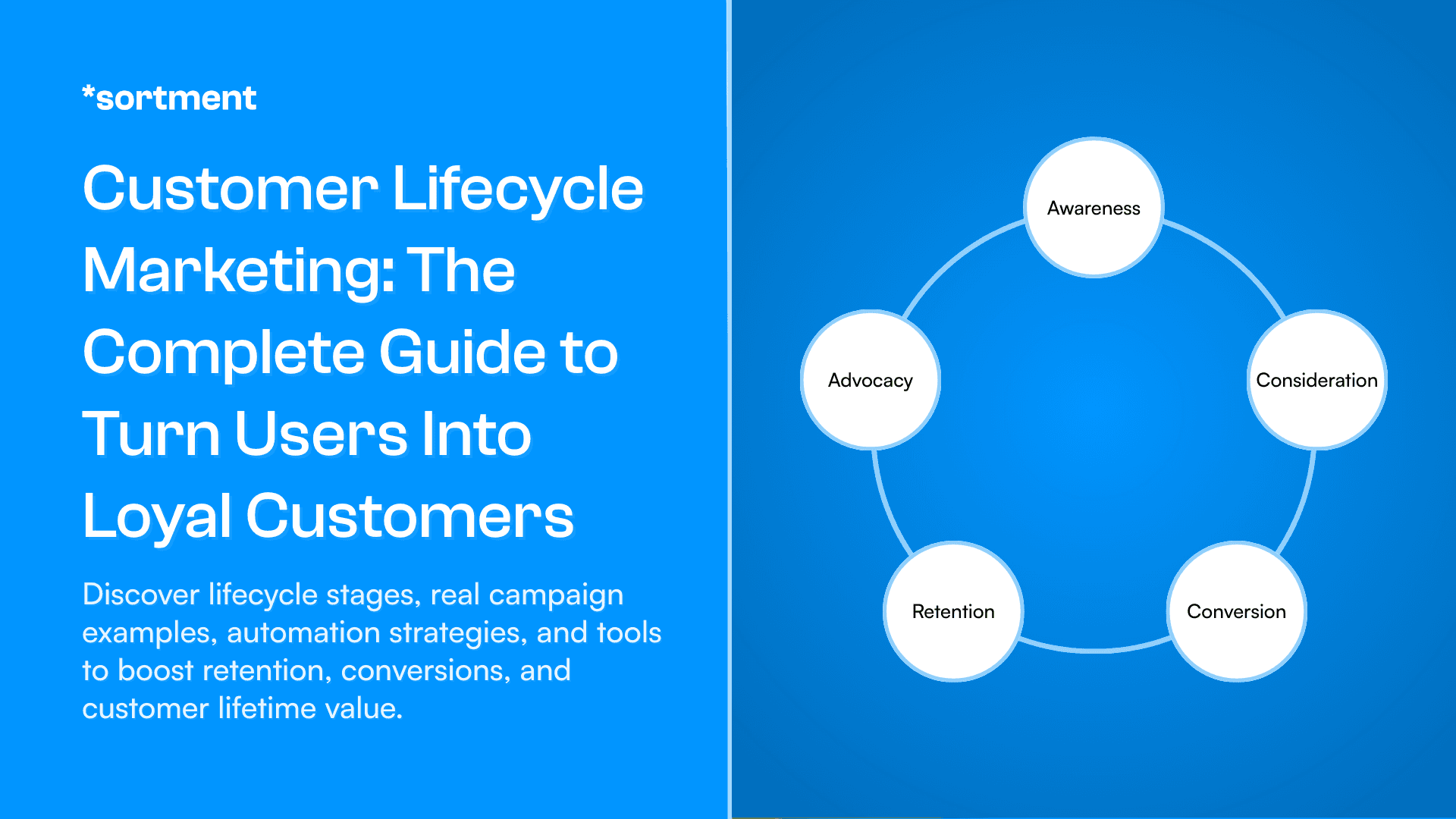
Wondering how some brands succeed in winning loyal customers even without financial rewards and discounts? The key is customer lifecycle marketing.
Most marketing focuses on acquiring customers.
But growth doesn’t come from acquisition alone. It comes from what happens after users discover your product. Many users visit a website once and disappear. Others sign up but never activate. As the best customer engagement platform for mobile apps, we’ve solved this for many of our clients.
Some buy once and never return. Customer lifecycle marketing solves this problem. It guides users through every stage of their journey - from first discovery to loyal advocacy - using personalized, data-driven engagement.
Companies that invest in lifecycle marketing see massive results.
Lifecycle automation can increase conversions by over 40% while reducing churn by 20–30%.
Instead of running disconnected campaigns, lifecycle marketing builds continuous relationships with customers.
What Is Customer Lifecycle Marketing?
Customer lifecycle marketing means engaging users at every stage of their journey with the right message at the right time.
Image - Lifecycle Marketing Impact Chart – Design a simple stat-based infographic highlighting results like 20–30% lower churn, 341% higher click rates, and 20% higher repeat purchases.
The goal is simple:
attract the right audience
convert them into customers
retain them longer
turn them into advocates
Traditional marketing focuses on single campaigns. Lifecycle marketing focuses on long-term engagement.
Every action a user takes triggers a response:
sign up → welcome email
stop using the product → re-engagement campaign
upgrade usage → upsell offer



Why Customer Lifecycle Marketing Drives Higher Revenue?
Lifecycle marketing improves performance because it reacts to real behavior instead of assumptions. When users receive relevant messages through multiple channel (omnichannel marketing), they respond better.
Research shows strong results:
Lifecycle segmentation reduces churn by 20–30%
Targeted campaigns increase click rates by over 300%
Personalized messaging improves retention significantly
These improvements compound over time.
A small retention improvement can dramatically increase customer lifetime value (CLV). That is why lifecycle marketing has become a core growth strategy for SaaS, ecommerce, and mobile apps.
The 5 Key Customer Lifecycle Stages
Every customer journey follows predictable stages. Understanding these stages helps marketers deliver the right message at the right time.
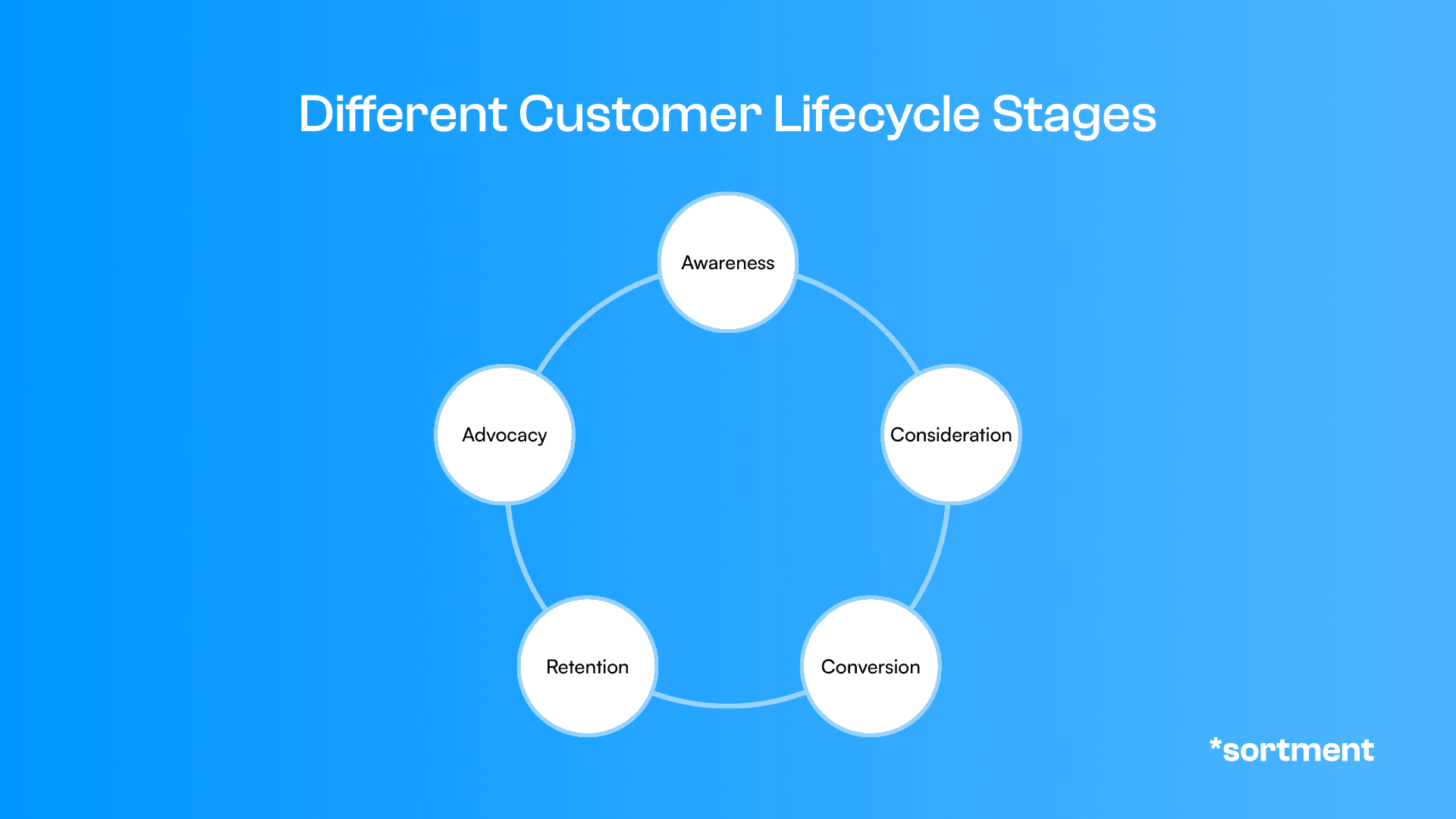
Figure: Different stages of the customer lifecycle
Awareness Stage
The awareness stage introduces potential customers to your brand. Users discover your company through channels like:
search engines
social media
paid advertising
content marketing
At this stage, customers are learning about the problem and possible solutions. Educational content works best here.
Examples include:
blog guides
product explainers
industry insights
The goal is simple: build interest and trust.
Consideration Stage
Users now evaluate whether your product solves their problem. They compare options and research alternatives. Marketing efforts should focus on building confidence.
Effective tactics include:
product demos
comparison guides
case studies
webinars
Clear messaging helps prospects understand why your solution is the best choice.
Conversion Stage
The conversion stage turns prospects into paying customers. Users often hesitate here because of uncertainty. Marketing must remove friction and answer final objections.
Popular conversion tactics include:
free trials
limited-time offers
onboarding assistance
clear pricing pages
These strategies push users toward their first purchase.
Retention Stage
Retention begins after the first conversion. This stage focuses on keeping customers active and satisfied. Strong retention programs include:
onboarding sequences
product education campaigns
feature announcements
loyalty rewards
Many companies track Day-30 engagement to predict long-term retention. Usage reminders and milestone nudges can reduce early churn by up to 50%.
Advocacy Stage
Satisfied customers become brand advocates. They recommend products, write reviews, and refer others. Advocacy programs amplify growth through word-of-mouth. Common strategies include:
referral programs
community building
loyalty rewards
user-generated content campaigns
Advocates become a powerful and low-cost acquisition channel.
Setup omni-channel journeys with Sortment
Watch how omni-channel journeys can improve customer engagement and improve business outcomes.
Setup omni-channel journeys with Sortment
Watch how omni-channel journeys can improve customer engagement and improve business outcomes.
Setup omni-channel journeys with Sortment
Watch how journeys can improve customer engagement and improve business outcomes.
The Customer Lifecycle Marketing Framework
A simple framework helps marketers manage the entire lifecycle.
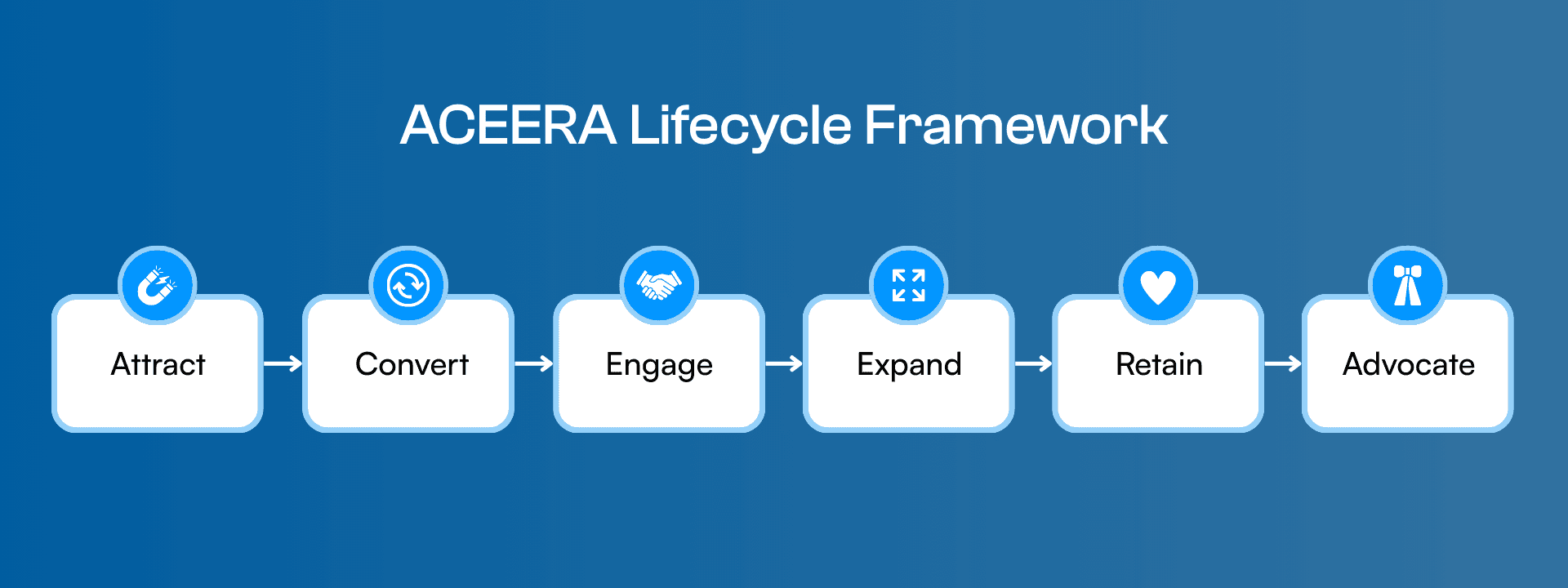
Figure: The ACEERA framework for lifecycle marketing
One effective model is the ACEERA lifecycle framework:
Attract → Convert → Engage → Expand → Retain → Advocate
Here’s how it works:
Attract
Bring new audiences through content, SEO, and advertising.
Convert
Turn interested visitors into customers.
Engage
Help customers discover product value quickly.
Expand
Upsell premium features or plans.
Retain
Prevent churn through ongoing engagement.
Advocate
Turn loyal users into promoters.
This framework ensures lifecycle marketing supports both acquisition and retention growth.
What one marketer built in a year
BryteBridge scaled a new brand from 2 states to 20 with one lifecycle marketer, no data engineering team, and Sortment.
10x
Revenue, year-over-year
2,000+
Campaigns shipped in 12 months
1
Marketer. No engineers.
What one marketer built in a year
BryteBridge scaled a new brand from 2 states to 20 with one lifecycle marketer, no data engineering team, and Sortment.
10x
Revenue, year-over-year
2,000+
Campaigns shipped in 12 months
1
Marketer. No engineers.
What one marketer built in a year
BryteBridge scaled a new brand from 2 states to 20 with one lifecycle marketer, no data engineering team, and Sortment.
10x
Revenue, year-over-year
2,000+
Campaigns shipped in 12 months
1
Marketer. No engineers.
Lifecycle Marketing Campaign Playbooks
Effective lifecycle marketing relies on automated campaign sequences.
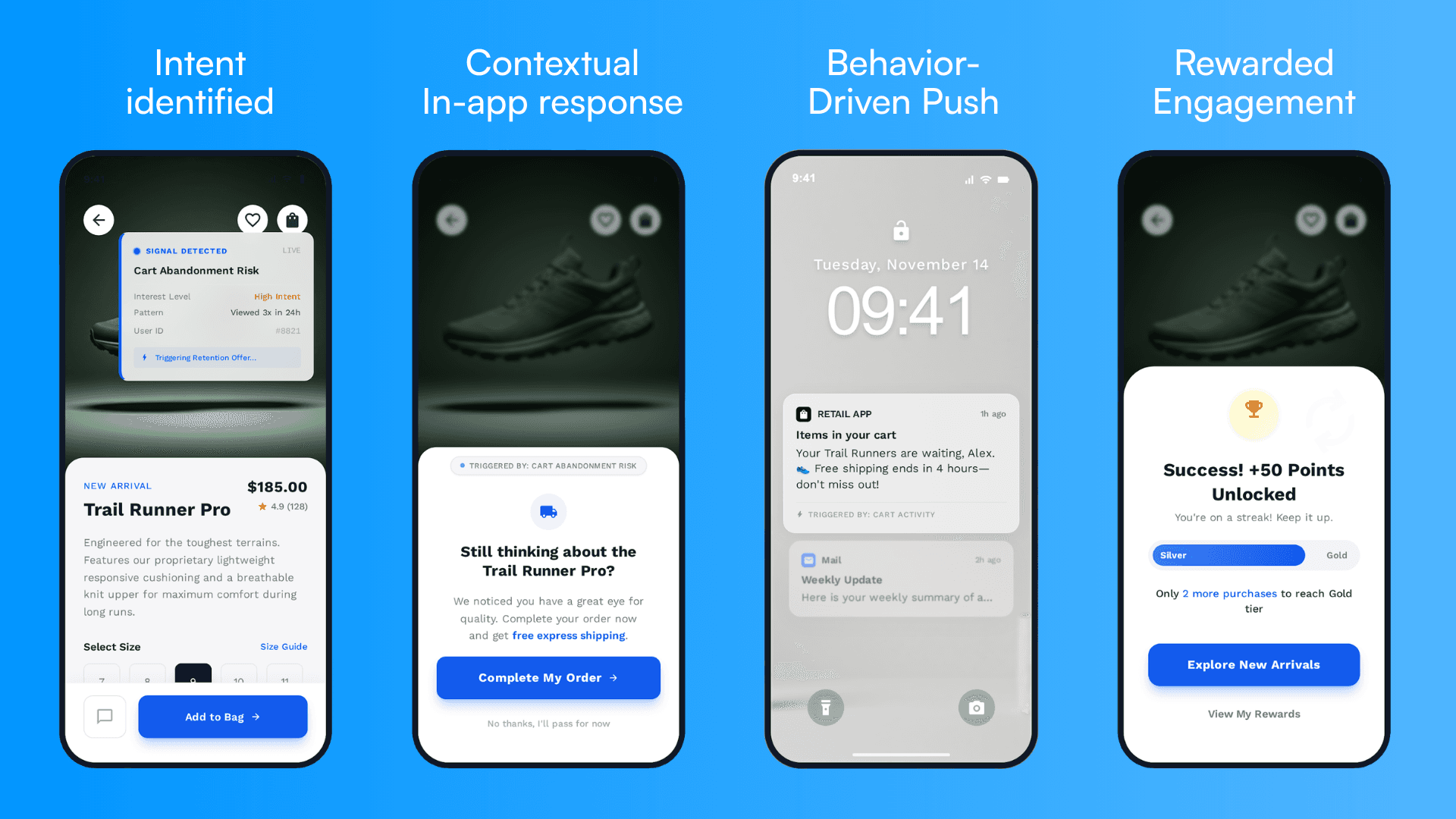
Figure: Effective lifecycle marketing with event-based messaging
Here are three common playbooks.
Onboarding Campaign
Day 0 – Welcome email
Day 1 – Product walkthrough
Day 3 – Feature highlight
Day 7 – Success milestone message
Day 14 – Upgrade prompt
The goal is to help users reach their first success moment quickly.
Abandoned Trial Campaign
User signs up but stops using the product.
Trigger sequence:
inactivity reminder email
feature education message
upgrade incentive
This flow re-engages users before they churn.
Reactivation Campaign
Inactive users often return with the right incentive. A typical win-back campaign may include:
product update announcement
personalized recommendation
limited-time offer
These campaigns pull dormant users back into the lifecycle.
Which Customer Lifecycle Marketing Metrics Should I Track?
Lifecycle marketing success depends on measurable outcomes.
Important metrics include:
Customer Lifetime Value (CLV)
Measures long-term revenue from each customer.Churn Rate
Shows how many customers stop using the product.Activation Rate
Tracks how many users reach the first success milestone.Retention Rate
Measures how many customers stay active over time.Product Qualified Leads (PQLs)
Identifies users most likely to upgrade based on product usage.
Tracking these metrics helps marketers optimize lifecycle programs continuously.
Find lifecycle growth opportunities with Sortment
See how Strategy AI monitors your customer data, surfaces growth opportunities, and recommends campaigns tied to activation, retention, or monetization.
Find lifecycle growth opportunities with Sortment
See how Strategy AI monitors your customer data, surfaces growth opportunities, and recommends campaigns tied to activation, retention, or monetization.
Find lifecycle growth opportunities with Sortment
See how Strategy AI monitors your customer data, surfaces growth opportunities, and recommends campaigns tied to activation, retention, or monetization.
What are Customer Lifecycle Marketing Tools?
Lifecycle marketing requires the right technology stack.
Many companies use customer engagement platforms (CEPs) to automate lifecycle campaigns. These platforms connect customer data with messaging channels.
Popular capabilities include:
behavior tracking
audience segmentation
automated messaging
multi-channel orchestration
Enterprise platforms like Braze help large organizations run complex lifecycle programs across millions of users. Emerging AI-driven platforms such as Sortment help growth teams launch lifecycle campaigns quickly using automation. (Check Sortment vs. Braze which is a better CEP for your brand?)
Choosing the right tool depends on your company’s scale and resources.
How to Build a Customer Lifecycle Marketing Strategy?
A strong lifecycle strategy follows a clear process.
Step 1: Map the customer journey
Identify every stage users experience from discovery to retention.
Step 2: Identify behavioral triggers
Track actions such as sign-ups, purchases, inactivity, and upgrades.
Step 3: Design lifecycle campaigns
Create targeted messaging flows for each lifecycle stage.
Step 4: Automate engagement
Use lifecycle platforms to trigger campaigns automatically.
Step 5: Measure performance
Monitor retention, activation, and revenue metrics.
Continuous optimization ensures lifecycle marketing remains a long-term growth engine.
Mobile App Lifecycle Marketing Example
Mobile-first companies like Duolingo and Spotify focus heavily on engagement and retention.
Their lifecycle campaigns often include:
Onboarding push notifications
Daily usage reminders
Progress milestones or streak rewards
Reactivation campaigns for inactive users
For example, Duolingo sends reminders to continue learning and celebrates streak milestones, motivating users to return to the app regularly.
These lifecycle strategies help reduce early churn and improve long-term retention.
Final Thoughts On Customer Lifecycle Marketing
Customer lifecycle marketing shifts the focus from short-term campaigns to long-term relationships. Instead of chasing one-time conversions, companies nurture customers throughout their entire journey.
The result is powerful:
higher retention
stronger engagement
greater lifetime value
Businesses that master lifecycle marketing create sustainable growth engines powered by loyal customers.
See what Sortment can do in 30 days
Pick one lifecycle goal, like activation, retention, or monetization and see how Sortment can achieves your business goals.
See what Sortment can do in 30 days
Pick one lifecycle goal, like activation, retention, or monetization and see how Sortment can achieves your business goals.
See what Sortment can do in 30 days
Pick one lifecycle goal, like activation, retention, or monetization and see how Sortment can achieves your business goals.
Frequently Asked Questions [FAQs] On Customer Lifecycle Marketing
What is customer lifecycle marketing?
Customer lifecycle marketing is a strategy that engages customers throughout their entire journey with a brand. It uses personalized messaging and automation to guide users through stages like awareness, consideration, conversion, retention, and advocacy.
The goal is to improve customer experience while increasing conversions, retention, and lifetime value.
What are the stages of customer lifecycle marketing?
Customer lifecycle marketing typically includes five stages:
Awareness – when potential customers first discover your brand
Consideration – when users evaluate your product or service
Conversion – when prospects become paying customers
Retention – when businesses keep customers engaged and active
Advocacy – when satisfied customers promote the brand through referrals and reviews
Each stage requires different marketing strategies and messaging.
Why is customer lifecycle marketing important?
Customer lifecycle marketing helps businesses build long-term relationships with customers instead of focusing only on acquisition.
Companies that invest in lifecycle marketing often see:
higher retention rates
improved customer lifetime value
lower churn
stronger engagement
Targeted lifecycle campaigns can also significantly increase conversions compared to generic marketing campaigns.
What are examples of customer lifecycle marketing campaigns?
Common lifecycle marketing campaigns include:
onboarding email sequences for new users
abandoned cart reminders in ecommerce
product adoption campaigns for SaaS tools
re-engagement campaigns for inactive users
referral programs that encourage customer advocacy
These campaigns use automation and behavioral triggers to send the right message at the right time.
What tools are used for customer lifecycle marketing?
Businesses use several tools to manage lifecycle marketing, including:
customer engagement platforms (CEPs)
marketing automation software
product analytics platforms
customer data platforms (CDPs)
These tools help marketers track user behavior, segment audiences, and automate lifecycle messaging across channels like email, SMS, push notifications, and in-app messages.
See also
Lifecycle Marketing Strategy: How to Turn Customer Journeys Into Growth?
Lifecycle Marketing Strategy: How to Turn Customer Journeys Into Growth?
Lifecycle Marketing Strategy: How to Turn Customer Journeys Into Growth?
Learn how to build a lifecycle marketing strategy that drives activation, retention, and revenue. Explore lifecycle stages, automation, examples, and best practices for modern marketing teams.
Learn how to build a lifecycle marketing strategy that drives activation, retention, and revenue. Explore lifecycle stages, automation, examples, and best practices for modern marketing teams.
See what Sortment can do for your goals.
See what Sortment can do for your goals.
Book a 30-minute call. We'll show you how the pilot works with your data and your stack.
Book a 30-minute call. We'll show you how the pilot works with your data and your stack.
AGENTS
CASE STUDIES
RESOURCES
AGENTS
CASE STUDIES
RESOURCES
Wondering how some brands succeed in winning loyal customers even without financial rewards and discounts? The key is customer lifecycle marketing.
Most marketing focuses on acquiring customers.
But growth doesn’t come from acquisition alone. It comes from what happens after users discover your product. Many users visit a website once and disappear. Others sign up but never activate. As the best customer engagement platform for mobile apps, we’ve solved this for many of our clients.
Some buy once and never return. Customer lifecycle marketing solves this problem. It guides users through every stage of their journey - from first discovery to loyal advocacy - using personalized, data-driven engagement.
Companies that invest in lifecycle marketing see massive results.
Lifecycle automation can increase conversions by over 40% while reducing churn by 20–30%.
Instead of running disconnected campaigns, lifecycle marketing builds continuous relationships with customers.
What Is Customer Lifecycle Marketing?
Customer lifecycle marketing means engaging users at every stage of their journey with the right message at the right time.
Image - Lifecycle Marketing Impact Chart – Design a simple stat-based infographic highlighting results like 20–30% lower churn, 341% higher click rates, and 20% higher repeat purchases.
The goal is simple:
attract the right audience
convert them into customers
retain them longer
turn them into advocates
Traditional marketing focuses on single campaigns. Lifecycle marketing focuses on long-term engagement.
Every action a user takes triggers a response:
sign up → welcome email
stop using the product → re-engagement campaign
upgrade usage → upsell offer
Why Customer Lifecycle Marketing Drives Higher Revenue?
Lifecycle marketing improves performance because it reacts to real behavior instead of assumptions. When users receive relevant messages through multiple channel (omnichannel marketing), they respond better.
Research shows strong results:
Lifecycle segmentation reduces churn by 20–30%
Targeted campaigns increase click rates by over 300%
Personalized messaging improves retention significantly
These improvements compound over time.
A small retention improvement can dramatically increase customer lifetime value (CLV). That is why lifecycle marketing has become a core growth strategy for SaaS, ecommerce, and mobile apps.
The 5 Key Customer Lifecycle Stages
Every customer journey follows predictable stages. Understanding these stages helps marketers deliver the right message at the right time.
Figure: Different stages of the customer lifecycle
Awareness Stage
The awareness stage introduces potential customers to your brand. Users discover your company through channels like:
search engines
social media
paid advertising
content marketing
At this stage, customers are learning about the problem and possible solutions. Educational content works best here.
Examples include:
blog guides
product explainers
industry insights
The goal is simple: build interest and trust.
Consideration Stage
Users now evaluate whether your product solves their problem. They compare options and research alternatives. Marketing efforts should focus on building confidence.
Effective tactics include:
product demos
comparison guides
case studies
webinars
Clear messaging helps prospects understand why your solution is the best choice.
Conversion Stage
The conversion stage turns prospects into paying customers. Users often hesitate here because of uncertainty. Marketing must remove friction and answer final objections.
Popular conversion tactics include:
free trials
limited-time offers
onboarding assistance
clear pricing pages
These strategies push users toward their first purchase.
Retention Stage
Retention begins after the first conversion. This stage focuses on keeping customers active and satisfied. Strong retention programs include:
onboarding sequences
product education campaigns
feature announcements
loyalty rewards
Many companies track Day-30 engagement to predict long-term retention. Usage reminders and milestone nudges can reduce early churn by up to 50%.
Advocacy Stage
Satisfied customers become brand advocates. They recommend products, write reviews, and refer others. Advocacy programs amplify growth through word-of-mouth. Common strategies include:
referral programs
community building
loyalty rewards
user-generated content campaigns
Advocates become a powerful and low-cost acquisition channel.
Setup omni-channel journeys with Sortment
Watch how omni-channel journeys can improve customer engagement and improve business outcomes.
Setup omni-channel journeys with Sortment
Watch how omni-channel journeys can improve customer engagement and improve business outcomes.
Setup omni-channel journeys with Sortment
Watch how journeys can improve customer engagement and improve business outcomes.
The Customer Lifecycle Marketing Framework
A simple framework helps marketers manage the entire lifecycle.
Figure: The ACEERA framework for lifecycle marketing
One effective model is the ACEERA lifecycle framework:
Attract → Convert → Engage → Expand → Retain → Advocate
Here’s how it works:
Attract
Bring new audiences through content, SEO, and advertising.
Convert
Turn interested visitors into customers.
Engage
Help customers discover product value quickly.
Expand
Upsell premium features or plans.
Retain
Prevent churn through ongoing engagement.
Advocate
Turn loyal users into promoters.
This framework ensures lifecycle marketing supports both acquisition and retention growth.
What one marketer built in a year
BryteBridge scaled a new brand from 2 states to 20 with one lifecycle marketer, no data engineering team, and Sortment.
10x
Revenue, year-over-year
2,000+
Campaigns shipped in 12 months
1
Marketer. No engineers.
What one marketer built in a year
BryteBridge scaled a new brand from 2 states to 20 with one lifecycle marketer, no data engineering team, and Sortment.
10x
Revenue, year-over-year
2,000+
Campaigns shipped in 12 months
1
Marketer. No engineers.
What one marketer built in a year
BryteBridge scaled a new brand from 2 states to 20 with one lifecycle marketer, no data engineering team, and Sortment.
10x
Revenue, year-over-year
2,000+
Campaigns shipped in 12 months
1
Marketer. No engineers.
Lifecycle Marketing Campaign Playbooks
Effective lifecycle marketing relies on automated campaign sequences.
Figure: Effective lifecycle marketing with event-based messaging
Here are three common playbooks.
Onboarding Campaign
Day 0 – Welcome email
Day 1 – Product walkthrough
Day 3 – Feature highlight
Day 7 – Success milestone message
Day 14 – Upgrade prompt
The goal is to help users reach their first success moment quickly.
Abandoned Trial Campaign
User signs up but stops using the product.
Trigger sequence:
inactivity reminder email
feature education message
upgrade incentive
This flow re-engages users before they churn.
Reactivation Campaign
Inactive users often return with the right incentive. A typical win-back campaign may include:
product update announcement
personalized recommendation
limited-time offer
These campaigns pull dormant users back into the lifecycle.
Which Customer Lifecycle Marketing Metrics Should I Track?
Lifecycle marketing success depends on measurable outcomes.
Important metrics include:
Customer Lifetime Value (CLV)
Measures long-term revenue from each customer.Churn Rate
Shows how many customers stop using the product.Activation Rate
Tracks how many users reach the first success milestone.Retention Rate
Measures how many customers stay active over time.Product Qualified Leads (PQLs)
Identifies users most likely to upgrade based on product usage.
Tracking these metrics helps marketers optimize lifecycle programs continuously.
Find lifecycle growth opportunities with Sortment
See how Strategy AI monitors your customer data, surfaces growth opportunities, and recommends campaigns tied to activation, retention, or monetization.
Find lifecycle growth opportunities with Sortment
See how Strategy AI monitors your customer data, surfaces growth opportunities, and recommends campaigns tied to activation, retention, or monetization.
Find lifecycle growth opportunities with Sortment
See how Strategy AI monitors your customer data, surfaces growth opportunities, and recommends campaigns tied to activation, retention, or monetization.
What are Customer Lifecycle Marketing Tools?
Lifecycle marketing requires the right technology stack.
Many companies use customer engagement platforms (CEPs) to automate lifecycle campaigns. These platforms connect customer data with messaging channels.
Popular capabilities include:
behavior tracking
audience segmentation
automated messaging
multi-channel orchestration
Enterprise platforms like Braze help large organizations run complex lifecycle programs across millions of users. Emerging AI-driven platforms such as Sortment help growth teams launch lifecycle campaigns quickly using automation. (Check Sortment vs. Braze which is a better CEP for your brand?)
Choosing the right tool depends on your company’s scale and resources.
How to Build a Customer Lifecycle Marketing Strategy?
A strong lifecycle strategy follows a clear process.
Step 1: Map the customer journey
Identify every stage users experience from discovery to retention.
Step 2: Identify behavioral triggers
Track actions such as sign-ups, purchases, inactivity, and upgrades.
Step 3: Design lifecycle campaigns
Create targeted messaging flows for each lifecycle stage.
Step 4: Automate engagement
Use lifecycle platforms to trigger campaigns automatically.
Step 5: Measure performance
Monitor retention, activation, and revenue metrics.
Continuous optimization ensures lifecycle marketing remains a long-term growth engine.
Mobile App Lifecycle Marketing Example
Mobile-first companies like Duolingo and Spotify focus heavily on engagement and retention.
Their lifecycle campaigns often include:
Onboarding push notifications
Daily usage reminders
Progress milestones or streak rewards
Reactivation campaigns for inactive users
For example, Duolingo sends reminders to continue learning and celebrates streak milestones, motivating users to return to the app regularly.
These lifecycle strategies help reduce early churn and improve long-term retention.
Final Thoughts On Customer Lifecycle Marketing
Customer lifecycle marketing shifts the focus from short-term campaigns to long-term relationships. Instead of chasing one-time conversions, companies nurture customers throughout their entire journey.
The result is powerful:
higher retention
stronger engagement
greater lifetime value
Businesses that master lifecycle marketing create sustainable growth engines powered by loyal customers.
See what Sortment can do in 30 days
Pick one lifecycle goal, like activation, retention, or monetization and see how Sortment can achieves your business goals.
See what Sortment can do in 30 days
Pick one lifecycle goal, like activation, retention, or monetization and see how Sortment can achieves your business goals.
See what Sortment can do in 30 days
Pick one lifecycle goal, like activation, retention, or monetization and see how Sortment can achieves your business goals.
Frequently Asked Questions [FAQs] On Customer Lifecycle Marketing
What is customer lifecycle marketing?
Customer lifecycle marketing is a strategy that engages customers throughout their entire journey with a brand. It uses personalized messaging and automation to guide users through stages like awareness, consideration, conversion, retention, and advocacy.
The goal is to improve customer experience while increasing conversions, retention, and lifetime value.
What are the stages of customer lifecycle marketing?
Customer lifecycle marketing typically includes five stages:
Awareness – when potential customers first discover your brand
Consideration – when users evaluate your product or service
Conversion – when prospects become paying customers
Retention – when businesses keep customers engaged and active
Advocacy – when satisfied customers promote the brand through referrals and reviews
Each stage requires different marketing strategies and messaging.
Why is customer lifecycle marketing important?
Customer lifecycle marketing helps businesses build long-term relationships with customers instead of focusing only on acquisition.
Companies that invest in lifecycle marketing often see:
higher retention rates
improved customer lifetime value
lower churn
stronger engagement
Targeted lifecycle campaigns can also significantly increase conversions compared to generic marketing campaigns.
What are examples of customer lifecycle marketing campaigns?
Common lifecycle marketing campaigns include:
onboarding email sequences for new users
abandoned cart reminders in ecommerce
product adoption campaigns for SaaS tools
re-engagement campaigns for inactive users
referral programs that encourage customer advocacy
These campaigns use automation and behavioral triggers to send the right message at the right time.
What tools are used for customer lifecycle marketing?
Businesses use several tools to manage lifecycle marketing, including:
customer engagement platforms (CEPs)
marketing automation software
product analytics platforms
customer data platforms (CDPs)
These tools help marketers track user behavior, segment audiences, and automate lifecycle messaging across channels like email, SMS, push notifications, and in-app messages.