Lifecycle Email Marketing: The Complete Guide to Converting Users at Every Stage
Learn how lifecycle email marketing drives retention with automated, behavior-triggered campaigns. See real examples, best practices, and tools for 2026.
Abhimanyu
·
New York
·
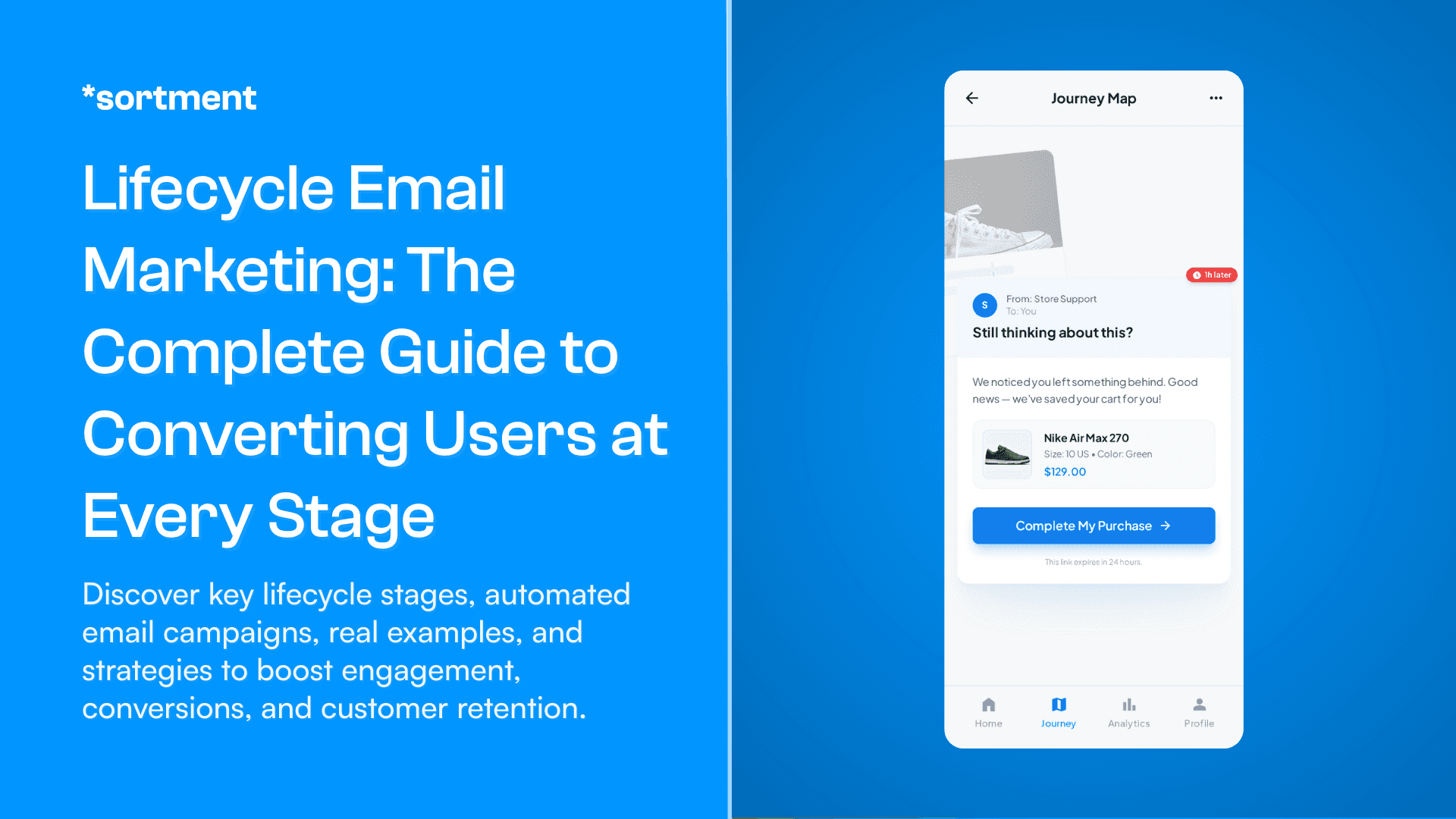
Lifecycle email marketing is one of the most effective ways to turn leads into customers and customers into loyal advocates. Instead of sending the same message to every subscriber, lifecycle email marketing delivers automated, behavior-triggered emails tailored to where a user is in their journey.
These emails are designed to appear at the exact moment a customer needs them - when they sign up, browse a product, abandon a cart, make a purchase, or stop engaging. Because they are timely and personalized, lifecycle emails consistently outperform traditional campaigns in engagement and revenue.
Studies show that automated email sequences can generate significantly more revenue than one-off campaigns, while segmented email flows often produce much higher open and click rates. Businesses that implement lifecycle email marketing correctly create stronger customer relationships, improve retention, and increase lifetime value.
In this guide, you’ll learn how lifecycle email marketing works, the key stages involved, and how to build a lifecycle strategy that converts users at every step.
What Is Lifecycle Email Marketing?
Lifecycle email marketing is a strategy that sends automated emails triggered by customer behavior or lifecycle stage. Instead of broadcasting generic messages, brands send targeted emails based on actions such as:
Signing up for a newsletter
Browsing products
Adding items to a cart
Making a purchase
Becoming inactive
The goal is to guide users through the entire customer journey - from awareness to retention - using personalized communication.
For example:
A new subscriber receives a welcome email
A prospect exploring products receives educational content
A shopper who abandons a cart receives a reminder email
A new customer receives onboarding tips
An inactive user receives a re-engagement campaign
Each message is designed to move the customer toward the next stage of the lifecycle.
Lifecycle Stage | Goal | Example Emails |
Awareness | Introduce brand and value | Welcome email, lead magnet delivery |
Consideration | Educate and build trust | Nurture emails, case studies |
Conversion | Encourage purchase | Cart abandonment, trial reminders |
Onboarding | Help users succeed | Setup guides, product tutorials |
Retention | Increase repeat engagement | Product tips, loyalty offers |
Win-Back | Reactivate inactive users | Re-engagement campaigns, special offers |
Why Lifecycle Email Marketing Matters?
Traditional email campaigns often send the same message to thousands of subscribers at once. While these emails can work, they rarely match the relevance of lifecycle emails.
Lifecycle email marketing improves results because it focuses on timing, personalization, and behavior. It gets even better when done as omnichannel orchestration.
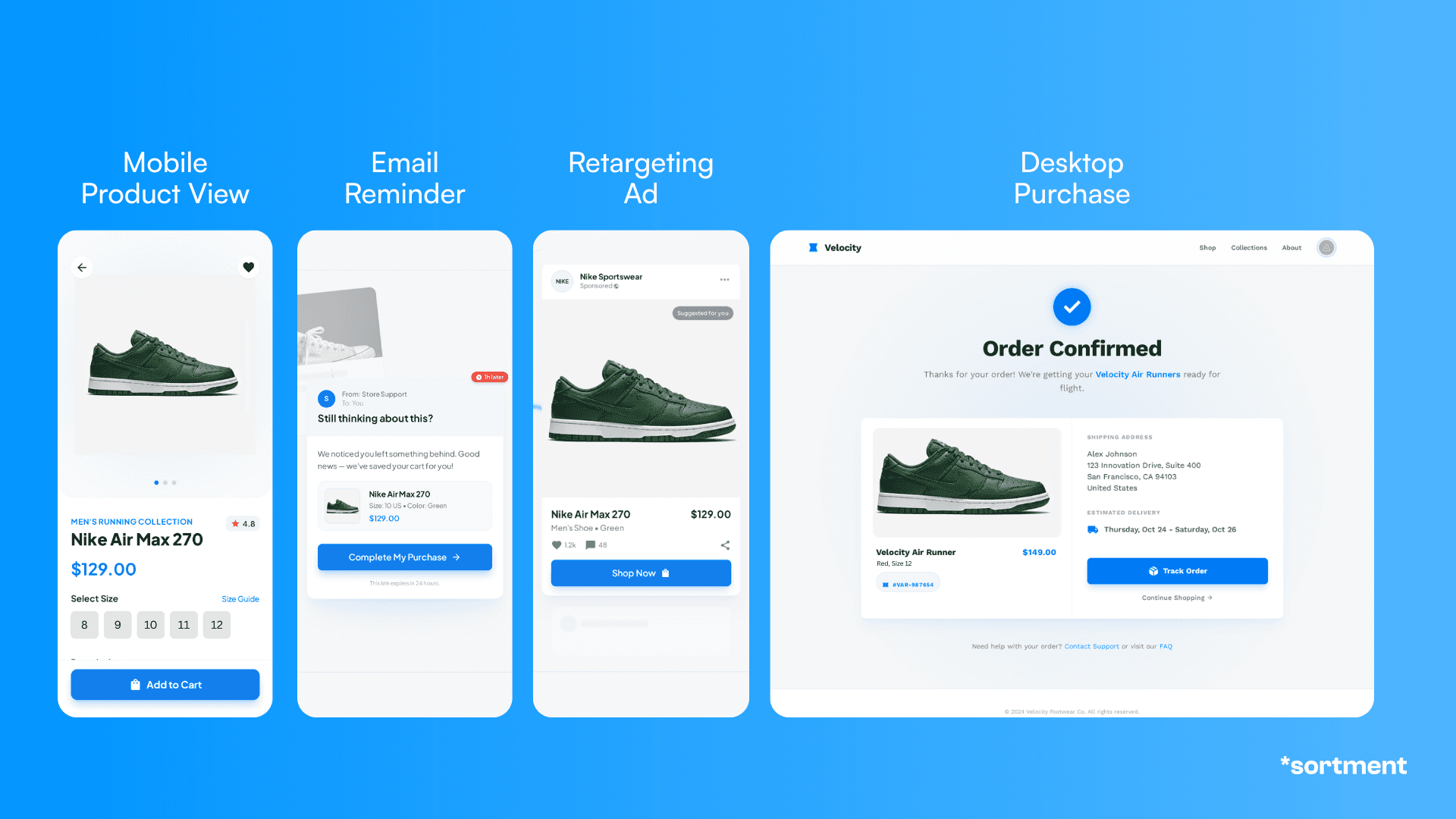
Figure: Omnichannel orchestration helps you engage with customers better
Key benefits include:
Higher Engagement
Emails triggered by user actions tend to receive significantly higher open and click rates because they are highly relevant.
Increased Revenue
Automated email flows such as abandoned cart reminders, onboarding sequences, and upsell campaigns often generate a large portion of total email revenue.
Better Customer Retention
Lifecycle emails help businesses stay connected with customers throughout their journey, encouraging repeat purchases and long-term relationships.
Improved Personalization
Using behavioral data allows brands to deliver highly personalized content at scale without manually sending emails.
What are the Core Stages of Lifecycle Email Marketing?
Lifecycle email marketing mirrors the stages of the customer journey. Each stage has different goals and requires different types of emails.
1. Awareness Stage
At the awareness stage, users are just discovering your brand. They may have subscribed to your newsletter, downloaded a resource, or created an account.
The goal here is to introduce your brand and demonstrate value.
Common emails at this stage include:
Welcome emails
Lead magnet delivery emails
Educational content emails
Brand introduction messages
A strong welcome email sets expectations and encourages the subscriber to explore your products or services.
Example message:
“Welcome! Here’s how you can start getting the most value from our platform.”
2. Consideration Stage
During the consideration stage, users are evaluating whether your product or service fits their needs. They may browse your website, compare solutions, or read case studies.
The goal is to build trust and help prospects make informed decisions.
Effective emails include:
Educational nurture sequences
Product comparison emails
Case studies and testimonials
Webinar invitations or demos
These emails should focus on solving customer problems rather than pushing sales.
Example message:
“See how companies like yours increased retention by 30% using our platform.”
3. Conversion Stage
The conversion stage occurs when prospects are close to making a purchase but may still need encouragement.
Emails at this stage often address objections, create urgency, or remind users of unfinished actions.
Common conversion emails include:
Cart abandonment emails
Free trial expiration reminders
Limited-time promotions
Pricing and feature explanations
Cart abandonment emails are especially powerful because they target users who already showed purchase intent.
Example message:
“Still thinking about it? Your cart is waiting.”
4. Onboarding and Retention Stage
Once someone becomes a customer, the goal shifts to helping them succeed with your product or service. Successful onboarding improves customer satisfaction and reduces churn.
Key onboarding and retention emails include:
Product setup guides
Feature tutorials
Usage tips and best practices
Milestone celebrations
These emails help customers get value quickly, which increases the likelihood that they continue using the product.
Example message:
“Complete your setup in three quick steps.”
5. Win-Back and Advocacy Stage
Even loyal customers can become inactive over time. Lifecycle email marketing includes strategies to re-engage those users and encourage loyalty.
Common win-back emails include:
Re-engagement campaigns
Special offers for inactive users
Loyalty rewards
Referral invitations
A simple “We miss you” email with an incentive can often bring customers back.
Example message:
“It’s been a while. Here’s 15% off your next purchase.”
What are the Types of Lifecycle Emails Every Business Should Use?
While lifecycle strategies vary across industries, several email types appear in nearly every successful program.
Welcome Emails
Sent immediately after a user signs up. These emails introduce your brand and set expectations.
Nurture Emails
Educational emails designed to build trust and help prospects learn about your solution.
Cart Abandonment Emails
Remind users about products left in their shopping cart.
Onboarding Emails
Help new customers understand how to use your product effectively.
Upsell and Cross-Sell Emails
Recommend complementary products or upgrades.
Re-Engagement Emails
Encourage inactive subscribers to return and interact again.
How to Build a Lifecycle Email Marketing Strategy?
Creating a successful lifecycle email strategy requires thoughtful planning and the right automation tools used by your lifecycle marketing platform.
Step 1: Map the Customer Journey
Start by identifying the key stages customers go through before and after purchasing.
Typical stages include:
Awareness
Consideration
Conversion
Onboarding
Retention
Advocacy
Mapping the journey helps you understand when each email should be sent.
Step 2: Collect and Organize Customer Data
Lifecycle emails rely on data to trigger messages and personalize content.
Important data types include:
Behavioral data (clicks, browsing activity)
Demographic data (location, job role)
Transactional data (purchase history)
The more accurate your data, the more relevant your emails can be.
Step 3: Create Smart Segments
Segmentation ensures that each subscriber receives messages relevant to their interests and behavior.
Examples of useful segments:
New subscribers
Active customers
High-value customers
Inactive users
Dynamic segments automatically update based on user behavior.
Step 4: Set Up Automated Triggers
Automation allows emails to be sent at exactly the right moment.
Common triggers include:
Account sign-up
Product purchase
Cart abandonment
Trial expiration
User inactivity
Triggers transform your email marketing from manual campaigns into an always-on system.
Step 5: Personalize Email Content
Personalization goes beyond using a subscriber’s name. Effective personalization can include:
Product recommendations based on browsing history
Content tailored to user interests
Dynamic sections that change depending on behavior
The more relevant the content, the more likely users are to engage.
Step 6: Automate and Test Campaigns
Automation tools allow marketers to build workflows that send emails automatically based on triggers.
However, optimization is essential.
Testing can include:
Subject lines
Call-to-action buttons
Email design
Send times
Regular A/B testing ensures that your campaigns continue improving over time.
Step 7: Measure and Optimize Performance
Tracking the right metrics helps determine whether your lifecycle strategy is working.
Important metrics include:
Open rate
Click-through rate
Conversion rate
Revenue generated from email flows
Customer lifetime value
Reviewing performance data regularly helps identify opportunities to improve your campaigns.
What are the Best Practices for Lifecycle Email Marketing?
Implementing lifecycle email marketing successfully requires more than automation. Following these best practices can significantly improve results.
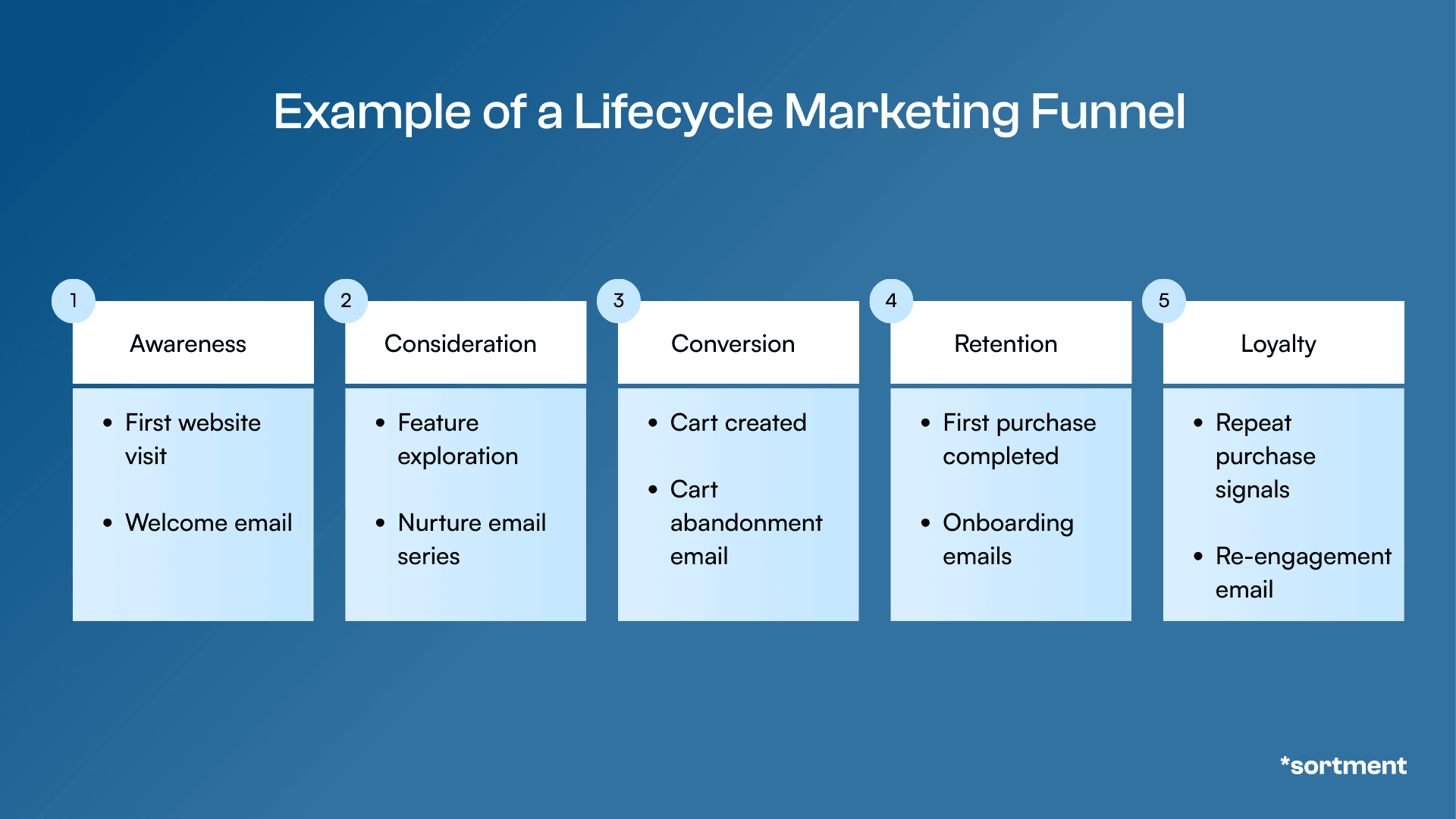
Figure: Best practices for lifecycle email marketing
Prioritize Behavioral Triggers
Emails triggered by user behavior are more effective than generic batch campaigns.
Maintain Consistent Messaging
Your messaging should feel consistent across email, push notifications, SMS, and other channels.
Focus on Customer Value
Instead of pushing sales immediately, focus on solving customer problems and delivering helpful content.
Continuously Improve Workflows
Customer behavior changes over time. Review your lifecycle campaigns regularly and update them as needed.
Which Key Lifecycle Email Marketing Metrics Should I Track?
To understand the success of your lifecycle strategy, track performance metrics carefully.
Important metrics include:
Open Rate
Measures how many recipients opened your email.
Click-Through Rate (CTR)
Shows how many readers clicked a link within the email.
Conversion Rate
Measures how many users completed the desired action.
Customer Lifetime Value (CLV)
Indicates the total revenue generated by a customer over time.
Revenue Per Email Flow
Helps identify which automated sequences drive the most sales.
What Tools do We Need for Running Lifecycle Email Campaigns?
Several marketing platforms support lifecycle email automation.
Common features include:
Workflow builders
Behavioral triggers
Customer segmentation
Analytics dashboards
Popular platforms often used by marketing teams include automation tools designed for segmentation, personalization, and campaign analytics.
Choosing the right platform depends on your business size, data needs, and integration requirements.
What are the Common Lifecycle Email Marketing Mistakes to Avoid?
Even well-designed email programs can fail if common mistakes are not addressed.
Sending Generic Emails
Without segmentation, emails feel irrelevant and reduce engagement.
Ignoring the Customer Journey
Messages should match where customers are in their lifecycle.
Over-Automating Without Personalization
Automation should enhance personalization, not replace it.
Not Optimizing Campaigns
Email performance improves through testing and continuous refinement.
Final Takeaway on Lifecycle Email Marketing
Lifecycle emails drive 20% reorders, halve early churn via nudges. Lifecycle email marketing is one of the most powerful strategies for building meaningful relationships with customers. By sending behavior-triggered emails tailored to each stage of the customer journey, businesses can guide users from their first interaction to long-term loyalty.
Instead of relying on occasional campaigns, lifecycle email marketing creates an automated communication system that delivers the right message at the right time.
When implemented effectively, lifecycle email marketing can:
Increase engagement
Drive higher conversions
Improve retention
Maximize customer lifetime value
Businesses that invest in lifecycle email strategies gain a significant advantage by delivering personalized experiences that keep customers engaged long after the first interaction.
Frequently Asked Questions [FAQs] On Lifecycle Email Marketing
What is lifecycle email marketing?
Lifecycle email marketing is a strategy that sends automated emails to customers based on where they are in the customer journey. These emails are triggered by specific actions such as signing up, browsing products, making a purchase, or becoming inactive. The goal is to send relevant messages at the right time to guide users from awareness to conversion and long-term loyalty.
Why is lifecycle email marketing important?
Lifecycle email marketing is important because it improves engagement, conversions, and customer retention. Instead of sending generic campaigns to everyone, businesses deliver personalized emails based on user behavior and interests. This targeted approach helps build stronger relationships with customers and increases customer lifetime value.
What are the main stages of lifecycle email marketing?
The main stages of lifecycle email marketing typically include awareness, consideration, conversion, onboarding, retention, and win-back. Each stage focuses on a different goal, such as introducing the brand, nurturing leads, encouraging purchases, helping new customers succeed, and re-engaging inactive users.
What types of emails are used in lifecycle marketing?
Common lifecycle emails include welcome emails, nurture campaigns, cart abandonment emails, onboarding emails, product recommendation emails, and re-engagement emails. These emails are usually automated and triggered by user behavior to deliver timely and relevant communication.
How can businesses implement lifecycle email marketing?
Businesses can implement lifecycle email marketing by mapping the customer journey, collecting user data, creating audience segments, and setting up automated triggers. Using email marketing platforms, companies can design workflows that send personalized messages based on customer actions and continuously optimize campaigns using performance data.
See also
18 Lifecycle Email Marketing Examples That Drive Retention and Revenue
18 Lifecycle Email Marketing Examples That Drive Retention and Revenue
18 Lifecycle Email Marketing Examples That Drive Retention and Revenue
18 real lifecycle email marketing examples covering welcome, onboarding, cart recovery, and win-back flows that drive retention and revenue in 2026.
18 real lifecycle email marketing examples covering welcome, onboarding, cart recovery, and win-back flows that drive retention and revenue in 2026.
See what Sortment can do for your goals.
See what Sortment can do for your goals.
Book a 30-minute call. We'll show you how the pilot works with your data and your stack.
Book a 30-minute call. We'll show you how the pilot works with your data and your stack.
AGENTS
CASE STUDIES
RESOURCES
AGENTS
CASE STUDIES
RESOURCES
Lifecycle email marketing is one of the most effective ways to turn leads into customers and customers into loyal advocates. Instead of sending the same message to every subscriber, lifecycle email marketing delivers automated, behavior-triggered emails tailored to where a user is in their journey.
These emails are designed to appear at the exact moment a customer needs them - when they sign up, browse a product, abandon a cart, make a purchase, or stop engaging. Because they are timely and personalized, lifecycle emails consistently outperform traditional campaigns in engagement and revenue.
Studies show that automated email sequences can generate significantly more revenue than one-off campaigns, while segmented email flows often produce much higher open and click rates. Businesses that implement lifecycle email marketing correctly create stronger customer relationships, improve retention, and increase lifetime value.
In this guide, you’ll learn how lifecycle email marketing works, the key stages involved, and how to build a lifecycle strategy that converts users at every step.
What Is Lifecycle Email Marketing?
Lifecycle email marketing is a strategy that sends automated emails triggered by customer behavior or lifecycle stage. Instead of broadcasting generic messages, brands send targeted emails based on actions such as:
Signing up for a newsletter
Browsing products
Adding items to a cart
Making a purchase
Becoming inactive
The goal is to guide users through the entire customer journey - from awareness to retention - using personalized communication.
For example:
A new subscriber receives a welcome email
A prospect exploring products receives educational content
A shopper who abandons a cart receives a reminder email
A new customer receives onboarding tips
An inactive user receives a re-engagement campaign
Each message is designed to move the customer toward the next stage of the lifecycle.
Lifecycle Stage | Goal | Example Emails |
Awareness | Introduce brand and value | Welcome email, lead magnet delivery |
Consideration | Educate and build trust | Nurture emails, case studies |
Conversion | Encourage purchase | Cart abandonment, trial reminders |
Onboarding | Help users succeed | Setup guides, product tutorials |
Retention | Increase repeat engagement | Product tips, loyalty offers |
Win-Back | Reactivate inactive users | Re-engagement campaigns, special offers |
Why Lifecycle Email Marketing Matters?
Traditional email campaigns often send the same message to thousands of subscribers at once. While these emails can work, they rarely match the relevance of lifecycle emails.
Lifecycle email marketing improves results because it focuses on timing, personalization, and behavior. It gets even better when done as omnichannel orchestration.
Figure: Omnichannel orchestration helps you engage with customers better
Key benefits include:
Higher Engagement
Emails triggered by user actions tend to receive significantly higher open and click rates because they are highly relevant.
Increased Revenue
Automated email flows such as abandoned cart reminders, onboarding sequences, and upsell campaigns often generate a large portion of total email revenue.
Better Customer Retention
Lifecycle emails help businesses stay connected with customers throughout their journey, encouraging repeat purchases and long-term relationships.
Improved Personalization
Using behavioral data allows brands to deliver highly personalized content at scale without manually sending emails.
What are the Core Stages of Lifecycle Email Marketing?
Lifecycle email marketing mirrors the stages of the customer journey. Each stage has different goals and requires different types of emails.
1. Awareness Stage
At the awareness stage, users are just discovering your brand. They may have subscribed to your newsletter, downloaded a resource, or created an account.
The goal here is to introduce your brand and demonstrate value.
Common emails at this stage include:
Welcome emails
Lead magnet delivery emails
Educational content emails
Brand introduction messages
A strong welcome email sets expectations and encourages the subscriber to explore your products or services.
Example message:
“Welcome! Here’s how you can start getting the most value from our platform.”
2. Consideration Stage
During the consideration stage, users are evaluating whether your product or service fits their needs. They may browse your website, compare solutions, or read case studies.
The goal is to build trust and help prospects make informed decisions.
Effective emails include:
Educational nurture sequences
Product comparison emails
Case studies and testimonials
Webinar invitations or demos
These emails should focus on solving customer problems rather than pushing sales.
Example message:
“See how companies like yours increased retention by 30% using our platform.”
3. Conversion Stage
The conversion stage occurs when prospects are close to making a purchase but may still need encouragement.
Emails at this stage often address objections, create urgency, or remind users of unfinished actions.
Common conversion emails include:
Cart abandonment emails
Free trial expiration reminders
Limited-time promotions
Pricing and feature explanations
Cart abandonment emails are especially powerful because they target users who already showed purchase intent.
Example message:
“Still thinking about it? Your cart is waiting.”
4. Onboarding and Retention Stage
Once someone becomes a customer, the goal shifts to helping them succeed with your product or service. Successful onboarding improves customer satisfaction and reduces churn.
Key onboarding and retention emails include:
Product setup guides
Feature tutorials
Usage tips and best practices
Milestone celebrations
These emails help customers get value quickly, which increases the likelihood that they continue using the product.
Example message:
“Complete your setup in three quick steps.”
5. Win-Back and Advocacy Stage
Even loyal customers can become inactive over time. Lifecycle email marketing includes strategies to re-engage those users and encourage loyalty.
Common win-back emails include:
Re-engagement campaigns
Special offers for inactive users
Loyalty rewards
Referral invitations
A simple “We miss you” email with an incentive can often bring customers back.
Example message:
“It’s been a while. Here’s 15% off your next purchase.”
What are the Types of Lifecycle Emails Every Business Should Use?
While lifecycle strategies vary across industries, several email types appear in nearly every successful program.
Welcome Emails
Sent immediately after a user signs up. These emails introduce your brand and set expectations.
Nurture Emails
Educational emails designed to build trust and help prospects learn about your solution.
Cart Abandonment Emails
Remind users about products left in their shopping cart.
Onboarding Emails
Help new customers understand how to use your product effectively.
Upsell and Cross-Sell Emails
Recommend complementary products or upgrades.
Re-Engagement Emails
Encourage inactive subscribers to return and interact again.
How to Build a Lifecycle Email Marketing Strategy?
Creating a successful lifecycle email strategy requires thoughtful planning and the right automation tools used by your lifecycle marketing platform.
Step 1: Map the Customer Journey
Start by identifying the key stages customers go through before and after purchasing.
Typical stages include:
Awareness
Consideration
Conversion
Onboarding
Retention
Advocacy
Mapping the journey helps you understand when each email should be sent.
Step 2: Collect and Organize Customer Data
Lifecycle emails rely on data to trigger messages and personalize content.
Important data types include:
Behavioral data (clicks, browsing activity)
Demographic data (location, job role)
Transactional data (purchase history)
The more accurate your data, the more relevant your emails can be.
Step 3: Create Smart Segments
Segmentation ensures that each subscriber receives messages relevant to their interests and behavior.
Examples of useful segments:
New subscribers
Active customers
High-value customers
Inactive users
Dynamic segments automatically update based on user behavior.
Step 4: Set Up Automated Triggers
Automation allows emails to be sent at exactly the right moment.
Common triggers include:
Account sign-up
Product purchase
Cart abandonment
Trial expiration
User inactivity
Triggers transform your email marketing from manual campaigns into an always-on system.
Step 5: Personalize Email Content
Personalization goes beyond using a subscriber’s name. Effective personalization can include:
Product recommendations based on browsing history
Content tailored to user interests
Dynamic sections that change depending on behavior
The more relevant the content, the more likely users are to engage.
Step 6: Automate and Test Campaigns
Automation tools allow marketers to build workflows that send emails automatically based on triggers.
However, optimization is essential.
Testing can include:
Subject lines
Call-to-action buttons
Email design
Send times
Regular A/B testing ensures that your campaigns continue improving over time.
Step 7: Measure and Optimize Performance
Tracking the right metrics helps determine whether your lifecycle strategy is working.
Important metrics include:
Open rate
Click-through rate
Conversion rate
Revenue generated from email flows
Customer lifetime value
Reviewing performance data regularly helps identify opportunities to improve your campaigns.
What are the Best Practices for Lifecycle Email Marketing?
Implementing lifecycle email marketing successfully requires more than automation. Following these best practices can significantly improve results.
Figure: Best practices for lifecycle email marketing
Prioritize Behavioral Triggers
Emails triggered by user behavior are more effective than generic batch campaigns.
Maintain Consistent Messaging
Your messaging should feel consistent across email, push notifications, SMS, and other channels.
Focus on Customer Value
Instead of pushing sales immediately, focus on solving customer problems and delivering helpful content.
Continuously Improve Workflows
Customer behavior changes over time. Review your lifecycle campaigns regularly and update them as needed.
Which Key Lifecycle Email Marketing Metrics Should I Track?
To understand the success of your lifecycle strategy, track performance metrics carefully.
Important metrics include:
Open Rate
Measures how many recipients opened your email.
Click-Through Rate (CTR)
Shows how many readers clicked a link within the email.
Conversion Rate
Measures how many users completed the desired action.
Customer Lifetime Value (CLV)
Indicates the total revenue generated by a customer over time.
Revenue Per Email Flow
Helps identify which automated sequences drive the most sales.
What Tools do We Need for Running Lifecycle Email Campaigns?
Several marketing platforms support lifecycle email automation.
Common features include:
Workflow builders
Behavioral triggers
Customer segmentation
Analytics dashboards
Popular platforms often used by marketing teams include automation tools designed for segmentation, personalization, and campaign analytics.
Choosing the right platform depends on your business size, data needs, and integration requirements.
What are the Common Lifecycle Email Marketing Mistakes to Avoid?
Even well-designed email programs can fail if common mistakes are not addressed.
Sending Generic Emails
Without segmentation, emails feel irrelevant and reduce engagement.
Ignoring the Customer Journey
Messages should match where customers are in their lifecycle.
Over-Automating Without Personalization
Automation should enhance personalization, not replace it.
Not Optimizing Campaigns
Email performance improves through testing and continuous refinement.
Final Takeaway on Lifecycle Email Marketing
Lifecycle emails drive 20% reorders, halve early churn via nudges. Lifecycle email marketing is one of the most powerful strategies for building meaningful relationships with customers. By sending behavior-triggered emails tailored to each stage of the customer journey, businesses can guide users from their first interaction to long-term loyalty.
Instead of relying on occasional campaigns, lifecycle email marketing creates an automated communication system that delivers the right message at the right time.
When implemented effectively, lifecycle email marketing can:
Increase engagement
Drive higher conversions
Improve retention
Maximize customer lifetime value
Businesses that invest in lifecycle email strategies gain a significant advantage by delivering personalized experiences that keep customers engaged long after the first interaction.
Frequently Asked Questions [FAQs] On Lifecycle Email Marketing
What is lifecycle email marketing?
Lifecycle email marketing is a strategy that sends automated emails to customers based on where they are in the customer journey. These emails are triggered by specific actions such as signing up, browsing products, making a purchase, or becoming inactive. The goal is to send relevant messages at the right time to guide users from awareness to conversion and long-term loyalty.
Why is lifecycle email marketing important?
Lifecycle email marketing is important because it improves engagement, conversions, and customer retention. Instead of sending generic campaigns to everyone, businesses deliver personalized emails based on user behavior and interests. This targeted approach helps build stronger relationships with customers and increases customer lifetime value.
What are the main stages of lifecycle email marketing?
The main stages of lifecycle email marketing typically include awareness, consideration, conversion, onboarding, retention, and win-back. Each stage focuses on a different goal, such as introducing the brand, nurturing leads, encouraging purchases, helping new customers succeed, and re-engaging inactive users.
What types of emails are used in lifecycle marketing?
Common lifecycle emails include welcome emails, nurture campaigns, cart abandonment emails, onboarding emails, product recommendation emails, and re-engagement emails. These emails are usually automated and triggered by user behavior to deliver timely and relevant communication.
How can businesses implement lifecycle email marketing?
Businesses can implement lifecycle email marketing by mapping the customer journey, collecting user data, creating audience segments, and setting up automated triggers. Using email marketing platforms, companies can design workflows that send personalized messages based on customer actions and continuously optimize campaigns using performance data.