Sortment vs Mixpanel: Which Platform is Better for Lifecycle Marketing?
Compare Sortment vs Mixpanel for lifecycle marketing. Discover differences in analytics, engagement, automation, and retention to choose the right customer engagement platform for your business.
Still thinking Sortment vs Mixpanel: which is a better customer engagement platform? Most teams face this exact confusion.
Some platforms help you understand user behavior. Others help you act on that behavior to drive retention and revenue. Mixpanel and Sortment sit on opposite sides of that spectrum.
Mixpanel is a product analytics platform. It tracks events, funnels, and user behavior inside apps and websites.
Sortment is an AI-driven customer engagement platform. It helps you turn insights into action through lifecycle automation and omnichannel messaging.
Both play an important role in growth.
But they solve very different problems.
If your goal is lifecycle marketing, retention, and revenue growth, the difference becomes critical.
This guide breaks down Sortment vs Mixpanel across analytics, engagement, automation, and pricing so you can choose the right platform.
Category Comparison: Sortment vs. Mixpanel
| Category | Sortment | Mixpanel |
|---|---|---|
| Platform Type | AI-driven lifecycle automation platform | Product analytics platform |
| Core Strength | Lifecycle engagement and retention | Behavioral analytics and insights |
| Campaign Execution | Built-in automation and messaging | Requires external tools |
| Channels | Email, SMS, push, in-app | No native messaging |
| Analytics | Retention and lifecycle insights | Deep event-based analytics |
| Pricing | Free plan; paid plans from $40/month, plus email volume | Free tier + scalable pricing |
| Best For | Growth teams, startups | Product and analytics teams |
Table: Comparison of Sortment vs Mixpanel
What Is a Customer Engagement Platform?
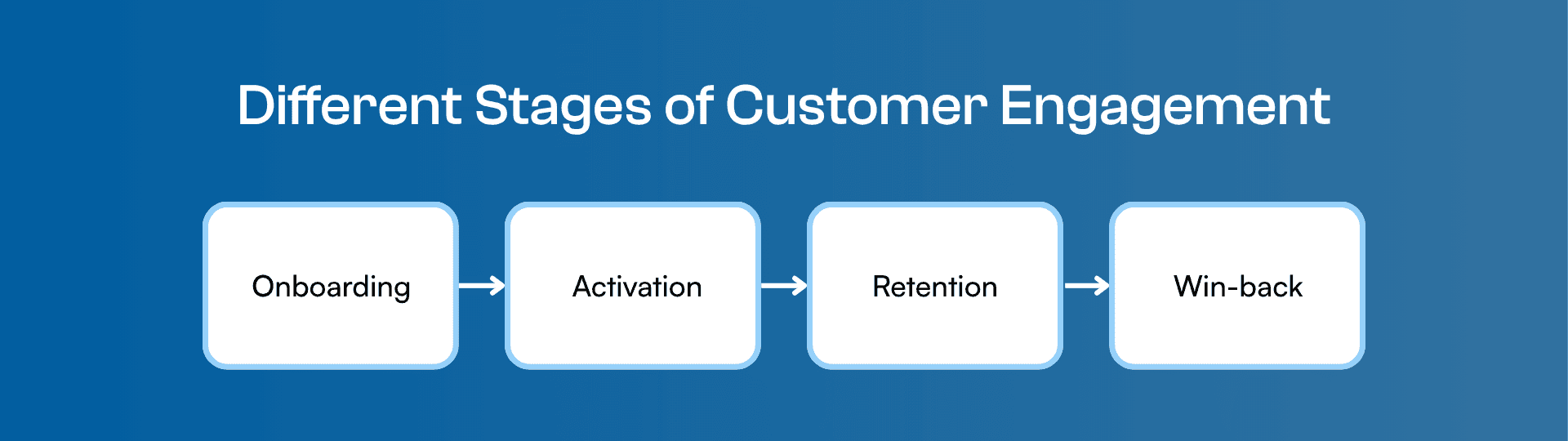
Figure: Different Stages of Customer Engagement
A customer engagement platform (CEP) connects user data with communication channels. It helps you send the right message at the right time.
Core functions include:
- email campaigns
- push notifications
- SMS messaging
- in-app communication
- lifecycle automation
Lifecycle teams use CEPs to run:
- onboarding journeys
- activation nudges
- conversion campaigns
- churn prevention flows
- win-back strategies
Instead of sending generic messages, CEPs react to real user behavior. That's what drives modern lifecycle marketing.
Sortment vs Mixpanel: A Quick Comparison
Sortment and Mixpanel serve different purposes within growth stacks. One focuses on executing lifecycle marketing, while the other focuses on analyzing user behavior.
Understanding this difference helps you choose the right tool faster.
| Feature | Sortment | Mixpanel |
|---|---|---|
| Core Approach | AI executes lifecycle marketing | Tracks user behavior |
| Setup | No-code, fast deployment | Event tracking setup required |
| Messaging | Built-in omnichannel | Not supported |
| Automation | AI-driven journeys | Not available |
| Insights | Actionable lifecycle insights | Deep behavioral analytics |
| Best Fit | Growth & marketing teams | Product & data teams |
Table: Feature comparison of Sortment vs Mixpanel
In simple terms:
Sortment = action + automation
Mixpanel = insights + analysis
What Is Sortment?
Sortment is an AI-driven lifecycle marketing platform designed for execution and growth. It removes the need to manually build campaigns. Instead, it uses AI to run lifecycle programs automatically.
How Sortment Works?
Sortment uses AI agents to manage lifecycle marketing tasks:
- identify growth opportunities
- generate campaign content
- trigger personalized messaging
- optimize performance
These systems continuously learn and improve results.
Key Sortment Features?
- AI-driven lifecycle automation
- omnichannel messaging (email, SMS, push, in-app)
- behavioral triggers
- no-code campaign setup
- retention and churn optimization
Teams launch campaigns faster and scale without increasing effort.
What Is Mixpanel?
Mixpanel is a product analytics platform focused on understanding user behavior. It tracks how users interact with apps and websites.
How Mixpanel Works?
Mixpanel uses event-based tracking.
It captures:
- clicks
- page views
- feature usage
- conversions
Teams analyze this data through dashboards and reports.
Key Mixpanel Features?
- funnel analysis
- cohort tracking
- retention analysis
- user segmentation
- product insights
It helps teams identify where users drop off and why.
Sortment vs Mixpanel: Lifecycle Marketing Capabilities
Lifecycle marketing requires both insights and execution. Sortment enables action, while Mixpanel focuses on analysis. This difference directly impacts retention and engagement outcomes.
Sortment
Sortment focuses on execution.
It allows you to:
- trigger campaigns based on behavior
- automate user journeys
- personalize communication across channels
You can act on insights instantly.
Mixpanel
Mixpanel focuses on analysis.
It helps you:
- understand user behavior
- identify drop-offs
- measure product performance
But it does not execute campaigns. You need additional tools for engagement.
Key takeaway
Sortment drives engagement and retention
Mixpanel drives understanding and analysis
Sortment vs Mixpanel: Analytics and Insights
Analytics determines how well you understand your users. Both platforms offer insights, but their depth and purpose differ significantly.
Sortment Analytics
Sortment focuses on:
- retention metrics
- churn signals
- lifecycle performance
It prioritizes quick decision-making and action.
Mixpanel Analytics
Mixpanel provides:
- deep behavioral insights
- funnel performance
- cohort analysis
- product usage trends
It excels in data depth and reporting.
Sortment vs Mixpanel: Pricing
Pricing reflects each platform's core use case. Sortment focuses on accessibility, while Mixpanel scales with data usage.
Your choice depends on budget and needs.
Sortment Pricing
- free plan; paid plans from $40/month plus email volume
- includes automation and messaging
- suitable for startups and growth teams
Mixpanel Pricing
- free tier available
- scales with usage and events
- cost increases with data volume
When Should You Choose Sortment?
Choose Sortment if you need:
- lifecycle marketing execution
- omnichannel engagement
- faster campaign launches
- AI-driven automation
- improved retention and revenue
Best for:
- startups
- SaaS companies
- product-led growth teams
- mobile apps
When Should You Choose Mixpanel?
Choose Mixpanel if you need:
- product analytics
- funnel and cohort analysis
- user behavior insights
- data-driven product decisions
Best for:
- product teams
- data analysts
- growth analysts
Final Verdict: Sortment vs Mixpanel
Both platforms are powerful. They simply solve different problems. Choose Sortment if you want:
- lifecycle automation
- customer engagement
- retention and revenue growth
Choose Mixpanel if you need:
- behavioral analytics
- product insights
- data tracking
In most cases: Sortment helps you act. Mixpanel helps you understand
If your focus is lifecycle marketing, engagement, and retention, execution matters more than analysis.
That's where Sortment stands out.
For the lifecycle marketing framework that covers what drives retention and engagement outcomes, see the customer lifecycle marketing guide.
Frequently Asked Questions About Sortment vs Mixpanel
Is Mixpanel a customer engagement platform?
No. Mixpanel is a product analytics platform. It tracks user behavior but does not handle messaging or lifecycle engagement.
Can Mixpanel run lifecycle marketing campaigns?
No. Mixpanel provides insights. You need external tools to execute campaigns and automation.
Does Sortment replace Mixpanel?
In some cases, yes. If your goal is engagement and retention, Sortment can reduce the need for separate tools.
Which platform is better for startups?
Sortment works better for startups because it combines automation, messaging, and lifecycle marketing in one platform.
Which platform should I choose for retention?
Choose Sortment. It directly focuses on engagement, lifecycle automation, and improving retention metrics.