5 Best Mixpanel Alternatives for Lifecycle Marketing and Customer Engagement (2026)
Compare the top Mixpanel competitors and alternatives for 2026 — Sortment, MoEngage, Customer.io, CleverTap, and Braze — for lifecycle marketing and retention.
Abhimanyu
·
Blogs
·
Mixpanel is a strong product analytics tool. It tracks user behavior, builds funnels, and shows you where people drop off, which cohorts retain, and what events predict conversion.
The gap most teams run into: Mixpanel stops at the insight. It does not execute campaigns, send push notifications, or automate engagement flows. Teams that want to act on Mixpanel data still need a separate engagement platform, which adds integrations, engineering dependencies, and lag between insight and action. That gap is why teams start looking.
Here are the five strongest Mixpanel alternatives, compared on the factors that determine whether a platform actually moves the needle for your team.
What Should You Look for in a Mixpanel Alternative?
The right alternative depends on what Mixpanel is not giving your team. These five areas separate tools that look good in demos from the ones that deliver in production.
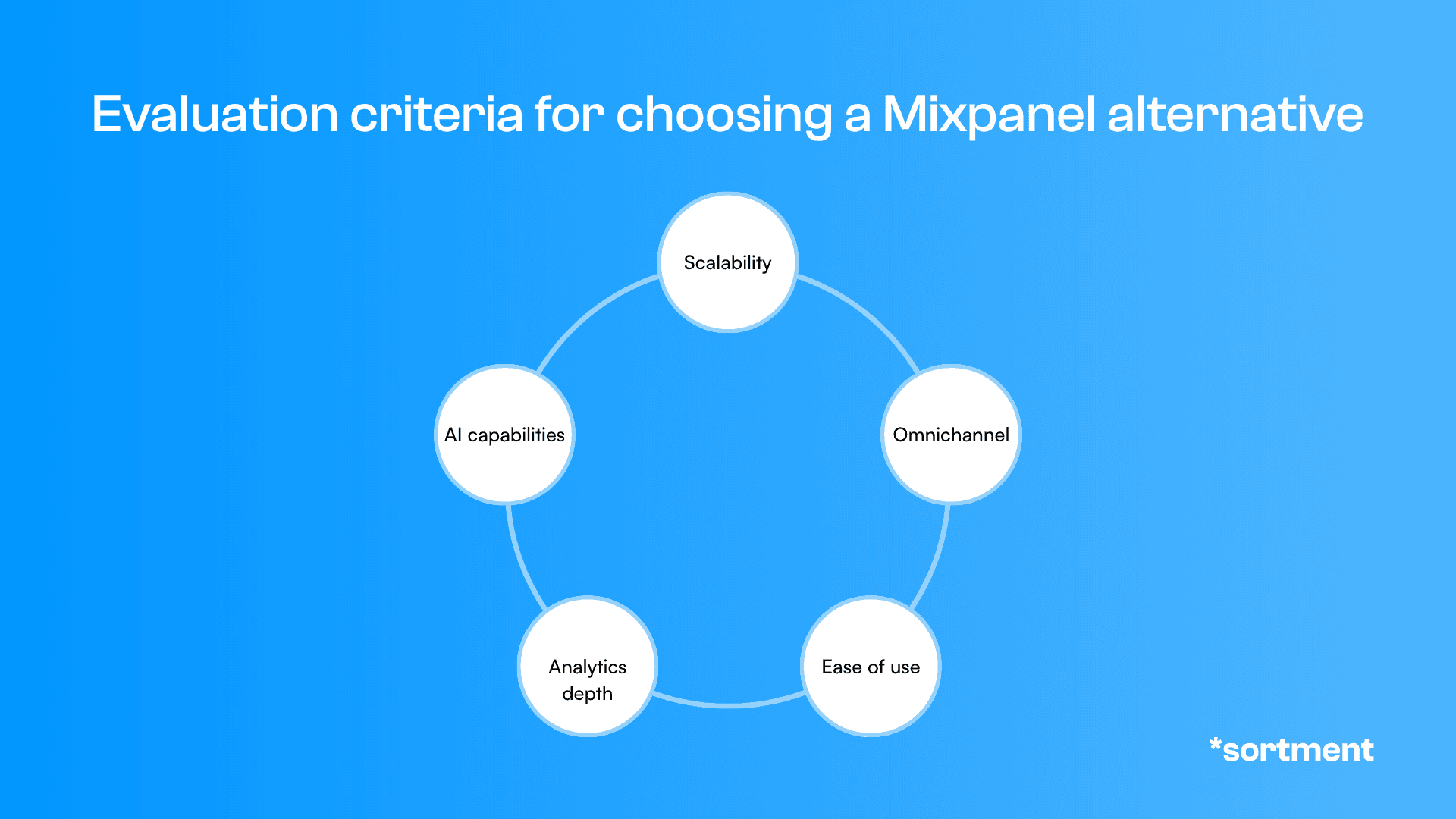
Figure: 5 criteria for evaluating a Mixpanel alternative for lifecycle marketing
Scalability
Your platform should handle growing event volume and user counts without forcing architecture changes or surprise pricing jumps. Mixpanel's event-based pricing model can become painful fast as instrumentation expands.
Omnichannel Capabilities
Analytics without action is half the job. A strong Mixpanel alternative should let you act on behavioral data across push, email, SMS, and in-app channels from one place.
Ease of Use
If every audience segment or campaign requires a data engineer or SQL query, your execution speed drops. Look for platforms where marketers can build audiences and launch campaigns without constant technical support.
Analytics Depth
Switching from Mixpanel should not mean losing visibility. Look for cohort tracking, funnel analysis, retention curves, and lifecycle stage reporting that match or exceed what you have today.
AI Capabilities
The best tools now use AI to surface insights, generate campaign content, and optimize automatically. If you still have to hypothesize and test everything manually, you are leaving speed and performance on the table.
What Should You Look for in a Mixpanel Competitor or Alternative?
Every tool on this list actually executes campaigns. Unlike Mixpanel, none of them stop at the insight.
Platform | Best For | What Stands Out | When to Choose |
Sortment | Teams wanting analytics and campaign execution in one place | Warehouse-native AI that handles insight and action | When you want to close the gap between data and messaging without adding another tool |
MoEngage | B2C and mobile-first teams | Integrated analytics and omnichannel engagement | When you need behavioral insights and campaign execution in one platform |
Customer.io | SaaS and PLG teams | Flexible trigger-based campaigns with strong data ingestion | When you need precise campaign control and already use a separate analytics tool |
CleverTap | Mobile-first B2C teams | Integrated analytics and engagement on one platform | When most of your users are on mobile and you want analytics alongside messaging |
Braze | Enterprise teams at scale | Real-time journey orchestration across millions of users | When you need enterprise-grade lifecycle programs with deep experimentation |
Table: Comparison of top alternatives to Mixpanel for lifecycle marketing
1. Sortment — Built for Teams That Want the Platform to Drive the Strategy
Mixpanel tells you what happened. Sortment is built for teams that want the platform to also tell them what to do about it, and then do it.
When to choose Sortment over Mixpanel:
Your team spends more time interpreting dashboards and deciding what to run than actually running campaigns
You want behavioral alerts that surface problems before your team notices them in a weekly review
You're ready to evaluate with a specific outcome (retention, activation, or conversion) and see results in 30 days
What actually stands out:
Sortment identifies growth opportunities and behavioral shifts your team didn't know to look for. A cohort dropping off, a segment ready to upsell, a reactivation window your current setup missed: the platform surfaces these and tells you what campaigns to run, which segments to target, and what's working and why.
Your team's job is to review and approve, not configure from scratch. That's the difference for teams coming from a setup where analytics and execution were always two separate decisions.
Best for: Growth teams that want lifecycle intelligence and campaign execution in a single platform, without the analyst handoff in between.
2. MoEngage — Best for B2C Teams That Need Analytics and Engagement Together
MoEngage is a lifecycle marketing and customer engagement platform. It handles what Mixpanel cannot: actually sending campaigns. It also includes behavioral analytics, so you get both layers in one place.
When to choose MoEngage over Mixpanel:
If you are using Mixpanel because it tracks behavior well, but need to act on that behavior through push, email, SMS, or WhatsApp, MoEngage solves both problems. It is especially well-suited for B2C brands with high-frequency user interactions and mobile-first audiences.
What actually stands out:
MoEngage's AI-powered segmentation identifies users likely to churn or convert and surfaces them for targeting automatically. Its journey builder handles multi-step omnichannel flows without needing a separate execution tool. Compared to Mixpanel, the gap from insight to sent campaign shrinks from days to hours. For a full breakdown of where MoEngage fits in the market, see the best MoEngage alternatives.
Best for: B2C consumer apps, mobile-first brands, and growth teams that want analytics and campaign execution on one platform.
3. Customer.io — Best for SaaS Teams Running Behavioral Campaigns
Customer.io is an engagement platform, not an analytics platform. It ingests behavioral events and triggers campaigns across email, push, SMS, and in-app based on what users do. It is often the tool teams reach for when they decide Mixpanel needs a messaging layer.
When to choose Customer.io over Mixpanel:
If you already have analytics handled and need precise, code-friendly campaign automation, Customer.io is well-suited. It is especially strong for SaaS onboarding flows and lifecycle programs that need tight control over branching logic. It pairs well with Mixpanel rather than replacing it.
What actually stands out:
Customer.io's journey builder is flexible and developer-friendly. Its data model handles complex event schemas well. The platform has strong API support, which makes it a natural fit for technical teams that want to stay close to their data. The gap is AI-native automation, which is limited compared to newer platforms.
Best for: Technical SaaS teams with existing analytics stacks that want campaign execution without giving up control.
4. CleverTap — Best for Mobile-First B2C Teams
CleverTap combines analytics and engagement in one platform, built specifically for mobile consumer apps. It handles push, email, SMS, in-app, and WhatsApp, with cohort analysis and funnel reporting alongside campaign execution.
When to choose CleverTap over Mixpanel:
If your users are primarily on mobile and you want analytics and messaging from one platform, CleverTap removes the two-tool problem. It is stronger than Mixpanel for engagement and more focused on mobile than broad product analytics.
What actually stands out:
CleverTap's predictive segmentation identifies churn risk and high-LTV users automatically. Journey orchestration handles multi-step engagement flows without separate tooling. Pricing is based on monthly active users, which is more predictable than event-volume pricing. For a deeper look, see the best CleverTap alternatives if you are evaluating what sits above or next to CleverTap in your stack.
Best for: Mobile-first B2C teams in fintech, fitness, food, or subscription apps that want one platform for analytics and engagement.
5. Braze — Best for Enterprise Lifecycle Marketing at Scale
Braze is an enterprise customer engagement platform used by global consumer brands managing millions of users. It is what teams graduate to when the scale and complexity of their lifecycle programs outgrows lighter tools.
When to choose Braze over Mixpanel:
If Mixpanel's gap is causing real revenue impact, campaigns are not going out, personalization is inconsistent, and you have the team to manage an enterprise platform, Braze is the most capable option on this list. It is not a simple switch, but the ceiling is high.
What actually stands out:
Braze Canvas handles complex multi-step journeys across every major channel. Real-time event processing means users hit triggers within seconds of an action. Experimentation and AI personalization are built in, not bolted on. The tradeoff is cost and implementation weight: Braze requires dedicated lifecycle and data resources to get full value from it. For a comparison of what sits below Braze at lower cost, see the best Braze alternatives.
Best for: Enterprise teams managing high user volumes with dedicated lifecycle marketing functions and the budget to match.
Which Mixpanel Alternative Is Best for Your Use Case?
Match the tool to the actual gap, not the feature list.
You want to close the gap between analytics and campaign execution, and you run on a data warehouse: Sortment
You are a B2C team that needs behavioral analytics and omnichannel engagement together: MoEngage
You need behavioral campaign automation and already have analytics handled: Customer.io
You are a mobile-first B2C team and want one platform for analytics and messaging: CleverTap
You are at enterprise scale with a dedicated lifecycle team and complex journey needs: Braze
For a broader view of where these tools sit across the category, see the best customer engagement platforms for 2026.
How to Migrate from Mixpanel Without Losing Data or Campaigns?
Migrating from Mixpanel is manageable if you sequence it correctly. The most common mistake: moving everything at once before validating that the new platform reads your data the same way Mixpanel did.
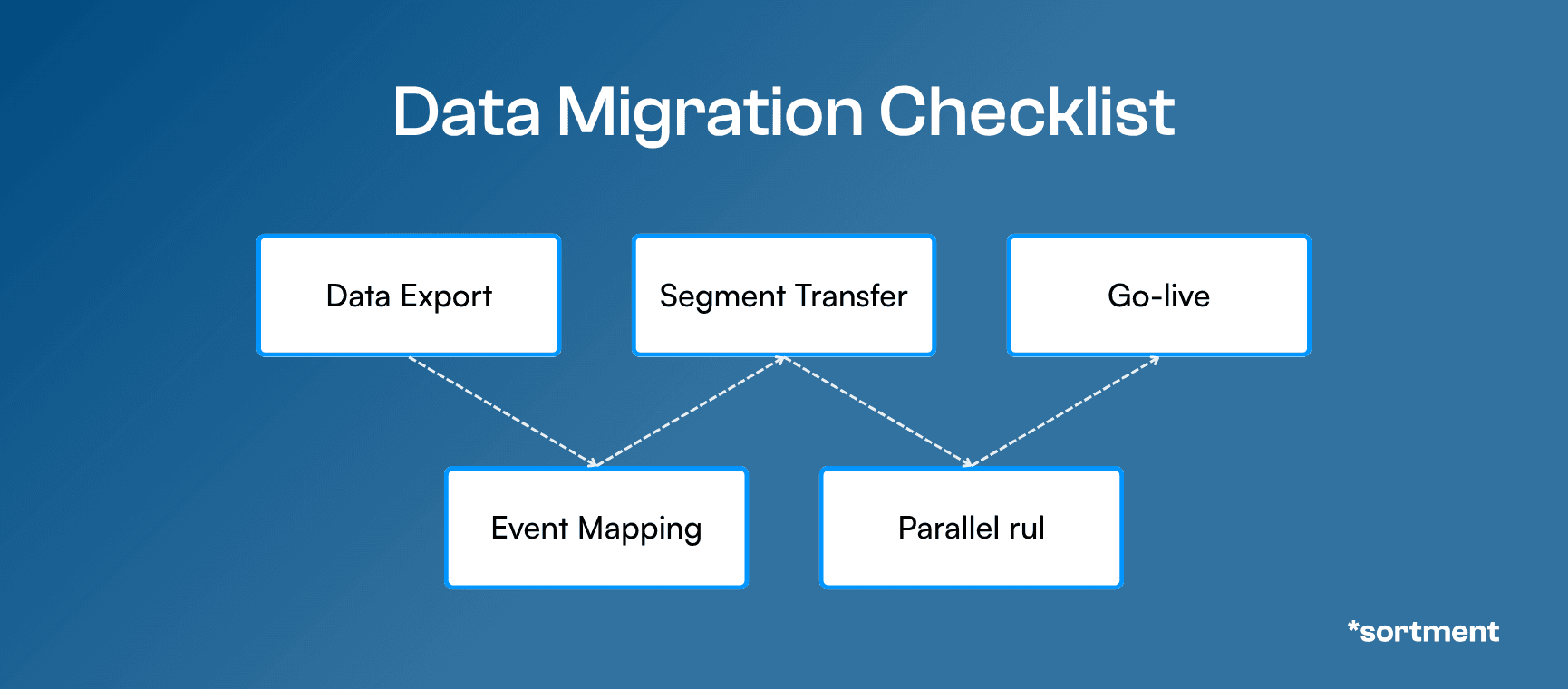
Figure: Step-by-step for migrating from Mixpanel
Data Migration
Export your event schema and user property definitions before switching. Map each Mixpanel event to its equivalent in the new platform. Discrepancies here create silent reporting errors that are hard to catch later.
Campaign Replication
Document every active journey and trigger in Mixpanel-connected tools before migration. Rebuild critical flows (onboarding, activation, churn prevention) first. Secondary campaigns follow after validation.
Customer Segmentation Transfer
Re-map your key cohorts to the new platform's schema. Behavioral cohorts defined in Mixpanel do not transfer automatically. Rebuild your highest-impact segments before go-live.
Avoiding Downtime
Run the new platform in parallel for at least two weeks before cutting over. This gives you a comparison baseline and catches data discrepancies before they affect live campaigns.
Common Migration Mistakes
The most common Mixpanel-specific issue: event property names are rarely as standardized as teams assume. Clean your event taxonomy before import, not after.
For a concrete picture of what lifecycle marketing looks like in practice, the customer lifecycle marketing guide covers the full playbook.
Still Not Sure Which Mixpanel Alternative Fits You?
The decision usually comes down to one question: do you need better analytics, better execution, or both in one place?
If the answer is both, that is where Sortment fits. It connects to your existing data, adds AI-driven campaign execution on top, and removes the two-platform dependency that Mixpanel creates by design.
Frequently Asked Questions About Mixpanel Alternatives
What is the biggest limitation of Mixpanel?
Mixpanel is a product analytics platform, not an engagement platform. It shows you what users are doing but does not send campaigns to act on that data. Teams using Mixpanel for lifecycle marketing still need a separate tool for messaging, which adds cost, integrations, and engineering time between insight and action.
How does MoEngage compare to Mixpanel?
MoEngage is a lifecycle marketing and engagement platform, while Mixpanel is a product analytics tool. MoEngage can send push, email, SMS, and in-app messages based on user behavior. Mixpanel cannot. Teams that need both analytics and campaign execution often find MoEngage a more complete replacement than a pure analytics alternative.
Can I use Sortment with Mixpanel instead of replacing it?
Yes. Sortment connects to Mixpanel via MCP integration before you complete a full data warehouse setup. This means you can use Sortment for campaign execution while keeping Mixpanel for analytics, then consolidate later if it makes sense for your stack.
Which Mixpanel alternative is best for mobile apps?
CleverTap is built specifically for mobile-first B2C teams and combines analytics with push, SMS, email, and in-app messaging. Sortment is also strong for mobile apps and adds warehouse-native AI on top of execution. The right choice depends on whether analytics depth or campaign automation is the higher priority for your team.
What should I look for when switching from Mixpanel to a lifecycle marketing platform?
Look for three things: direct data warehouse connection so you do not have to rebuild your data layer, multi-channel execution (push, email, SMS, in-app) from one place, and AI that reduces manual campaign work. If you still need SQL or engineering for every campaign after switching, you have not fixed the core problem.
See also
Sortment vs Mixpanel: Which Platform is Better for Lifecycle Marketing?
Sortment vs Mixpanel: Which Platform is Better for Lifecycle Marketing?
Sortment vs Mixpanel: Which Platform is Better for Lifecycle Marketing?
Compare Sortment vs Mixpanel for lifecycle marketing. Discover differences in analytics, engagement, automation, and retention to choose the right customer engagement platform for your business.
Compare Sortment vs Mixpanel for lifecycle marketing. Discover differences in analytics, engagement, automation, and retention to choose the right customer engagement platform for your business.
See what Sortment can do for your goals.
See what Sortment can do for your goals.
Book a 30-minute call. We'll show you how the pilot works with your data and your stack.
Book a 30-minute call. We'll show you how the pilot works with your data and your stack.
AGENTS
CASE STUDIES
RESOURCES
AGENTS
CASE STUDIES
RESOURCES
Mixpanel is a strong product analytics tool. It tracks user behavior, builds funnels, and shows you where people drop off, which cohorts retain, and what events predict conversion.
The gap most teams run into: Mixpanel stops at the insight. It does not execute campaigns, send push notifications, or automate engagement flows. Teams that want to act on Mixpanel data still need a separate engagement platform, which adds integrations, engineering dependencies, and lag between insight and action. That gap is why teams start looking.
Here are the five strongest Mixpanel alternatives, compared on the factors that determine whether a platform actually moves the needle for your team.
What Should You Look for in a Mixpanel Alternative?
The right alternative depends on what Mixpanel is not giving your team. These five areas separate tools that look good in demos from the ones that deliver in production.
Figure: 5 criteria for evaluating a Mixpanel alternative for lifecycle marketing
Scalability
Your platform should handle growing event volume and user counts without forcing architecture changes or surprise pricing jumps. Mixpanel's event-based pricing model can become painful fast as instrumentation expands.
Omnichannel Capabilities
Analytics without action is half the job. A strong Mixpanel alternative should let you act on behavioral data across push, email, SMS, and in-app channels from one place.
Ease of Use
If every audience segment or campaign requires a data engineer or SQL query, your execution speed drops. Look for platforms where marketers can build audiences and launch campaigns without constant technical support.
Analytics Depth
Switching from Mixpanel should not mean losing visibility. Look for cohort tracking, funnel analysis, retention curves, and lifecycle stage reporting that match or exceed what you have today.
AI Capabilities
The best tools now use AI to surface insights, generate campaign content, and optimize automatically. If you still have to hypothesize and test everything manually, you are leaving speed and performance on the table.
What Should You Look for in a Mixpanel Competitor or Alternative?
Every tool on this list actually executes campaigns. Unlike Mixpanel, none of them stop at the insight.
Platform | Best For | What Stands Out | When to Choose |
Sortment | Teams wanting analytics and campaign execution in one place | Warehouse-native AI that handles insight and action | When you want to close the gap between data and messaging without adding another tool |
MoEngage | B2C and mobile-first teams | Integrated analytics and omnichannel engagement | When you need behavioral insights and campaign execution in one platform |
Customer.io | SaaS and PLG teams | Flexible trigger-based campaigns with strong data ingestion | When you need precise campaign control and already use a separate analytics tool |
CleverTap | Mobile-first B2C teams | Integrated analytics and engagement on one platform | When most of your users are on mobile and you want analytics alongside messaging |
Braze | Enterprise teams at scale | Real-time journey orchestration across millions of users | When you need enterprise-grade lifecycle programs with deep experimentation |
Table: Comparison of top alternatives to Mixpanel for lifecycle marketing
1. Sortment — Built for Teams That Want the Platform to Drive the Strategy
Mixpanel tells you what happened. Sortment is built for teams that want the platform to also tell them what to do about it, and then do it.
When to choose Sortment over Mixpanel:
Your team spends more time interpreting dashboards and deciding what to run than actually running campaigns
You want behavioral alerts that surface problems before your team notices them in a weekly review
You're ready to evaluate with a specific outcome (retention, activation, or conversion) and see results in 30 days
What actually stands out:
Sortment identifies growth opportunities and behavioral shifts your team didn't know to look for. A cohort dropping off, a segment ready to upsell, a reactivation window your current setup missed: the platform surfaces these and tells you what campaigns to run, which segments to target, and what's working and why.
Your team's job is to review and approve, not configure from scratch. That's the difference for teams coming from a setup where analytics and execution were always two separate decisions.
Best for: Growth teams that want lifecycle intelligence and campaign execution in a single platform, without the analyst handoff in between.
2. MoEngage — Best for B2C Teams That Need Analytics and Engagement Together
MoEngage is a lifecycle marketing and customer engagement platform. It handles what Mixpanel cannot: actually sending campaigns. It also includes behavioral analytics, so you get both layers in one place.
When to choose MoEngage over Mixpanel:
If you are using Mixpanel because it tracks behavior well, but need to act on that behavior through push, email, SMS, or WhatsApp, MoEngage solves both problems. It is especially well-suited for B2C brands with high-frequency user interactions and mobile-first audiences.
What actually stands out:
MoEngage's AI-powered segmentation identifies users likely to churn or convert and surfaces them for targeting automatically. Its journey builder handles multi-step omnichannel flows without needing a separate execution tool. Compared to Mixpanel, the gap from insight to sent campaign shrinks from days to hours. For a full breakdown of where MoEngage fits in the market, see the best MoEngage alternatives.
Best for: B2C consumer apps, mobile-first brands, and growth teams that want analytics and campaign execution on one platform.
3. Customer.io — Best for SaaS Teams Running Behavioral Campaigns
Customer.io is an engagement platform, not an analytics platform. It ingests behavioral events and triggers campaigns across email, push, SMS, and in-app based on what users do. It is often the tool teams reach for when they decide Mixpanel needs a messaging layer.
When to choose Customer.io over Mixpanel:
If you already have analytics handled and need precise, code-friendly campaign automation, Customer.io is well-suited. It is especially strong for SaaS onboarding flows and lifecycle programs that need tight control over branching logic. It pairs well with Mixpanel rather than replacing it.
What actually stands out:
Customer.io's journey builder is flexible and developer-friendly. Its data model handles complex event schemas well. The platform has strong API support, which makes it a natural fit for technical teams that want to stay close to their data. The gap is AI-native automation, which is limited compared to newer platforms.
Best for: Technical SaaS teams with existing analytics stacks that want campaign execution without giving up control.
4. CleverTap — Best for Mobile-First B2C Teams
CleverTap combines analytics and engagement in one platform, built specifically for mobile consumer apps. It handles push, email, SMS, in-app, and WhatsApp, with cohort analysis and funnel reporting alongside campaign execution.
When to choose CleverTap over Mixpanel:
If your users are primarily on mobile and you want analytics and messaging from one platform, CleverTap removes the two-tool problem. It is stronger than Mixpanel for engagement and more focused on mobile than broad product analytics.
What actually stands out:
CleverTap's predictive segmentation identifies churn risk and high-LTV users automatically. Journey orchestration handles multi-step engagement flows without separate tooling. Pricing is based on monthly active users, which is more predictable than event-volume pricing. For a deeper look, see the best CleverTap alternatives if you are evaluating what sits above or next to CleverTap in your stack.
Best for: Mobile-first B2C teams in fintech, fitness, food, or subscription apps that want one platform for analytics and engagement.
5. Braze — Best for Enterprise Lifecycle Marketing at Scale
Braze is an enterprise customer engagement platform used by global consumer brands managing millions of users. It is what teams graduate to when the scale and complexity of their lifecycle programs outgrows lighter tools.
When to choose Braze over Mixpanel:
If Mixpanel's gap is causing real revenue impact, campaigns are not going out, personalization is inconsistent, and you have the team to manage an enterprise platform, Braze is the most capable option on this list. It is not a simple switch, but the ceiling is high.
What actually stands out:
Braze Canvas handles complex multi-step journeys across every major channel. Real-time event processing means users hit triggers within seconds of an action. Experimentation and AI personalization are built in, not bolted on. The tradeoff is cost and implementation weight: Braze requires dedicated lifecycle and data resources to get full value from it. For a comparison of what sits below Braze at lower cost, see the best Braze alternatives.
Best for: Enterprise teams managing high user volumes with dedicated lifecycle marketing functions and the budget to match.
Which Mixpanel Alternative Is Best for Your Use Case?
Match the tool to the actual gap, not the feature list.
You want to close the gap between analytics and campaign execution, and you run on a data warehouse: Sortment
You are a B2C team that needs behavioral analytics and omnichannel engagement together: MoEngage
You need behavioral campaign automation and already have analytics handled: Customer.io
You are a mobile-first B2C team and want one platform for analytics and messaging: CleverTap
You are at enterprise scale with a dedicated lifecycle team and complex journey needs: Braze
For a broader view of where these tools sit across the category, see the best customer engagement platforms for 2026.
How to Migrate from Mixpanel Without Losing Data or Campaigns?
Migrating from Mixpanel is manageable if you sequence it correctly. The most common mistake: moving everything at once before validating that the new platform reads your data the same way Mixpanel did.
Figure: Step-by-step for migrating from Mixpanel
Data Migration
Export your event schema and user property definitions before switching. Map each Mixpanel event to its equivalent in the new platform. Discrepancies here create silent reporting errors that are hard to catch later.
Campaign Replication
Document every active journey and trigger in Mixpanel-connected tools before migration. Rebuild critical flows (onboarding, activation, churn prevention) first. Secondary campaigns follow after validation.
Customer Segmentation Transfer
Re-map your key cohorts to the new platform's schema. Behavioral cohorts defined in Mixpanel do not transfer automatically. Rebuild your highest-impact segments before go-live.
Avoiding Downtime
Run the new platform in parallel for at least two weeks before cutting over. This gives you a comparison baseline and catches data discrepancies before they affect live campaigns.
Common Migration Mistakes
The most common Mixpanel-specific issue: event property names are rarely as standardized as teams assume. Clean your event taxonomy before import, not after.
For a concrete picture of what lifecycle marketing looks like in practice, the customer lifecycle marketing guide covers the full playbook.
Still Not Sure Which Mixpanel Alternative Fits You?
The decision usually comes down to one question: do you need better analytics, better execution, or both in one place?
If the answer is both, that is where Sortment fits. It connects to your existing data, adds AI-driven campaign execution on top, and removes the two-platform dependency that Mixpanel creates by design.
Frequently Asked Questions About Mixpanel Alternatives
What is the biggest limitation of Mixpanel?
Mixpanel is a product analytics platform, not an engagement platform. It shows you what users are doing but does not send campaigns to act on that data. Teams using Mixpanel for lifecycle marketing still need a separate tool for messaging, which adds cost, integrations, and engineering time between insight and action.
How does MoEngage compare to Mixpanel?
MoEngage is a lifecycle marketing and engagement platform, while Mixpanel is a product analytics tool. MoEngage can send push, email, SMS, and in-app messages based on user behavior. Mixpanel cannot. Teams that need both analytics and campaign execution often find MoEngage a more complete replacement than a pure analytics alternative.
Can I use Sortment with Mixpanel instead of replacing it?
Yes. Sortment connects to Mixpanel via MCP integration before you complete a full data warehouse setup. This means you can use Sortment for campaign execution while keeping Mixpanel for analytics, then consolidate later if it makes sense for your stack.
Which Mixpanel alternative is best for mobile apps?
CleverTap is built specifically for mobile-first B2C teams and combines analytics with push, SMS, email, and in-app messaging. Sortment is also strong for mobile apps and adds warehouse-native AI on top of execution. The right choice depends on whether analytics depth or campaign automation is the higher priority for your team.
What should I look for when switching from Mixpanel to a lifecycle marketing platform?
Look for three things: direct data warehouse connection so you do not have to rebuild your data layer, multi-channel execution (push, email, SMS, in-app) from one place, and AI that reduces manual campaign work. If you still need SQL or engineering for every campaign after switching, you have not fixed the core problem.