AI Customer Engagement Platform: How to Drive Retention & Revenue in 2026
Discover how an AI customer engagement platform improves retention, personalization, and lifecycle marketing. Learn features, benefits, and how to choose the right platform for your business.
AI customer engagement platform is no longer a nice-to-have - it is the core of how modern brands drive retention, personalization, and lifecycle marketing.
Users today expect real-time, relevant communication across channels. Generic campaigns fail to hold attention. You need behavior-based engagement, predictive analytics, and omnichannel automation to stay competitive.
This is where platforms like Sortment step in. They combine AI-driven segmentation, customer journey automation, and personalization engines to help you engage users at every stage - from acquisition to retention and reactivation.
If your goal is to increase customer lifetime value, reduce churn, and build consistent engagement, the right AI customer engagement platform will make that shift possible.
What is an AI customer engagement platform, and how does it work?
An AI customer engagement platform uses data, machine learning, and automation to manage user interactions across channels. It tracks behavior, predicts intent, and triggers actions in real time, helping businesses deliver timely, personalized communication without relying on manual rules or static workflows.
Core components: customer data, AI models, and automation engines
The platform collects data from multiple touchpoints - website visits, app usage, purchases, and more.
AI models process this data to identify patterns. Automation engines then act on those patterns by triggering messages or campaigns.
This creates a system that runs continuously without manual effort.
How does AI predict user behavior and trigger actions in real time?
AI analyzes user actions, including clicks, time spent, and purchase history.
It identifies intent. For example, a user browsing repeatedly without buying signals hesitation. The platform can trigger a discount or reminder at the right moment.
This real-time response improves conversions without delay.
AI vs traditional engagement tools: what’s the real difference?
Traditional tools follow fixed rules. You set a condition, and the system executes it. AI platforms go further. They learn from behavior and adjust automatically. Instead of sending the same message to all users, AI tailors communication for each individual.
Sortment is trusted by leading brands
What are the best AI customer engagement platforms in 2026?
Different platforms solve different problems. Some focus on retention, others on onboarding or enterprise automation. Choose the best customer engagement platform based on your growth goal, budget, and how deeply you want to personalize the customer journey.
1. Sortment - Best for e-commerce retention and lifecycle marketing
Sortment focuses on turning first-time buyers into repeat customers. It helps you build lifecycle journeys across channels, personalize engagement, and drive retention-led growth.
If your goal is revenue from existing users, Sortment fits best.
2. Intercom - Best for SaaS onboarding and product engagement
Intercom works well for SaaS businesses that rely on product usage. It tracks user behavior inside apps and helps guide onboarding, feature adoption, and in-product engagement through targeted messaging.
3. Braze - Best for omnichannel customer engagement at scale
Braze offers strong omnichannel capabilities across email, push, SMS, and more. It suits businesses that want to manage large-scale campaigns with real-time personalization and cross-channel consistency.
4. MoEngage - Best for mobile-first and growing brands
MoEngage supports mobile-led engagement strategies with automation, segmentation, and personalization. It works well for startups and mid-sized businesses looking for a balance between features and ease of use.
5. Salesforce Marketing Cloud - Best for enterprise-grade automation
Salesforce offers deep integrations, advanced analytics, and high scalability. Large organizations use it to manage complex customer journeys, data systems, and multi-team operations across regions.
Find lifecycle growth opportunities with Sortment
See how Strategy AI monitors your customer data, surfaces growth opportunities, and recommends campaigns tied to activation, retention, or monetization.
Why are AI customer engagement platforms critical for retention and growth?
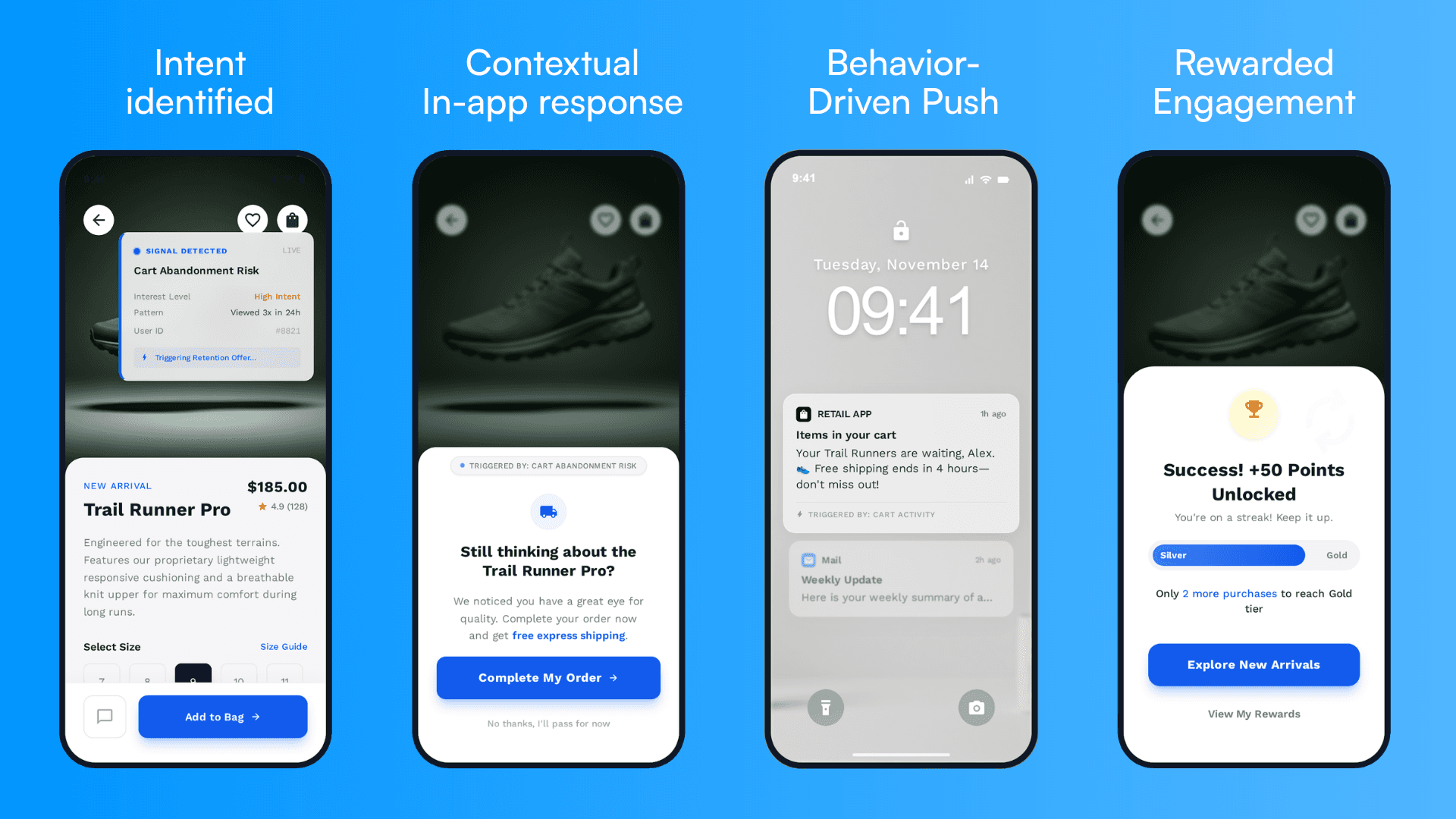
Figure: AI detects intent and triggers a personalized message
Getting users is expensive. Losing them is easy.
Automated Customer Engagement Platforms help businesses move beyond one-time interactions by improving retention and increasing lifetime value.
They reduce dependency on constant acquisition, personalize communication at scale, and ensure users stay engaged, making growth more predictable and cost-efficient over time.
From one-time users to repeat customers: the retention gap
Many users drop off after the first interaction. This creates a gap between acquisition and retention.
AI helps you close that gap. It keeps users engaged through timely and relevant communication.
How AI increases LTV (lifetime value) and reduces CAC?
When users stay longer and purchase more, their lifetime value increases.
AI improves retention, which means you spend less on acquiring new users to replace lost ones. This reduces overall acquisition cost.
Personalization at scale: why generic messaging fails today
Users expect relevant communication.
Generic messages feel easy to ignore. AI solves this by personalizing content based on behavior, preferences, and past actions.
You can reach thousands of users with messages that still feel personal.
From player data to deposit growth
Sortment's AI agents helped Topdog identify where users were dropping, surface dormant cohorts, and turn those insights into lifecycle campaigns.
5x Increase in first-deposit conversion
5% Dormant users returned and re-deposited
1 day To connect Redshift and get onboarded
What features should you look for in an AI customer engagement platform?
Not all platforms offer the same value. Focus on features that directly impact growth and retention.
The right platform should offer omnichannel communication, lifecycle automation, real-time personalization, predictive segmentation, and actionable analytics.
These features ensure you can engage users effectively at every stage while making data-driven decisions that directly impact retention and revenue.
Omnichannel engagement: email, WhatsApp, push, SMS in one place
Users interact across multiple channels.
A strong platform connects all of them. You can send consistent and timely messages without switching tools.
Lifecycle journey automation (onboarding to reactivation)
Engagement should not stop after the first message.
You can create journeys that guide users from onboarding to repeat purchase and even bring back inactive users.
Real-time personalization and recommendation engines
Timing matters.
AI helps you send the right message at the right moment. It can also recommend products or actions based on user behavior.
Predictive segmentation and targeting
Instead of grouping users manually, AI segments them automatically.
It identifies high-value users, at-risk users, and potential buyers. You can target each group differently.
Analytics and actionable insights (not just dashboards)
Data alone does not help.
You need insights that guide action. A good platform shows what works, what does not, and what to improve next.
How do AI customer engagement platforms improve the entire customer lifecycle?
Customer engagement does not happen in one step. It happens across stages. AI enhances every stage of the customer journey - from acquisition and onboarding to engagement, retention, and reactivation.
It uses behavior-driven insights to guide users, send relevant nudges, and optimize interactions, ensuring a smooth and continuous experience that drives long-term value..
Acquisition: smarter targeting and first-touch engagement
AI identifies users who are more likely to convert. You can focus your efforts on high-intent audiences and improve first impressions.
Onboarding: guiding users to activation faster
The first few interactions decide whether users stay. AI-driven onboarding flows help users understand your product quickly and take meaningful actions.
Engagement: behavior-based nudges and communication
Users need reminders and nudges. AI sends messages based on actions, not assumptions. This keeps users active without overwhelming them.
Retention: personalized offers and lifecycle campaigns
Retention drives long-term growth. AI helps you send targeted offers, reminders, and updates that keep users coming back.
Reactivation: winning back dormant users with AI
Some users go inactive. AI identifies them early and triggers campaigns to bring them back. This recovers lost revenue without new acquisition.
How do you choose the right AI customer engagement platform for your business?
Selecting the right CEP requires clarity on your growth goals, whether acquisition, retention, or lifecycle optimization. You must also evaluate integrations, ease of use, scalability, and ROI metrics to ensure the platform aligns with your business needs and long-term strategy.
Identify your growth goal: acquisition vs retention vs lifecycle
Start with clarity. Focus on what matters most - getting users, keeping them, or improving the entire journey.
Evaluate integrations with your existing stack
Your platform must connect with your current tools. This ensures smooth data flow and better performance.
Measure ROI: what metrics actually matter?
Track metrics like retention rate, lifetime value, and engagement. Avoid focusing only on open rates or clicks.
Ease of use vs scalability: what should you prioritize?
A simple tool helps you start quickly. A scalable platform supports long-term growth. Balance both based on your needs.
Not sure which platform fits your stack?
What challenges should you consider before adopting an AI customer engagement platform?
While AI offers strong advantages, challenges like data privacy, over-automation, and implementation complexity remain.
Businesses must balance automation with human experience, ensure compliance, and choose platforms that match their technical capabilities and operational readiness.
Data privacy and compliance concerns
Handle user data responsibly. Follow regulations and ensure transparency in how you use data.
Over-automation vs human experience
Automation should not feel robotic. Maintain a balance between efficiency and human touch.
Implementation and learning curve
Some platforms take time to set up. Choose one that matches your team’s capability and resources.
Want to turn customer engagement into a predictable growth engine?
80% of customers are more likely to buy when offered personalized experiences
Most businesses focus on acquiring users. Growth comes from keeping them. An AI customer engagement platform gives you the tools. But tools alone do not drive results.
You need the right lifecycle strategy, the right timing, and the right execution.
That’s where platforms like Sortment stand out. They focus on turning engagement into retention and retention into revenue.
If you want consistent growth, start thinking beyond campaigns. Start building journeys that keep users coming back.
Frequently Asked Questions (FAQs) About AI Customer Engagement Platform
What is an AI customer engagement platform?
An AI customer engagement platform is a software solution that uses artificial intelligence to manage and improve how businesses interact with users across channels. It analyzes customer data, predicts behavior, and automates personalized communication to drive better engagement and conversions.
How does AI improve customer retention?
AI improves customer retention by analyzing user behavior and identifying patterns such as drop-offs or high intent. It then triggers timely, personalized messages, offers, or reminders that keep users engaged, reduce churn, and encourage repeat interactions or purchases.
Are AI engagement platforms suitable for small businesses?
Yes, AI engagement platforms work well for small businesses. Many tools offer scalable features, easy setup, and flexible pricing. This allows growing brands to automate engagement, personalize communication, and improve retention without needing large teams or complex systems.
What is the difference between CRM and AI engagement tools?
A CRM primarily stores and organizes customer data for reference and tracking. An AI engagement platform goes further by using that data to predict behavior, automate actions, and deliver personalized communication, helping businesses actively engage and retain customers.
How long does it take to see results from an AI engagement platform?
You can notice early improvements in engagement within a few weeks of implementation. However, stronger results like increased retention and lifetime value build over time as the platform collects more data and continuously optimizes customer interactions.