Customer Engagement Platform Examples: 7 Platforms Powering Modern Retention
See how 7 top customer engagement platforms work in practice—Sortment, Braze, MoEngage, CleverTap, Iterable, HubSpot, and Salesforce compared.
Abhimanyu
·
New York
·
Customer engagement platform examples help businesses understand how modern brands manage customer communication, retention, and lifecycle marketing at scale.
Customer acquisition costs keep rising, and retention has become the real growth driver. Businesses now need platforms that unify customer data, automate lifecycle journeys, and connect engagement directly to revenue.
But which customer engagement platforms lead the market? And how do they differ in what they are built for?
Here are some leading customer engagement platform examples and what each platform does best.
What Is a Customer Engagement Platform?
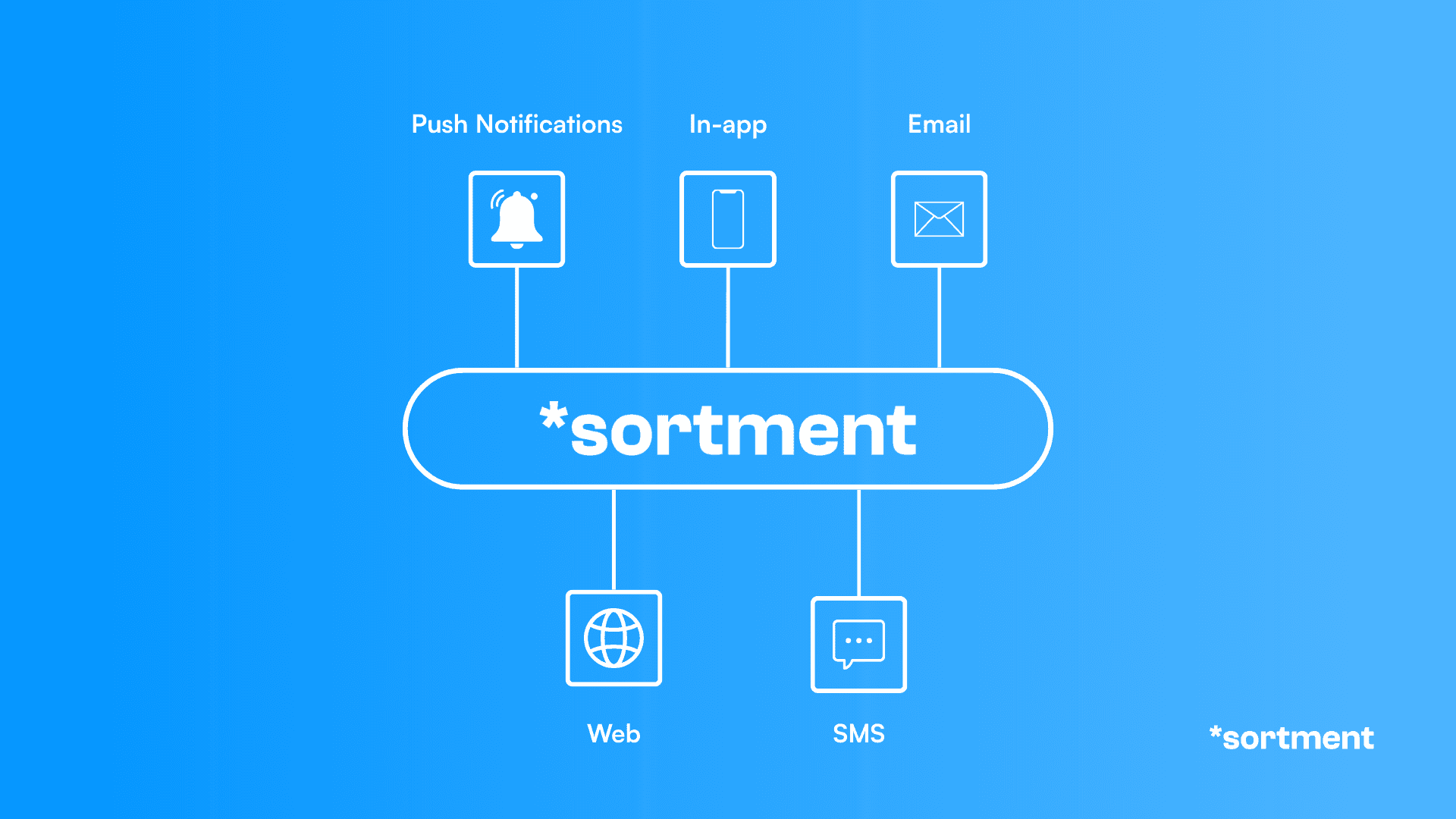
Figure: Sortment has omnichannel capabilities
Before we look at examples, let’s clarify the definition. Unlike basic marketing automation tools, CEPs focus on retention, personalization, and lifecycle growth.
CEP market projected at approximately $10 billion in 2025, growing to $11.5 billion in 2026 at a 15% CAGR, driven by AI personalization and omnichannel strategies.
A customer engagement platform (CEP) is software that:
Unifies customer data
Automates lifecycle communication
Orchestrates cross-channel messaging
Predicts churn risk
Connects engagement to revenue
What are the Examples of the Best Customer Engagement Platforms?
Several customer engagement platforms help businesses manage communication, automate lifecycle journeys, and improve customer retention.
Each platform focuses on slightly different capabilities such as lifecycle automation, mobile engagement, analytics, or CRM-driven marketing.
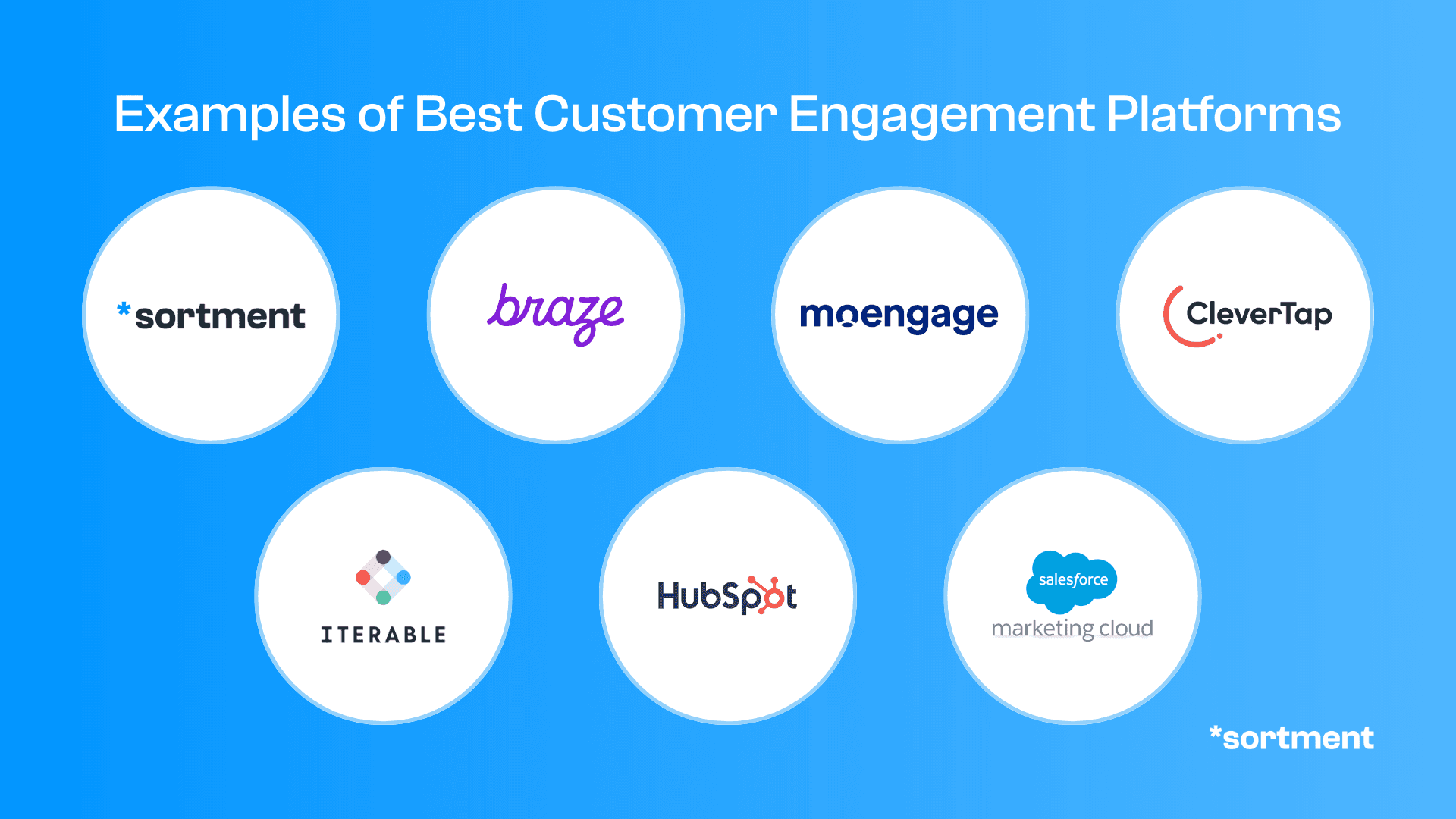
Figure: Examples of best customer engagement platforms
1. Sortment
Best for: Subscription apps, mobile apps, PLG businesses, and lifecycle orchestration with revenue-driven engagement.
Sortment is designed for growing businesses that need to manage customer data, engagement, and revenue insights in one unified system. It brings customer information into a single view and allows teams to automate communication based on real-time user behavior.
The platform focuses on turning engagement into measurable business growth rather than functioning as a basic campaign tool. Businesses can trigger personalized interactions at the right moment while tracking how engagement impacts revenue.
Key strengths include:
Unified customer profiles
Event-based automation
Cross-channel orchestration across email, push notifications, SMS, in-app messages, and WhatsApp
Churn prediction and retention analytics
Revenue attribution and customer lifetime value tracking
Sortment works best for subscription businesses, mobile apps, product-led growth companies, and digital brands focused on improving retention and lifetime value.
2. Braze
Best for: Enterprise mobile engagement.
Braze is known for its mobile-first engagement capabilities and strong real-time event processing. The platform helps businesses deliver personalized messages based on user behavior across mobile apps and digital channels.
It allows companies to trigger communication in real time as users interact with their apps or platforms. This makes it easier to deliver timely and relevant engagement at scale.
Key strengths include:
App-based messaging
Push notification orchestration
Real-time behavioral triggers
Infrastructure built for large enterprise workloads
Braze is commonly used by high-volume consumer apps and global enterprises that rely heavily on mobile engagement.
3. MoEngage
Best for: Mobile engagement in emerging markets.
MoEngage focuses on mobile-first customer engagement while supporting multiple communication channels. The platform helps businesses understand user behavior and send personalized messages across different touchpoints.
Teams can track how users interact with apps and trigger communication based on real-time actions. This allows brands to improve engagement, onboarding, and retention.
Key strengths include:
Cross-channel messaging
Built-in personalization engine
Predictive segmentation
Strong mobile analytics capabilities
MoEngage is widely used by mobile commerce and fintech companies to manage user engagement and improve retention.
4. CleverTap
Best for: Behavioral analytics and mobile retention.
CleverTap combines product analytics with engagement automation to help businesses understand user behavior and trigger targeted messaging. Teams can track how users interact with an app or product and respond with timely, personalized communication.
The platform helps businesses analyze user journeys, identify drop-off points, and improve retention through behavior-based engagement.
Key strengths include:
Event tracking
Funnel analysis
Advanced segmentation
Messaging across push notifications and in-app channels
Companies often use CleverTap to improve mobile user retention and increase product engagement.
5. Iterable
Best for: Cross-channel marketing orchestration.
Iterable focuses on lifecycle marketing and campaign automation across multiple communication channels. The platform helps teams design customer journeys and deliver personalized messaging based on behavioral signals.
Businesses can automate campaigns and coordinate communication across email, SMS, push notifications, and other channels from a single workflow.
Key strengths include:
Visual workflow builder
Dynamic segmentation
Cross-channel campaign management across email, SMS, and push notifications
Built-in experimentation and testing tools
Retail brands and digital subscription companies commonly use Iterable to manage lifecycle marketing and customer journeys.
6. HubSpot
Best for: CRM and marketing automation integration.
HubSpot primarily functions as a CRM and marketing automation platform, but it also includes engagement tools that support lifecycle communication. Businesses can manage customer relationships, track leads, and run marketing campaigns within the same ecosystem.
The platform helps teams align sales and marketing efforts while nurturing leads through automated workflows.
Key strengths include:
Built-in CRM integration
Email automation
Lead nurturing workflows
Sales and marketing alignment
HubSpot works best for B2B lifecycle marketing rather than high-volume behavioral engagement.
7. Salesforce Marketing Cloud
Best for: Enterprise omnichannel orchestration.
Salesforce Marketing Cloud enables businesses to manage customer engagement across multiple channels within the broader Salesforce ecosystem. The platform helps enterprises design customer journeys, personalize communication, and coordinate messaging at scale.
Teams can connect marketing activity directly with CRM data, making it easier to deliver relevant experiences throughout the customer lifecycle.
Key strengths include:
Deep CRM integration
Enterprise-level personalization
Customer journey orchestration tools
Large-scale segmentation capabilities
Salesforce Marketing Cloud works best for organizations already operating within Salesforce infrastructure and managing complex enterprise customer journeys.
How to Choose Between Customer Engagement Platform Examples?
Not all platforms are built for the same stage or goal. When evaluating options, ask:
Does it unify behavioral and transactional data?
Does it support real-time event-based automation?
Can it orchestrate messaging across channels?
Does it provide churn prediction?
Does it connect engagement to revenue metrics like CLV?
Many tools send campaigns. Fewer platforms orchestrate retention. The difference shows up in revenue.
Tip: Check what a CEP actually does and then evaluate which platform covers most responsibilities that matters to your business. The best CEP will do it all for you!
What Separates a True Customer Engagement Platform from a Messaging Tool?
Messaging tools focus on:
Sending emails
Tracking opens
Basic automation
True customer engagement platforms focus on:
Unified customer intelligence
Lifecycle orchestration
Predictive retention
Revenue attribution
If engagement isn’t tied to retention and CLV growth, it’s not a growth engine. It’s a communication tool.
Customer Engagement Platform Examples in Practice
Example 1: Subscription app onboarding
A subscription app using Sortment detected that users who did not use a specific core feature in their first 7 days churned at 3x the rate of users who did.
Sortment built a behavioral trigger: any user who had not touched that feature by day 4 received an in-app message with a one-tap shortcut to it, followed by an email on day 6 if they were still inactive.
Onboarding completion improved by 23% within 60 days, without any manual campaign management from the marketing team.
Note: If you have a real stat from a customer, use that instead. This is a placeholder structure.
Example 2: E-commerce re-engagement
An e-commerce brand using Klaviyo identified customers who had purchased once but had not returned in 90 days.
They built a 3-step win-back sequence: a “we miss you” email with a product recommendation based on the customer’s original purchase category, followed by an SMS with a time-limited discount, followed by a final email summarizing what was new since their last order.
The sequence recovered 11% of lapsed customers within 30 days.
Note: Source this from Klaviyo’s published win-back benchmarks before publishing.
Example 3: Mobile app churn prevention
A gaming company using Braze tracked players who had not logged in for 5 days, which had historically been the key churn indicator in its cohort data.
Braze triggered a push notification personalized to each player’s most recent in-game achievement, with a message framing what they would miss if they stayed away.
Players who received the behavioral push had a 34% higher 30-day retention rate compared to those who received a generic re-engagement blast.
Final Thoughts on Customer Engagement Platform Examples
Customer engagement platform examples vary widely. Some platforms focus on enterprise ecosystems, while others specialize in mobile engagement or lifecycle marketing.
But the real decision should not revolve around feature lists. It should focus on outcomes.
Ask a simple question: Do you want to send more campaigns, or build a system that improves retention, reduces churn, and grows revenue over time?
Customer acquisition brings users into your product. Engagement determines whether they stay, return, and continue buying.
The right customer engagement platform helps businesses turn everyday interactions into long-term customer relationships and measurable growth.
Frequently Asked Questions [FAQs] on Customer Engagement Platform Examples
What are some popular customer engagement platform examples?
Popular customer engagement platform examples include Sortment, Braze, MoEngage, CleverTap, Iterable, HubSpot, and Salesforce Marketing Cloud. These platforms help businesses automate communication, personalize messaging, and manage customer interactions across channels.
How do businesses choose the right customer engagement platform?
Businesses should evaluate their engagement goals, customer scale, and communication channels. Some platforms specialize in mobile engagement, while others focus on lifecycle automation, CRM integration, or enterprise-level orchestration.
Are customer engagement platforms only for large companies?
No. Many customer engagement platforms support startups and mid-sized businesses as well. Growing companies often use them to automate lifecycle communication, improve onboarding, and increase customer retention.
Which industries use customer engagement platforms the most?
Industries such as SaaS, ecommerce, fintech, mobile apps, and digital subscription businesses commonly use customer engagement platforms to manage large-scale customer communication and improve retention.
Why are customer engagement platforms important for retention?
Customer engagement platforms help businesses send timely, personalized communication based on user behavior. This improves onboarding, increases product usage, reduces churn, and helps businesses build long-term customer relationships.
When should you use a customer engagement platform instead of a CRM for retention?
A CRM manages relationships and deal pipelines, but it was not designed to automate real-time behavioral engagement at scale.
A customer engagement platform becomes the right tool when your retention strategy requires triggering messages based on what users actually do. For example, detecting that a user skipped a key feature after onboarding and automatically sending a targeted in-app message followed by a timed email.
CRMs cannot execute multi-step behavioral sequences without heavy custom development. If your retention depends on lifecycle journeys that react to live user behavior across channels, a customer engagement platform is the right layer on top of your CRM, not a replacement for it.
See also
How the Sortment Proof of Concept Works (30-Day Overview)
How the Sortment Proof of Concept Works (30-Day Overview)
How the Sortment Proof of Concept Works (30-Day Overview)
Learn how the Sortment 30-day Proof of Concept works for lifecycle marketing. Connect your data, focus on one metric, and achieve measurable improvement before committing to the platform.
Learn how the Sortment 30-day Proof of Concept works for lifecycle marketing. Connect your data, focus on one metric, and achieve measurable improvement before committing to the platform.
See what Sortment can do for your goals.
See what Sortment can do for your goals.
Book a 30-minute call. We'll show you how the pilot works with your data and your stack.
Book a 30-minute call. We'll show you how the pilot works with your data and your stack.
AGENTS
CASE STUDIES
RESOURCES
AGENTS
CASE STUDIES
RESOURCES
Customer engagement platform examples help businesses understand how modern brands manage customer communication, retention, and lifecycle marketing at scale.
Customer acquisition costs keep rising, and retention has become the real growth driver. Businesses now need platforms that unify customer data, automate lifecycle journeys, and connect engagement directly to revenue.
But which customer engagement platforms lead the market? And how do they differ in what they are built for?
Here are some leading customer engagement platform examples and what each platform does best.
What Is a Customer Engagement Platform?
Figure: Sortment has omnichannel capabilities
Before we look at examples, let’s clarify the definition. Unlike basic marketing automation tools, CEPs focus on retention, personalization, and lifecycle growth.
CEP market projected at approximately $10 billion in 2025, growing to $11.5 billion in 2026 at a 15% CAGR, driven by AI personalization and omnichannel strategies.
A customer engagement platform (CEP) is software that:
Unifies customer data
Automates lifecycle communication
Orchestrates cross-channel messaging
Predicts churn risk
Connects engagement to revenue
What are the Examples of the Best Customer Engagement Platforms?
Several customer engagement platforms help businesses manage communication, automate lifecycle journeys, and improve customer retention.
Each platform focuses on slightly different capabilities such as lifecycle automation, mobile engagement, analytics, or CRM-driven marketing.
Figure: Examples of best customer engagement platforms
1. Sortment
Best for: Subscription apps, mobile apps, PLG businesses, and lifecycle orchestration with revenue-driven engagement.
Sortment is designed for growing businesses that need to manage customer data, engagement, and revenue insights in one unified system. It brings customer information into a single view and allows teams to automate communication based on real-time user behavior.
The platform focuses on turning engagement into measurable business growth rather than functioning as a basic campaign tool. Businesses can trigger personalized interactions at the right moment while tracking how engagement impacts revenue.
Key strengths include:
Unified customer profiles
Event-based automation
Cross-channel orchestration across email, push notifications, SMS, in-app messages, and WhatsApp
Churn prediction and retention analytics
Revenue attribution and customer lifetime value tracking
Sortment works best for subscription businesses, mobile apps, product-led growth companies, and digital brands focused on improving retention and lifetime value.
2. Braze
Best for: Enterprise mobile engagement.
Braze is known for its mobile-first engagement capabilities and strong real-time event processing. The platform helps businesses deliver personalized messages based on user behavior across mobile apps and digital channels.
It allows companies to trigger communication in real time as users interact with their apps or platforms. This makes it easier to deliver timely and relevant engagement at scale.
Key strengths include:
App-based messaging
Push notification orchestration
Real-time behavioral triggers
Infrastructure built for large enterprise workloads
Braze is commonly used by high-volume consumer apps and global enterprises that rely heavily on mobile engagement.
3. MoEngage
Best for: Mobile engagement in emerging markets.
MoEngage focuses on mobile-first customer engagement while supporting multiple communication channels. The platform helps businesses understand user behavior and send personalized messages across different touchpoints.
Teams can track how users interact with apps and trigger communication based on real-time actions. This allows brands to improve engagement, onboarding, and retention.
Key strengths include:
Cross-channel messaging
Built-in personalization engine
Predictive segmentation
Strong mobile analytics capabilities
MoEngage is widely used by mobile commerce and fintech companies to manage user engagement and improve retention.
4. CleverTap
Best for: Behavioral analytics and mobile retention.
CleverTap combines product analytics with engagement automation to help businesses understand user behavior and trigger targeted messaging. Teams can track how users interact with an app or product and respond with timely, personalized communication.
The platform helps businesses analyze user journeys, identify drop-off points, and improve retention through behavior-based engagement.
Key strengths include:
Event tracking
Funnel analysis
Advanced segmentation
Messaging across push notifications and in-app channels
Companies often use CleverTap to improve mobile user retention and increase product engagement.
5. Iterable
Best for: Cross-channel marketing orchestration.
Iterable focuses on lifecycle marketing and campaign automation across multiple communication channels. The platform helps teams design customer journeys and deliver personalized messaging based on behavioral signals.
Businesses can automate campaigns and coordinate communication across email, SMS, push notifications, and other channels from a single workflow.
Key strengths include:
Visual workflow builder
Dynamic segmentation
Cross-channel campaign management across email, SMS, and push notifications
Built-in experimentation and testing tools
Retail brands and digital subscription companies commonly use Iterable to manage lifecycle marketing and customer journeys.
6. HubSpot
Best for: CRM and marketing automation integration.
HubSpot primarily functions as a CRM and marketing automation platform, but it also includes engagement tools that support lifecycle communication. Businesses can manage customer relationships, track leads, and run marketing campaigns within the same ecosystem.
The platform helps teams align sales and marketing efforts while nurturing leads through automated workflows.
Key strengths include:
Built-in CRM integration
Email automation
Lead nurturing workflows
Sales and marketing alignment
HubSpot works best for B2B lifecycle marketing rather than high-volume behavioral engagement.
7. Salesforce Marketing Cloud
Best for: Enterprise omnichannel orchestration.
Salesforce Marketing Cloud enables businesses to manage customer engagement across multiple channels within the broader Salesforce ecosystem. The platform helps enterprises design customer journeys, personalize communication, and coordinate messaging at scale.
Teams can connect marketing activity directly with CRM data, making it easier to deliver relevant experiences throughout the customer lifecycle.
Key strengths include:
Deep CRM integration
Enterprise-level personalization
Customer journey orchestration tools
Large-scale segmentation capabilities
Salesforce Marketing Cloud works best for organizations already operating within Salesforce infrastructure and managing complex enterprise customer journeys.
How to Choose Between Customer Engagement Platform Examples?
Not all platforms are built for the same stage or goal. When evaluating options, ask:
Does it unify behavioral and transactional data?
Does it support real-time event-based automation?
Can it orchestrate messaging across channels?
Does it provide churn prediction?
Does it connect engagement to revenue metrics like CLV?
Many tools send campaigns. Fewer platforms orchestrate retention. The difference shows up in revenue.
Tip: Check what a CEP actually does and then evaluate which platform covers most responsibilities that matters to your business. The best CEP will do it all for you!
What Separates a True Customer Engagement Platform from a Messaging Tool?
Messaging tools focus on:
Sending emails
Tracking opens
Basic automation
True customer engagement platforms focus on:
Unified customer intelligence
Lifecycle orchestration
Predictive retention
Revenue attribution
If engagement isn’t tied to retention and CLV growth, it’s not a growth engine. It’s a communication tool.
Customer Engagement Platform Examples in Practice
Example 1: Subscription app onboarding
A subscription app using Sortment detected that users who did not use a specific core feature in their first 7 days churned at 3x the rate of users who did.
Sortment built a behavioral trigger: any user who had not touched that feature by day 4 received an in-app message with a one-tap shortcut to it, followed by an email on day 6 if they were still inactive.
Onboarding completion improved by 23% within 60 days, without any manual campaign management from the marketing team.
Note: If you have a real stat from a customer, use that instead. This is a placeholder structure.
Example 2: E-commerce re-engagement
An e-commerce brand using Klaviyo identified customers who had purchased once but had not returned in 90 days.
They built a 3-step win-back sequence: a “we miss you” email with a product recommendation based on the customer’s original purchase category, followed by an SMS with a time-limited discount, followed by a final email summarizing what was new since their last order.
The sequence recovered 11% of lapsed customers within 30 days.
Note: Source this from Klaviyo’s published win-back benchmarks before publishing.
Example 3: Mobile app churn prevention
A gaming company using Braze tracked players who had not logged in for 5 days, which had historically been the key churn indicator in its cohort data.
Braze triggered a push notification personalized to each player’s most recent in-game achievement, with a message framing what they would miss if they stayed away.
Players who received the behavioral push had a 34% higher 30-day retention rate compared to those who received a generic re-engagement blast.
Final Thoughts on Customer Engagement Platform Examples
Customer engagement platform examples vary widely. Some platforms focus on enterprise ecosystems, while others specialize in mobile engagement or lifecycle marketing.
But the real decision should not revolve around feature lists. It should focus on outcomes.
Ask a simple question: Do you want to send more campaigns, or build a system that improves retention, reduces churn, and grows revenue over time?
Customer acquisition brings users into your product. Engagement determines whether they stay, return, and continue buying.
The right customer engagement platform helps businesses turn everyday interactions into long-term customer relationships and measurable growth.
Frequently Asked Questions [FAQs] on Customer Engagement Platform Examples
What are some popular customer engagement platform examples?
Popular customer engagement platform examples include Sortment, Braze, MoEngage, CleverTap, Iterable, HubSpot, and Salesforce Marketing Cloud. These platforms help businesses automate communication, personalize messaging, and manage customer interactions across channels.
How do businesses choose the right customer engagement platform?
Businesses should evaluate their engagement goals, customer scale, and communication channels. Some platforms specialize in mobile engagement, while others focus on lifecycle automation, CRM integration, or enterprise-level orchestration.
Are customer engagement platforms only for large companies?
No. Many customer engagement platforms support startups and mid-sized businesses as well. Growing companies often use them to automate lifecycle communication, improve onboarding, and increase customer retention.
Which industries use customer engagement platforms the most?
Industries such as SaaS, ecommerce, fintech, mobile apps, and digital subscription businesses commonly use customer engagement platforms to manage large-scale customer communication and improve retention.
Why are customer engagement platforms important for retention?
Customer engagement platforms help businesses send timely, personalized communication based on user behavior. This improves onboarding, increases product usage, reduces churn, and helps businesses build long-term customer relationships.
When should you use a customer engagement platform instead of a CRM for retention?
A CRM manages relationships and deal pipelines, but it was not designed to automate real-time behavioral engagement at scale.
A customer engagement platform becomes the right tool when your retention strategy requires triggering messages based on what users actually do. For example, detecting that a user skipped a key feature after onboarding and automatically sending a targeted in-app message followed by a timed email.
CRMs cannot execute multi-step behavioral sequences without heavy custom development. If your retention depends on lifecycle journeys that react to live user behavior across channels, a customer engagement platform is the right layer on top of your CRM, not a replacement for it.