Omni-Channel Orchestration
Compare the best channel orchestration platforms for 2026 and learn to connect customer journeys across email, push, SMS, and in-app messaging seamlessly.
Omni channel orchestration connects every customer interaction across channels into one seamless experience.
Users today switch between apps, websites, emails, and messaging platforms without thinking twice. If your communication feels disconnected, they lose interest fast.
Platforms like Sortment help you unify customer data, automate journeys, and deliver real-time, personalized engagement across channels.
If your goal is better retention, higher conversions, and consistent customer experience, omni channel orchestration makes that possible.
What is omni channel orchestration and how does it work?
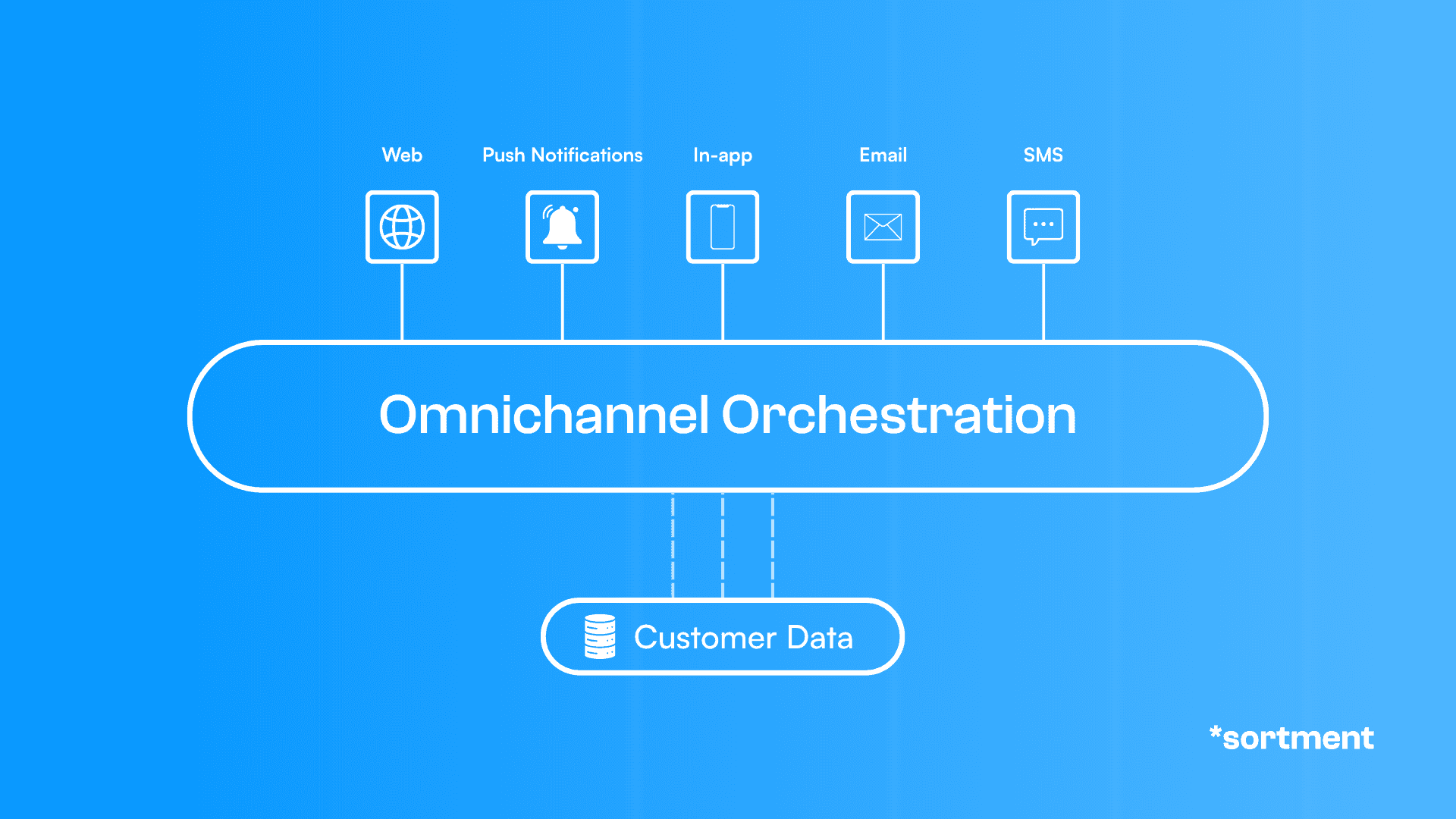
Figure: Omnichannel orchestration using customer data
Omni channel orchestration connects customer interactions across channels into one unified system. It uses data, automation, and timing to deliver consistent communication, ensuring users experience a seamless journey instead of fragmented messages across email, apps, and other touchpoints.
Omnichannel vs multichannel vs cross-channel
Multichannel means you use multiple platforms like email, SMS, and push notifications. Omnichannel connects these platforms. It ensures the message stays consistent across channels.
Cross-channel allows some interaction between channels, but orchestration goes deeper by managing timing, context, and sequence.
How orchestration connects data, channels, and timing
Orchestration pulls data from all touchpoints into one system.
It tracks user behavior and decides when and where to engage. This ensures users receive messages at the right time on the right channel.
Role of AI in omnichannel orchestration
AI studies user behavior and predicts intent.
It helps you send relevant messages instead of generic ones. This improves engagement without increasing effort.
Why is omnichannel orchestration important for customer engagement today?
Customers expect smooth and connected experiences across channels. Omni-channel orchestration removes gaps between touchpoints, improves consistency, and ensures timely communication, which increases engagement, builds trust, and helps businesses drive better conversions and long-term customer relationships.
The problem with fragmented customer touchpoints
When channels work in silos, users receive inconsistent messages. This breaks the journey and reduces engagement.
How seamless experiences improve retention and conversions
Consistent communication builds trust. When users receive relevant messages at the right time, they engage more and convert faster.
Impact on customer lifetime value (LTV) and churn
Better engagement leads to repeat interactions. This increases lifetime value and reduces the chances of users dropping off.
How does omnichannel orchestration improve the customer journey?
Omni-channel orchestration enhances every stage of the customer journey by connecting interactions across channels. Best omnichannel orchestration platforms ensure users receive relevant messages during acquisition, onboarding, engagement, retention, and reactivation, creating a seamless and personalized experience that drives better outcomes.
Awareness: unified messaging across channels
Users discover your brand on different platforms. You can maintain consistent messaging across all channels to create a strong first impression.
Onboarding: guiding users with connected flows
The first few interactions matter. You can guide users with structured onboarding flows that help them understand your product quickly.
Engagement: real-time, behavior-based communication
Users respond better to timely communication. You can send messages based on user actions instead of fixed schedules.
Retention: consistent and personalized interactions
Retention depends on relevance. You can keep users engaged with personalized offers, updates, and reminders.
Reactivation: bringing users back with smart campaigns
Some users go inactive. You can identify them early and send targeted campaigns to bring them back.
What features should you look for in an omni channel orchestration platform?
A strong platform should include unified customer data, real-time automation, multi-channel integration, personalization engines, and analytics. These features help businesses deliver consistent engagement, optimize journeys, and make data-driven decisions that improve customer experience and retention.
Unified customer data platform (CDP)
You need a single view of your customer. A CDP collects and organizes data from all touchpoints.
Real-time decisioning and automation
Timing matters. The platform should trigger actions based on real-time behavior.
Channel integration (email, WhatsApp, push, SMS, web)
Users engage on different channels. You should manage all channels from one place.
Personalization and segmentation engines
Not all users behave the same. You can segment users and personalize communication based on behavior.
Analytics and journey performance tracking
You must track what works. The platform should provide clear insights to improve performance.
What are the best omnichannel orchestration platforms in 2026?
The best omnichannel marketing tools and platforms depend on business needs such as lifecycle marketing, SaaS onboarding, or enterprise scalability. Each tool offers different strengths in personalization, automation, and channel integration, so choosing the right one requires aligning features with your growth goals.
| Platform | Best For | Key Strength | Channels Supported | Ease of Use | Ideal Business Type |
|---|---|---|---|---|---|
| Sortment | E-commerce lifecycle & retention | Strong lifecycle automation + retention focus | Email, WhatsApp, Push, SMS, Web | High | D2C, e-commerce brands |
| Braze | Omnichannel engagement at scale | Real-time personalization + strong automation | Email, Push, SMS, In-app, Web | Medium | Mid to large businesses |
| Intercom | SaaS onboarding & product engagement | In-app messaging + onboarding flows | In-app, Email, Chat | High | SaaS, product-led companies |
| MoEngage | Mobile-first engagement | Good segmentation + mobile automation | Push, Email, SMS, App | High | Startups, growing brands |
| Salesforce Marketing Cloud | Enterprise orchestration | Deep integrations + advanced analytics | All major channels | Low (complex) | Enterprises, large teams |
Table: Comparison of best omnichannel marketing tools and platforms
1. Sortment - Best for e-commerce lifecycle and retention
Sortment focuses on connecting customer journeys across channels. It helps you build lifecycle flows, personalize engagement, and drive repeat purchases.
2. Braze - Best for omnichannel engagement at scale
Braze supports large-scale campaigns across multiple channels. It works well for businesses that need strong automation and personalization.
3. Intercom - Best for SaaS onboarding and engagement
Intercom helps SaaS companies improve onboarding and product usage. It focuses on in-app engagement and user guidance.
4. MoEngage - Best for mobile-first brands
MoEngage supports mobile-driven engagement strategies. It offers automation, segmentation, and cross-channel communication.
5. Salesforce Marketing Cloud - Best for enterprise orchestration
Salesforce offers advanced features for large organizations. It supports complex journeys, integrations, and analytics.
How do you implement omni channel orchestration effectively?
Effective omnichannel implementation starts with mapping the customer journey, unifying data, and setting behavior-based triggers. Continuous testing and optimization ensure better results, helping businesses deliver timely and relevant communication that improves engagement and long-term customer value.
Map your customer journey first
Start with clarity. Define each stage of the customer journey and identify key touchpoints.
Unify data across all touchpoints
Bring all customer data into one system. This ensures consistency and accuracy.
Define triggers and automation flows
Set clear triggers based on user behavior. This helps you send timely and relevant communication.
Test, optimize, and scale journeys
Start small. Test different journeys, analyze performance, and scale what works.
What challenges should you consider in omni channel orchestration?
Businesses may face challenges like data silos, inconsistent messaging, and over-automation. Addressing these issues requires proper integration, clear strategy, and a balance between automation and personalization to ensure smooth and meaningful customer interactions.
Data silos and integration issues
Disconnected systems create gaps. You must ensure smooth data flow across tools.
Maintaining consistency across channels
Consistency builds trust. You must align messaging across all channels.
Balancing automation with personalization
Automation should feel human. You must avoid over-automation and focus on relevance.
Ready to turn disconnected touchpoints into one seamless customer journey?
Original mixed-methods study (500+ respondents across retail/tech/finance) confirms omnichannel boosts loyalty via consistency, with seamless mobile integration driving higher retention rates.
Running multiple channels is easy. Connecting them is what drives results.
Omni channel orchestration helps you deliver consistent, personalized, and timely experiences across the entire customer journey.
If you want to move beyond isolated campaigns and build journeys that drive retention and revenue, you need the right platform.
Sortment helps you bring everything together - from data to communication to lifecycle execution - so every interaction feels connected and meaningful.
Frequently Asked Questions (FAQs) About Omni Channel Orchestration
What is omni channel orchestration?
Omni channel orchestration connects all customer interactions across channels into one unified journey, ensuring consistent and personalized communication.
How is omnichannel different from multichannel?
Multichannel uses multiple platforms without connection. Omnichannel connects all channels to deliver a seamless experience.
What tools are used for omnichannel orchestration?
Tools include customer engagement platforms, automation systems, and data platforms that manage communication across channels.
Why is omnichannel important for customer experience?
It ensures users receive consistent and relevant communication, which improves engagement and satisfaction.
Is omnichannel orchestration suitable for small businesses?
Yes. Many platforms offer scalable solutions that help small businesses improve engagement and retention.