What Should I Look for Before Choosing a Customer Engagement Platform?
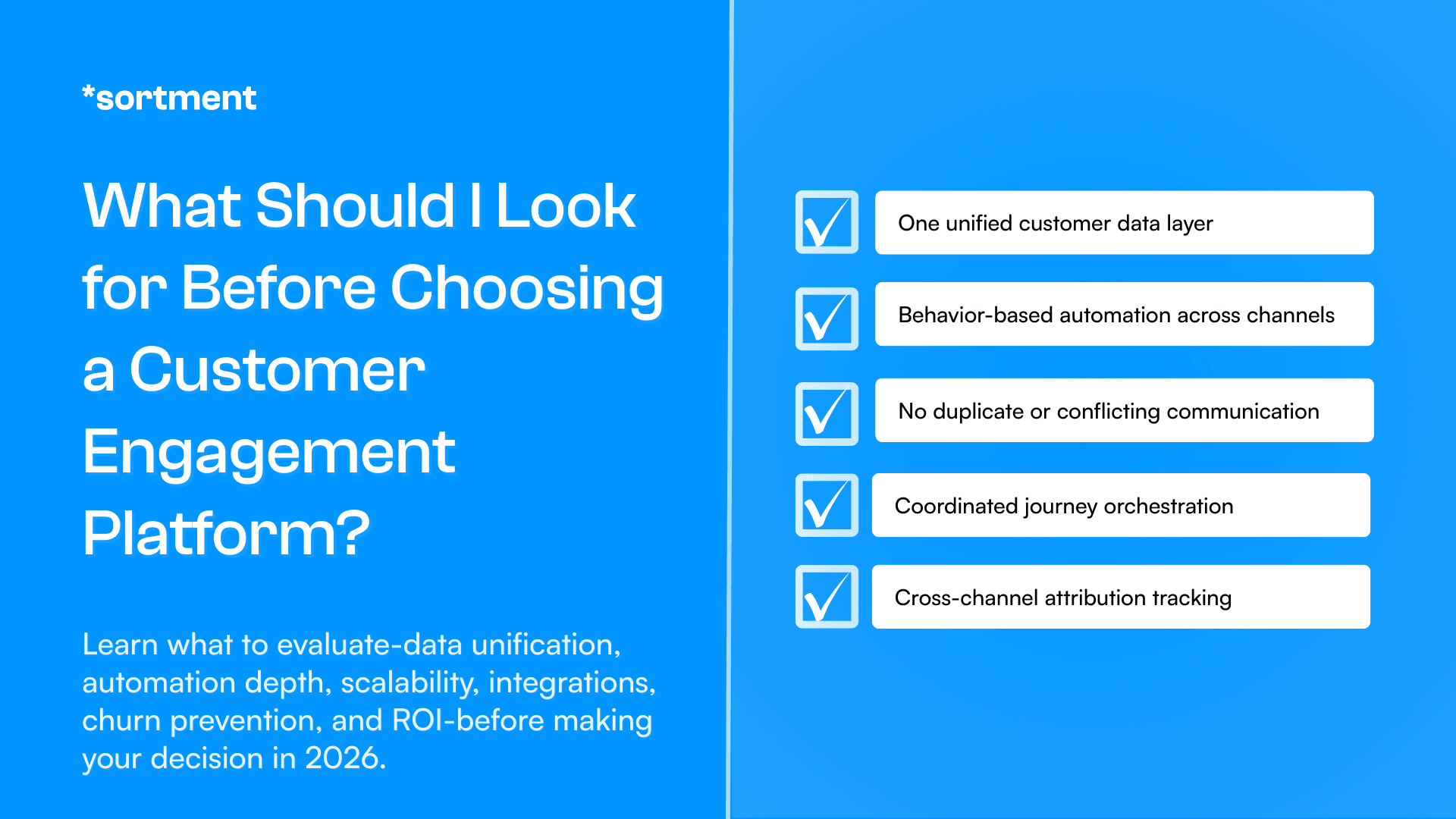
Choosing a customer engagement platform? Learn what to evaluate-data unification, automation depth, scalability, integrations, churn prevention, and ROI-before making your decision in 2026.
Abhimanyu
·
New York
·
Customer acquisition costs are rising across industries. Attention spans are shrinking. And retention is no longer just a growth lever - it’s a competitive necessity.
Yet when choosing a customer engagement platform, many brands compare features instead of outcomes.
The result?
Disconnected customer journeys. Fragmented data. Underused automation. Limited visibility into churn. And a platform that functions more like a campaign sender than a true engagement engine.
If you're evaluating a customer engagement platform in 2026, the real question isn’t “Which tool has more features?”
It’s:
Which platform will improve retention, increase customer lifetime value (CLV), and drive measurable revenue growth?
Here’s what to look for before making that decision.
Define Your Retention Goals Before Comparing Platforms
The first thing to look for in a customer engagement platform is alignment with your retention and lifecycle goals.
Before you compare tools, answer this:
Are you trying to reduce churn?
Improve activation?
Increase repeat purchases?
Drive subscription renewals?
Improve lifecycle personalization?
A platform should support your lifecycle strategy - not define it. If you don’t have clarity on lifecycle stages, start there.

Look for a Platform That Unifies Customer Data
This is non-negotiable. If your customer data lives across:
CRM
Website analytics
App events
Subscription platform
Email tool
You don’t have personalization. You have fragmentation. A strong customer engagement platform should:
✔ Merge behavioral + transactional data
✔ Sync real-time events
✔ Enable advanced segmentation
✔ Build dynamic audiences
Without unified data, automation becomes guesswork.
Prioritize Event-Based Automation and Journey Orchestration
Many tools call themselves “engagement platforms” but function as email schedulers. A strong engagement platform must support event-based automation and dynamic customer journeys.
What you actually need:
Event-triggered workflows
Conditional branching
Real-time behavioral triggers
Multi-step lifecycle journeys
Dynamic content personalization
If the automation feels linear, it’s not engagement - it’s broadcasting. Look for orchestration, not just automation.
Ensure True Cross-Channel Customer Engagement
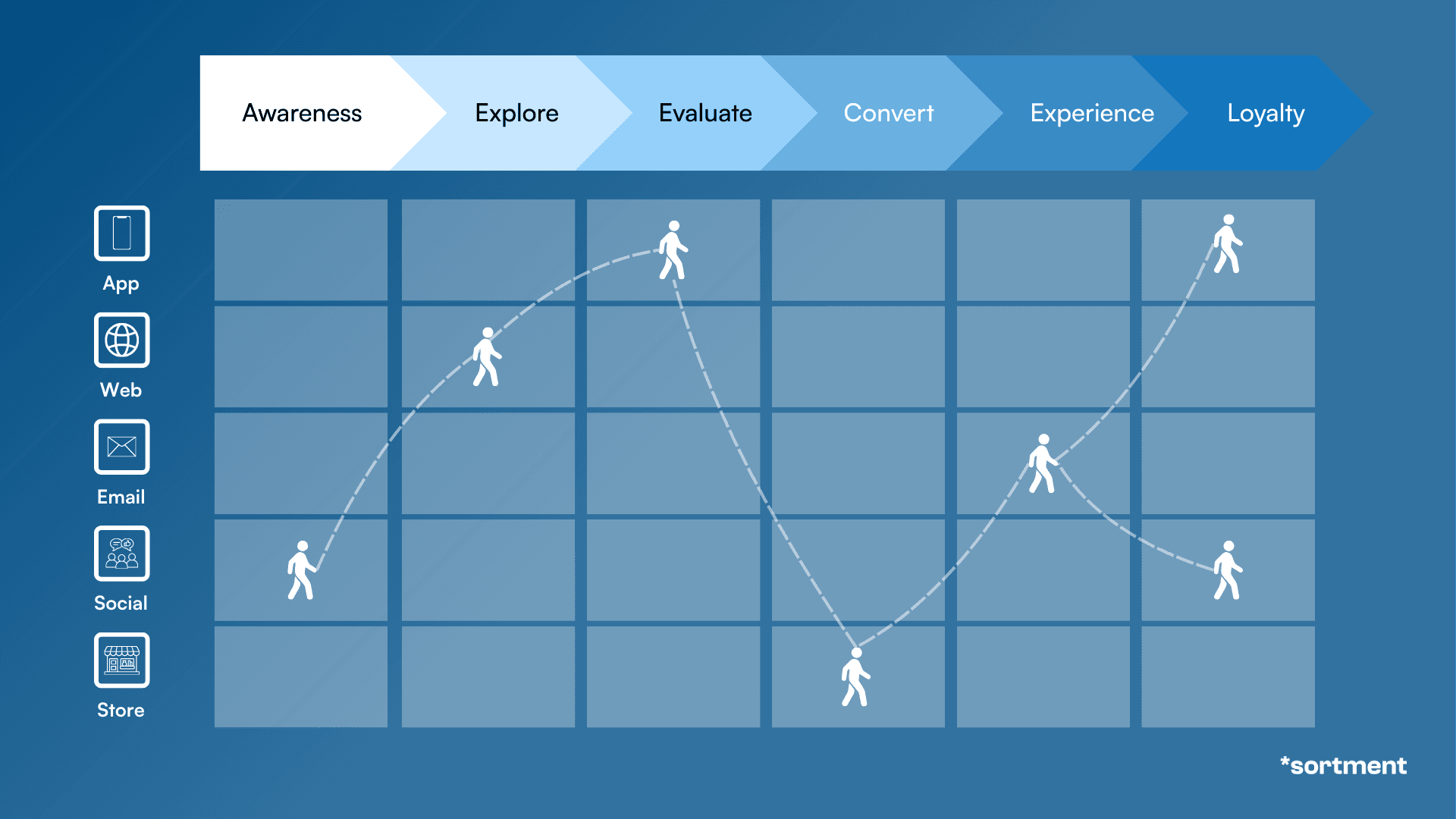
Figure: Cross-channel customer engagement is essential for driving trust among consumers
Customers don’t think in channels. Brands shouldn’t either. Omnichannel Marketing is a must. Your platform should coordinate:
✔ Email
✔ SMS
✔ Push notifications
✔ In-app messaging
✔ WhatsApp
✔ Web personalization
But more importantly, it should sequence them intelligently.
Example:
Email unopened → Trigger SMS
App inactive → Send push + in-app incentive
Subscription renewal near → Email + WhatsApp reminder
Consistency across touchpoints drives trust.
“Sortment is basically a system that is watching over your users so you don't have to. It identifies patterns, comes up with next steps, and even writes the content to reach those users.”
Jatin, Co-founder, Toast
“Sortment is basically a system that is watching over your users so you don't have to. It identifies patterns, comes up with next steps, and even writes the content to reach those users.”
Jatin, Co-founder, Toast
“Sortment is basically a system that is watching over your users so you don't have to. It identifies patterns, comes up with next steps, and even writes the content to reach those users.”
Jatin, Co-founder, Toast
Check for Built-In Churn Prediction and Retention Analytics
Most platforms tell you what happened. The best customer engagement platforms tell you what’s about to happen.
Look for:
Engagement scoring
Churn risk indicators
Renewal probability tracking
Predictive segments
Retention dashboards
If you can’t proactively identify churn risk, you’re reacting too late. A modern engagement platform should help you act before revenue is lost.
Evaluate Integration Capabilities and Scalability
Growth breaks weak systems. Your platform should integrate seamlessly with:
CRM
Shopify / eCommerce stack
Subscription management tools
Data warehouse
Analytics platforms
Ad platforms
Ask:
Does it support API flexibility?
Is data synced in real time?
Can it scale with increasing event volume?
Switching platforms every 18 months is expensive. Choose for where you're going, not where you are.
Demand Clear Revenue Attribution and ROI Reporting
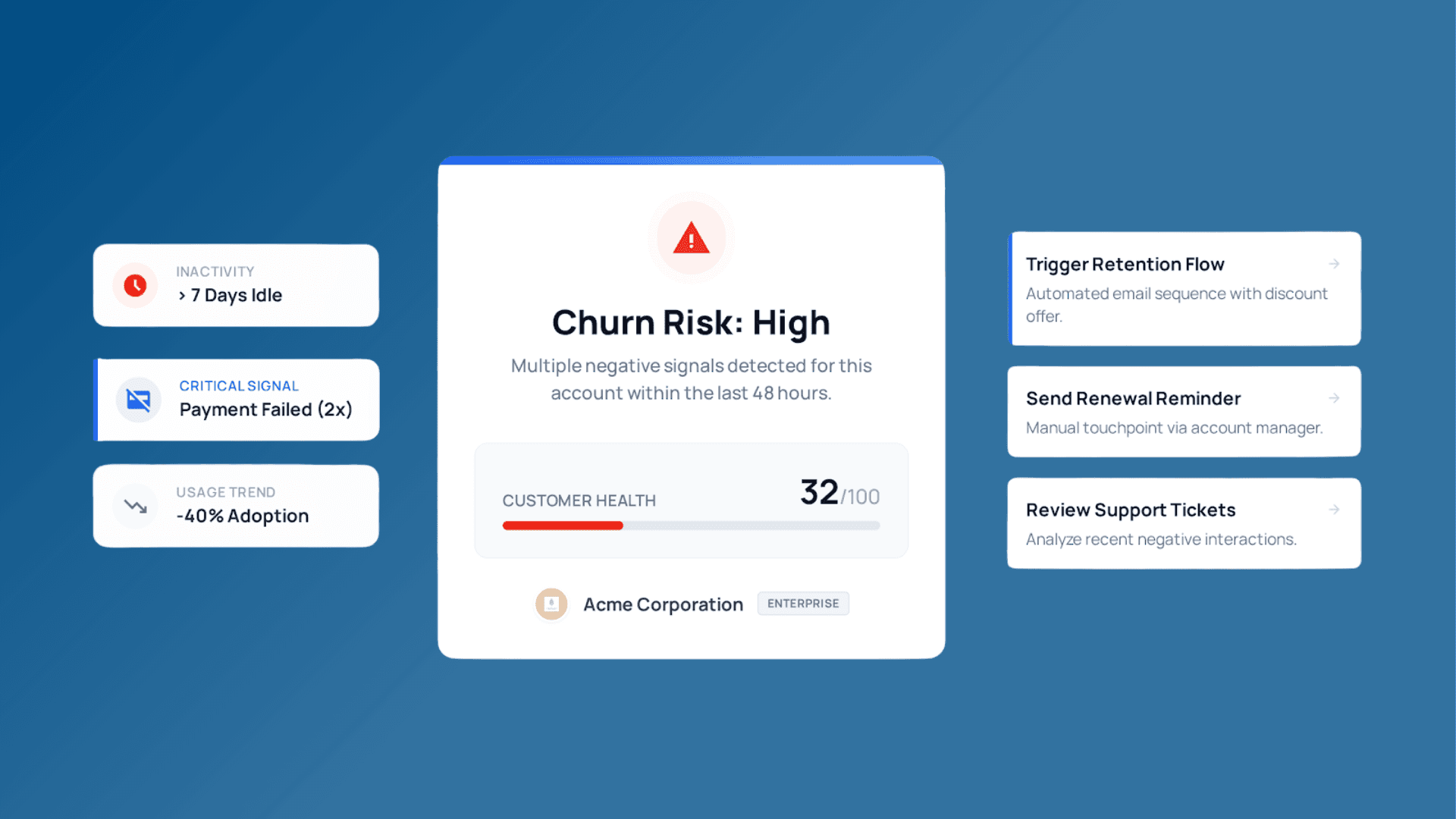
Figure: Clear reporting helps prevent churn, and understand where your revenue is coming from
If you cannot measure revenue impact, it’s not a growth tool - it’s a messaging tool.
Look for:
✔ Revenue attribution per campaign
✔ CLV tracking
✔ Retention rate visibility
✔ Cohort analysis
✔ Incrementality measurement
Engagement should tie directly to revenue.
If reporting is shallow, optimization becomes impossible.
Customer Engagement Platform Evaluation Checklist
Before choosing a customer engagement platform, confirm:
✔ Clear lifecycle and retention goals
✔ Unified customer data
✔ Event-based automation
✔ Cross-channel orchestration
✔ Predictive churn intelligence
✔ Strong integrations
✔ Revenue attribution
If even one of these is missing, you’re not choosing a growth engine - you’re choosing a communication tool. And this is a must when you’re choosing a customer engagement platform for a mobile app.
Where Sortment Fits Into This?
Most engagement tools help you send campaigns. Sortment is built to orchestrate lifecycle growth.
Find lifecycle growth opportunities with Sortment
See how Strategy AI monitors your customer data, surfaces growth opportunities, and recommends campaigns tied to activation, retention, or monetization.
Find lifecycle growth opportunities with Sortment
See how Strategy AI monitors your customer data, surfaces growth opportunities, and recommends campaigns tied to activation, retention, or monetization.
Find lifecycle growth opportunities with Sortment
See how Strategy AI monitors your customer data, surfaces growth opportunities, and recommends campaigns tied to activation, retention, or monetization.
Instead of juggling separate tools for data, messaging, churn tracking, and retention analytics, Sortment brings unified customer data, event-based automation, cross-channel sequencing, and churn intelligence into one connected system.
That means:
Journeys triggered by real behavior
Messaging coordinated across channels
Churn risks identified before revenue drops
Retention tied directly to measurable revenue impact
If your goal is simply sending more emails, any tool will work.
If your goal is increasing retention and lifetime value, orchestration matters.
Final Thought On Choosing the Best Customer Engagement Platform
86% of customers are willing to pay more for great customer experiences enabled by CEPs, prioritizing CX over price or ads.
Choosing a customer engagement platform is not a feature comparison exercise.
It’s a revenue decision. The real question isn’t:
“What does this tool do?”
It’s: “Will this platform measurably increase retention, customer lifetime value, and revenue over time?”
Engagement is no longer a marketing layer. It’s your growth infrastructure. Choose accordingly.
See what Sortment can do in 30 days
Pick one lifecycle goal, like activation, retention, or monetization and see how Sortment can achieves your business goals.
See what Sortment can do in 30 days
Pick one lifecycle goal, like activation, retention, or monetization and see how Sortment can achieves your business goals.
See what Sortment can do in 30 days
Pick one lifecycle goal, like activation, retention, or monetization and see how Sortment can achieves your business goals.
Frequently Asked Questions [FAQs] About Choosing the Right CEP
1. What is a customer engagement platform?
A customer engagement platform is software that helps businesses manage, automate, and personalize communication across multiple channels like email, SMS, push notifications, and in-app messaging. It unifies customer data and enables lifecycle-based automation to improve retention and revenue.
2. How is a customer engagement platform different from a marketing automation tool?
Marketing automation tools typically focus on campaign scheduling and email workflows.
A customer engagement platform goes further by unifying behavioral and transactional data, enabling real-time triggers, cross-channel orchestration, churn prediction, and revenue attribution.
In short: marketing automation sends messages. Engagement platforms manage customer journeys.
3. What features should I prioritize when choosing a customer engagement platform?
You should prioritize:
Unified customer data (single customer view)
Event-based automation
Cross-channel messaging
Predictive churn analytics
Revenue attribution
Strong integrations with your tech stack
Without these, personalization and retention efforts will remain limited.
4. Do small businesses need a customer engagement platform?
Yes - especially if retention matters to your revenue model.
Even small eCommerce or subscription brands benefit from automated lifecycle journeys, churn prevention, and cross-channel consistency. The key is choosing a scalable platform that fits your current volume but supports growth.
5. How do I measure ROI from a customer engagement platform?
ROI is measured through:
Increased retention rate
Higher customer lifetime value (CLV)
Reduced churn
Revenue per campaign
Cohort performance improvements
If a platform cannot directly connect engagement activity to revenue impact, it’s difficult to justify long-term investment.
See also
5 Best Customer Engagement Platforms for 2026 (Reviewed)
5 Best Customer Engagement Platforms for 2026 (Reviewed)
5 Best Customer Engagement Platforms for 2026 (Reviewed)
Compare the 5 best customer engagement platforms for 2026 — Sortment, Braze, HubSpot, Intercom, and Salesforce — ranked on features, pricing, and channels.
Compare the 5 best customer engagement platforms for 2026 — Sortment, Braze, HubSpot, Intercom, and Salesforce — ranked on features, pricing, and channels.
See what Sortment can do for your goals.
See what Sortment can do for your goals.
Book a 30-minute call. We'll show you how the pilot works with your data and your stack.
Book a 30-minute call. We'll show you how the pilot works with your data and your stack.
AGENTS
CASE STUDIES
RESOURCES
AGENTS
CASE STUDIES
RESOURCES
Customer acquisition costs are rising across industries. Attention spans are shrinking. And retention is no longer just a growth lever - it’s a competitive necessity.
Yet when choosing a customer engagement platform, many brands compare features instead of outcomes.
The result?
Disconnected customer journeys. Fragmented data. Underused automation. Limited visibility into churn. And a platform that functions more like a campaign sender than a true engagement engine.
If you're evaluating a customer engagement platform in 2026, the real question isn’t “Which tool has more features?”
It’s:
Which platform will improve retention, increase customer lifetime value (CLV), and drive measurable revenue growth?
Here’s what to look for before making that decision.
Define Your Retention Goals Before Comparing Platforms
The first thing to look for in a customer engagement platform is alignment with your retention and lifecycle goals.
Before you compare tools, answer this:
Are you trying to reduce churn?
Improve activation?
Increase repeat purchases?
Drive subscription renewals?
Improve lifecycle personalization?
A platform should support your lifecycle strategy - not define it. If you don’t have clarity on lifecycle stages, start there.
Look for a Platform That Unifies Customer Data
This is non-negotiable. If your customer data lives across:
CRM
Website analytics
App events
Subscription platform
Email tool
You don’t have personalization. You have fragmentation. A strong customer engagement platform should:
✔ Merge behavioral + transactional data
✔ Sync real-time events
✔ Enable advanced segmentation
✔ Build dynamic audiences
Without unified data, automation becomes guesswork.
Prioritize Event-Based Automation and Journey Orchestration
Many tools call themselves “engagement platforms” but function as email schedulers. A strong engagement platform must support event-based automation and dynamic customer journeys.
What you actually need:
Event-triggered workflows
Conditional branching
Real-time behavioral triggers
Multi-step lifecycle journeys
Dynamic content personalization
If the automation feels linear, it’s not engagement - it’s broadcasting. Look for orchestration, not just automation.
Ensure True Cross-Channel Customer Engagement
Figure: Cross-channel customer engagement is essential for driving trust among consumers
Customers don’t think in channels. Brands shouldn’t either. Omnichannel Marketing is a must. Your platform should coordinate:
✔ Email
✔ SMS
✔ Push notifications
✔ In-app messaging
✔ WhatsApp
✔ Web personalization
But more importantly, it should sequence them intelligently.
Example:
Email unopened → Trigger SMS
App inactive → Send push + in-app incentive
Subscription renewal near → Email + WhatsApp reminder
Consistency across touchpoints drives trust.
“Sortment is basically a system that is watching over your users so you don't have to. It identifies patterns, comes up with next steps, and even writes the content to reach those users.”
Jatin, Co-founder, Toast
“Sortment is basically a system that is watching over your users so you don't have to. It identifies patterns, comes up with next steps, and even writes the content to reach those users.”
Jatin, Co-founder, Toast
“Sortment is basically a system that is watching over your users so you don't have to. It identifies patterns, comes up with next steps, and even writes the content to reach those users.”
Jatin, Co-founder, Toast
Check for Built-In Churn Prediction and Retention Analytics
Most platforms tell you what happened. The best customer engagement platforms tell you what’s about to happen.
Look for:
Engagement scoring
Churn risk indicators
Renewal probability tracking
Predictive segments
Retention dashboards
If you can’t proactively identify churn risk, you’re reacting too late. A modern engagement platform should help you act before revenue is lost.
Evaluate Integration Capabilities and Scalability
Growth breaks weak systems. Your platform should integrate seamlessly with:
CRM
Shopify / eCommerce stack
Subscription management tools
Data warehouse
Analytics platforms
Ad platforms
Ask:
Does it support API flexibility?
Is data synced in real time?
Can it scale with increasing event volume?
Switching platforms every 18 months is expensive. Choose for where you're going, not where you are.
Demand Clear Revenue Attribution and ROI Reporting
Figure: Clear reporting helps prevent churn, and understand where your revenue is coming from
If you cannot measure revenue impact, it’s not a growth tool - it’s a messaging tool.
Look for:
✔ Revenue attribution per campaign
✔ CLV tracking
✔ Retention rate visibility
✔ Cohort analysis
✔ Incrementality measurement
Engagement should tie directly to revenue.
If reporting is shallow, optimization becomes impossible.
Customer Engagement Platform Evaluation Checklist
Before choosing a customer engagement platform, confirm:
✔ Clear lifecycle and retention goals
✔ Unified customer data
✔ Event-based automation
✔ Cross-channel orchestration
✔ Predictive churn intelligence
✔ Strong integrations
✔ Revenue attribution
If even one of these is missing, you’re not choosing a growth engine - you’re choosing a communication tool. And this is a must when you’re choosing a customer engagement platform for a mobile app.
Where Sortment Fits Into This?
Most engagement tools help you send campaigns. Sortment is built to orchestrate lifecycle growth.
Find lifecycle growth opportunities with Sortment
See how Strategy AI monitors your customer data, surfaces growth opportunities, and recommends campaigns tied to activation, retention, or monetization.
Find lifecycle growth opportunities with Sortment
See how Strategy AI monitors your customer data, surfaces growth opportunities, and recommends campaigns tied to activation, retention, or monetization.
Find lifecycle growth opportunities with Sortment
See how Strategy AI monitors your customer data, surfaces growth opportunities, and recommends campaigns tied to activation, retention, or monetization.
Instead of juggling separate tools for data, messaging, churn tracking, and retention analytics, Sortment brings unified customer data, event-based automation, cross-channel sequencing, and churn intelligence into one connected system.
That means:
Journeys triggered by real behavior
Messaging coordinated across channels
Churn risks identified before revenue drops
Retention tied directly to measurable revenue impact
If your goal is simply sending more emails, any tool will work.
If your goal is increasing retention and lifetime value, orchestration matters.
Final Thought On Choosing the Best Customer Engagement Platform
86% of customers are willing to pay more for great customer experiences enabled by CEPs, prioritizing CX over price or ads.
Choosing a customer engagement platform is not a feature comparison exercise.
It’s a revenue decision. The real question isn’t:
“What does this tool do?”
It’s: “Will this platform measurably increase retention, customer lifetime value, and revenue over time?”
Engagement is no longer a marketing layer. It’s your growth infrastructure. Choose accordingly.
See what Sortment can do in 30 days
Pick one lifecycle goal, like activation, retention, or monetization and see how Sortment can achieves your business goals.
See what Sortment can do in 30 days
Pick one lifecycle goal, like activation, retention, or monetization and see how Sortment can achieves your business goals.
See what Sortment can do in 30 days
Pick one lifecycle goal, like activation, retention, or monetization and see how Sortment can achieves your business goals.
Frequently Asked Questions [FAQs] About Choosing the Right CEP
1. What is a customer engagement platform?
A customer engagement platform is software that helps businesses manage, automate, and personalize communication across multiple channels like email, SMS, push notifications, and in-app messaging. It unifies customer data and enables lifecycle-based automation to improve retention and revenue.
2. How is a customer engagement platform different from a marketing automation tool?
Marketing automation tools typically focus on campaign scheduling and email workflows.
A customer engagement platform goes further by unifying behavioral and transactional data, enabling real-time triggers, cross-channel orchestration, churn prediction, and revenue attribution.
In short: marketing automation sends messages. Engagement platforms manage customer journeys.
3. What features should I prioritize when choosing a customer engagement platform?
You should prioritize:
Unified customer data (single customer view)
Event-based automation
Cross-channel messaging
Predictive churn analytics
Revenue attribution
Strong integrations with your tech stack
Without these, personalization and retention efforts will remain limited.
4. Do small businesses need a customer engagement platform?
Yes - especially if retention matters to your revenue model.
Even small eCommerce or subscription brands benefit from automated lifecycle journeys, churn prevention, and cross-channel consistency. The key is choosing a scalable platform that fits your current volume but supports growth.
5. How do I measure ROI from a customer engagement platform?
ROI is measured through:
Increased retention rate
Higher customer lifetime value (CLV)
Reduced churn
Revenue per campaign
Cohort performance improvements
If a platform cannot directly connect engagement activity to revenue impact, it’s difficult to justify long-term investment.