How to Build a Customer Engagement Process That Drives Retention & Sales
Learn how to build a customer engagement process step-by-step to increase retention, conversions, and customer lifetime value using proven strategies and tools.
Prabhat
·
New York
·
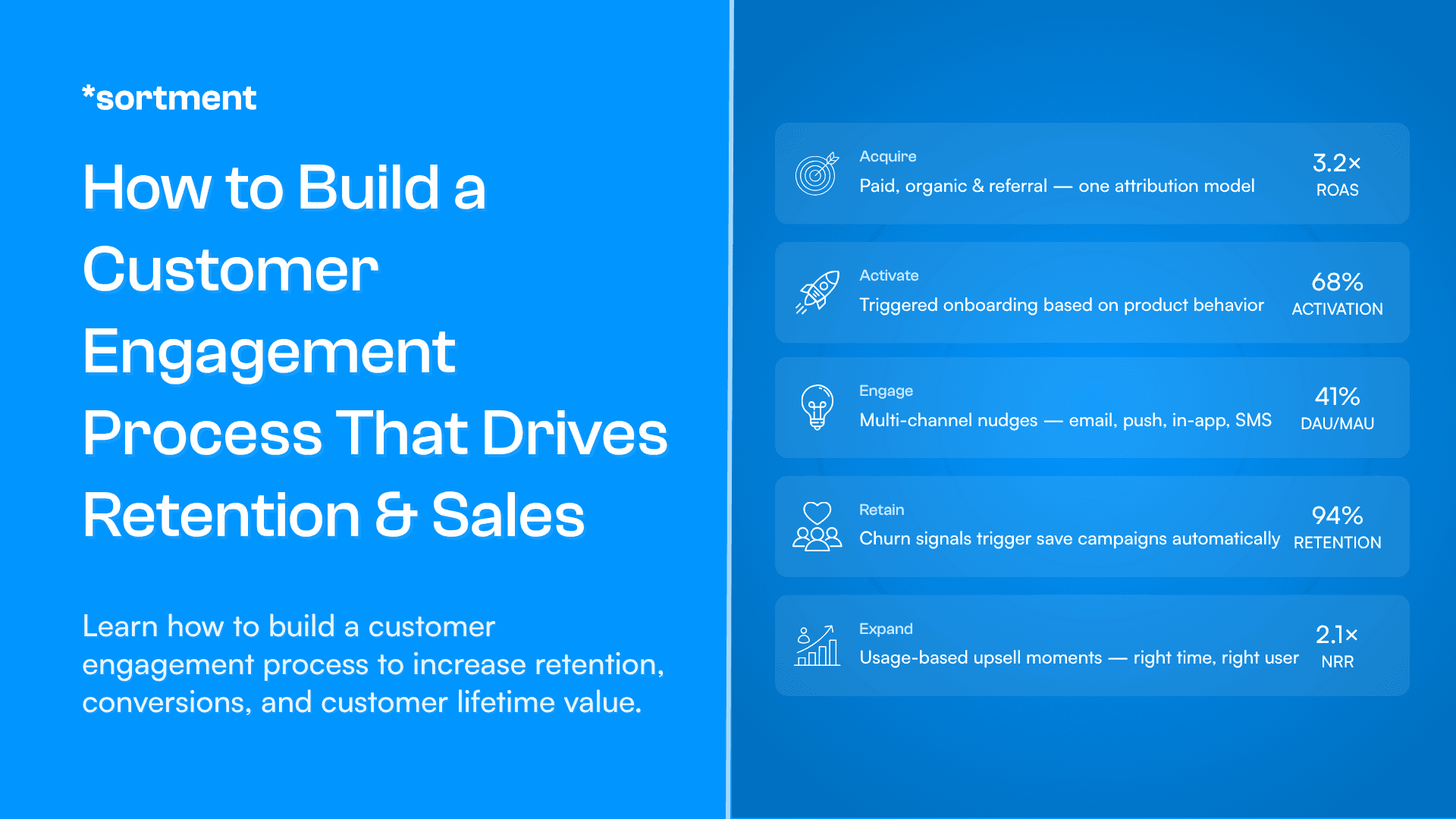
Customer engagement process defines how you attract, interact with, and retain customers across every stage of their journey.
Most brands run campaigns, send messages, and track clicks - but without a structured process, engagement stays inconsistent and short-lived.
You need a system that connects every touchpoint - from first discovery to repeat purchase. That’s where lifecycle marketing platforms like Sortment help bring clarity.
Instead of isolated efforts, you build a continuous engagement loop that improves retention, increases conversions, and grows customer lifetime value.
A strong customer engagement process focuses on behavior, not guesswork. You track how users interact, respond at the right moment, and deliver relevant communication across channels like email, push, and WhatsApp. This approach turns one-time users into active, loyal customers.
This guide breaks down exactly how to build that system. You will learn the stages, workflows, strategies, and tools needed to create a customer engagement process that actually drives results.
What is a customer engagement process (and why does it matter)?
A customer engagement process is a structured system that manages how your brand interacts with customers across their entire journey. It connects every touchpoint - discovery, onboarding, usage, and retention - into a continuous flow instead of isolated campaigns.
Fully engaged customers generate around 51% more revenue, spend more per transaction, and drive stronger up‑sell and cross‑sell outcomes compared to disengaged ones.
Most brands focus on individual actions like sending emails or running ads. That creates short bursts of activity but no long-term impact. A proper engagement process ensures every interaction builds on the previous one and moves the customer forward.
Customer engagement is not the same as customer experience or customer satisfaction. Experience focuses on how users feel during interactions. Satisfaction measures how happy they are after. Engagement, however, tracks how actively they interact with your brand over time.This is why engagement directly impacts retention and revenue.
When users engage consistently, they return more often, explore more features, and make repeat purchases. That increases customer lifetime value without constantly acquiring new users.
A strong customer engagement process also helps you act on real behavior. Instead of sending generic messages, you respond to actions - like a product view, cart abandonment, or inactivity. This makes communication timely, relevant, and more effective.
In simple terms, engagement shifts from random marketing efforts to a system that drives consistent growth.
What are the stages of a high-performing customer engagement process?
A high-performing customer engagement process follows five key stages:
Awareness to attract potential users, Activation to get them to take their first meaningful action, Engagement to maintain regular interaction, Retention to convert them into repeat customers, and Loyalty & Advocacy to turn satisfied customers into promoters.
Each stage builds on the previous to create a continuous engagement loop.
Stage | Goal | Key Actions | Metrics to Track | Recommended Channels |
Awareness | Capture attention of potential customers | Social media campaigns, SEO, ads, blog content | Website visits, impressions, click-through rate | Social media, search engines, email |
Activation | Get users to take their first meaningful action | Account sign-up, first purchase, newsletter subscription | Sign-ups, first purchases, email opt-ins | Website, email, app notifications |
Engagement | Maintain consistent interaction | Personalized content, in-app messages, push notifications | Session length, interaction rate, repeat visits | Email, push notifications, in-app messages |
Retention | Turn users into repeat customers | Loyalty programs, follow-ups, personalized recommendations | Repeat purchases, retention rate, churn rate | Email, app, SMS, social media |
Loyalty & Advocacy | Encourage promotion and referrals | Reviews, referrals, social sharing, user-generated content | Referral rate, NPS, review ratings | Social media, email, community forums |
Table: Stages of a High-Performing Customer Engagement Process
Awareness
Introduce your brand through social media, ads, SEO, and campaigns. Capture attention and make the first impression strong.
Activation
Encourage users to take their first meaningful action—sign up, create an account, or make a first purchase. Make it smooth and rewarding.
Engagement
Keep users interacting with your content, features, or products. Use timely, relevant messages to maintain interest.
Retention
Turn regular users into repeat customers. Offer loyalty programs, follow-ups, and personalized recommendations.
Loyalty & Advocacy
Encourage satisfied customers to share reviews, refer friends, and promote your brand organically.
How do you build a customer engagement process step-by-step for your brand?
A successful customer engagement process requires a clear, actionable workflow. The steps include mapping the customer journey, identifying engagement gaps, segmenting users, setting up triggers, choosing the right channels, personalizing messaging, and automating workflows. Each step ensures interactions are timely, relevant, and effective.
Map your customer journey
Identify all touchpoints where customers interact with your brand, from discovery to repeat usage. Understand their needs and pain points at each stage.
Identify engagement gaps
Analyze where users drop off or lose interest. Pinpoint stages where communication or incentives are missing.
Segment users based on behavior
Group customers by actions, preferences, and engagement patterns rather than just demographics. This allows for more targeted messaging.
Set up trigger-based engagement
Respond to customer actions, such as first purchase, cart abandonment, or inactivity, with automated and timely communication.
Choose the right channels
Use email, push notifications, in-app messages, or WhatsApp depending on where your audience is most active.
Personalize messaging
Craft content that aligns with user behavior and preferences. Deliver relevant offers, recommendations, and reminders.
Automate workflows
Use marketing automation tools to ensure consistent and scalable engagement across all stages of the customer journey.
Why you should use a customer engagement platform?
A customer engagement process works best when it’s supported by the right platform like Sortment. Manual tracking, spreadsheets, or isolated tools make it hard to deliver timely, personalized, and consistent engagement.
A customer engagement platform centralizes all customer data, automates communication, and tracks every interaction in one place.
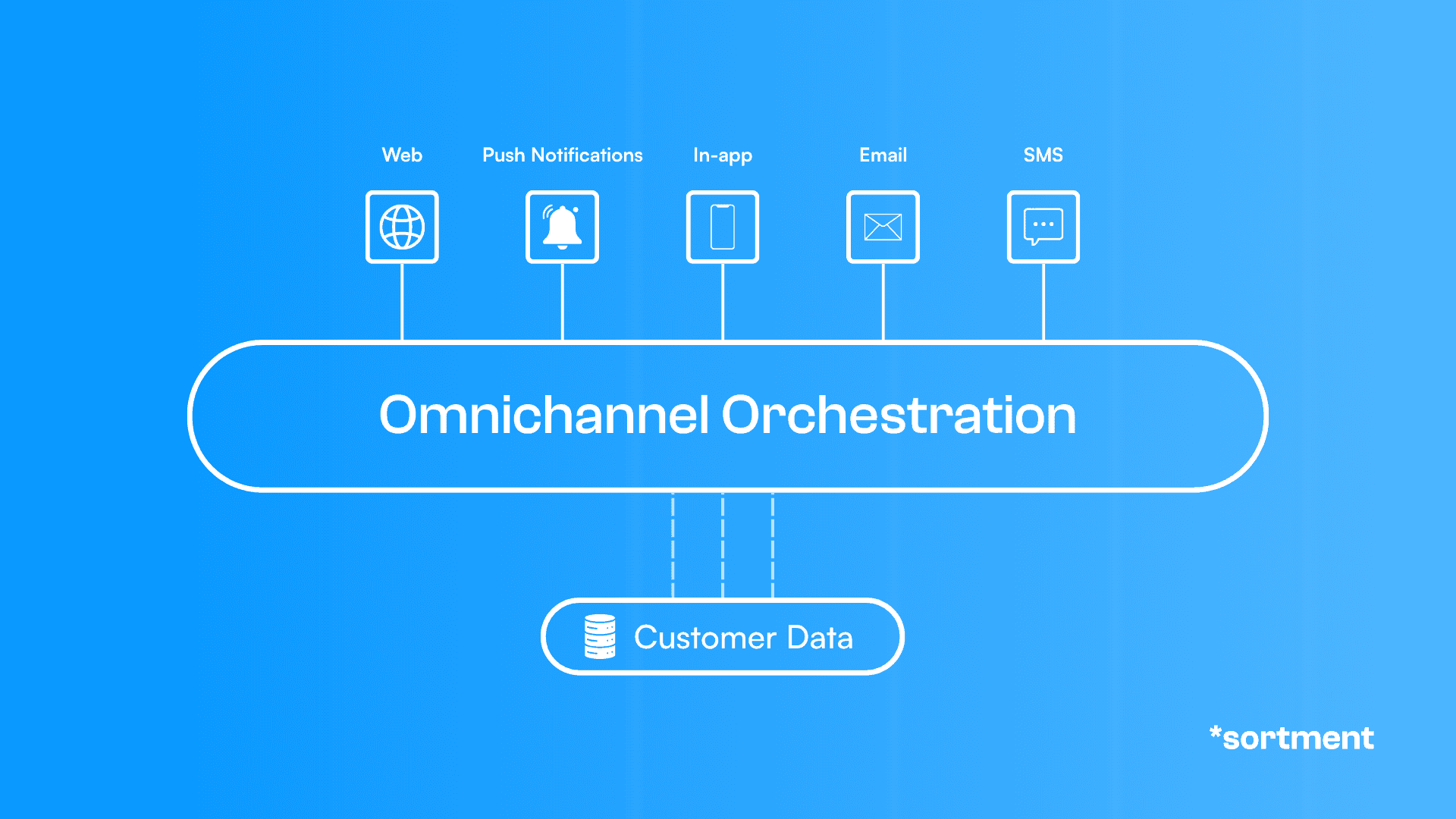
Figure: Omnichannel customer engagement showing email, push notifications, social media, and in-app messaging connecting to customers.
Centralized customer data
Store all customer touchpoints, preferences, and behaviors in a single system. This ensures every team has access to the same information and can act consistently.
Automation and triggers
Set up automated workflows for onboarding, follow-ups, cart abandonment, re-engagement, and loyalty campaigns. Automation reduces manual effort and ensures no opportunity is missed.
Personalization at scale
Use behavioral data to deliver tailored messages across channels. Personalization increases engagement, retention, and repeat purchases.
Analytics and reporting
Measure engagement, retention, and conversion metrics in real time. Use insights to refine campaigns, improve customer experience, and identify gaps in the process.
Omnichannel coordination
Reach customers through email, push notifications, in-app messages, or SMS from one platform. Consistent communication across channels strengthens the engagement loop. That is precisely what we call “omnichannel orchestration.”
Using a dedicated customer engagement platform turns your engagement process into a scalable, data-driven system that drives retention, revenue, and long-term loyalty. Brands that adopt these platforms see faster results and more predictable growth than those relying on manual or disconnected processes.
What metrics should you track in your customer engagement process?
Tracking the right metrics ensures your customer engagement process is effective and continuously improving. Focus on metrics that measure interaction, retention, value, and overall impact on business growth.
The key metrics include engagement rate, retention, churn, customer lifetime value, active users, and conversion across lifecycle stages.
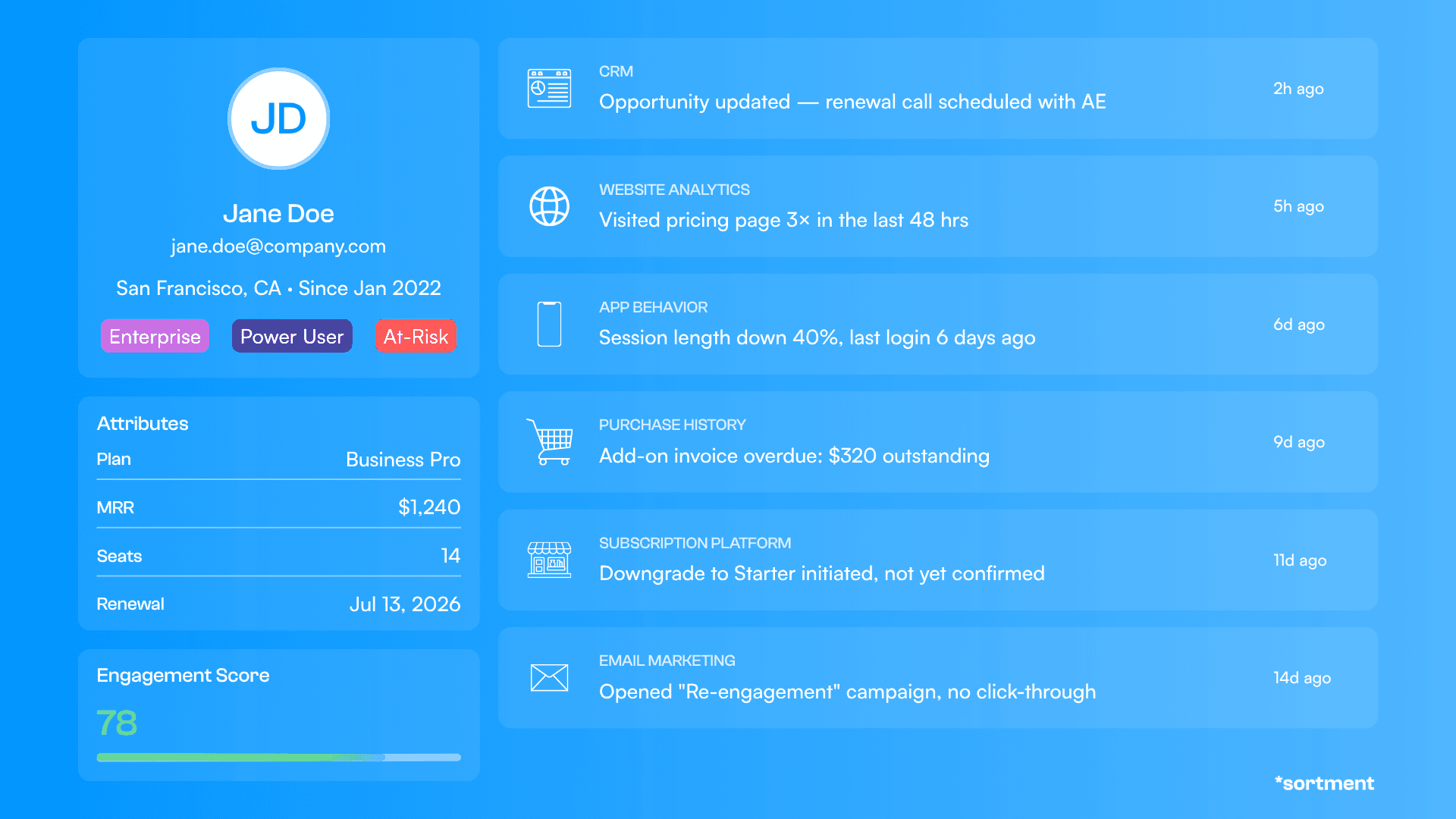
Figure: Customer engagement metrics dashboard displaying engagement behavior across channels.
Engagement rate
Measure how often customers interact with your content, products, or campaigns. High engagement indicates your messages and touchpoints are relevant and compelling.
Retention and churn
Track how many customers continue using your product or service over time versus those who stop. Retention shows long-term engagement, while churn highlights areas needing improvement.
Customer lifetime value (LTV)
Estimate the total revenue a customer generates over their relationship with your brand. A higher LTV shows effective engagement that encourages repeat purchases and loyalty.
Active users (DAU/MAU)
Monitor daily and monthly active users to understand usage patterns and engagement consistency. Fluctuations can reveal engagement gaps or opportunities.
Conversion across lifecycle stages
Measure how many users move from awareness to activation, engagement, retention, and advocacy. Tracking conversions at each stage highlights which parts of your process are performing well and which need optimization.
This set of metrics provides a clear, actionable view of your engagement process, helping you refine strategies, improve communication, and drive growth.
Ready to Take Your Customer Engagement to the Next Level?
Don’t let fragmented interactions hold your brand back. Streamline your engagement process, deliver personalized experiences, and boost retention with a unified system.
Book A Demo with Sortment today and get started on building a customer engagement process that drives results.
Frequently Asked Questions (FAQs) About Customer Engagement Process
What is a customer engagement process?
A customer engagement process is a structured approach to managing interactions with customers across their journey, from first discovery to repeat purchase and advocacy. It ensures every touchpoint adds value and strengthens the relationship.
What are the stages of customer engagement?
The main stages are Awareness, Activation, Engagement, Retention, and Loyalty & Advocacy. Each stage focuses on specific actions and interactions that move customers forward in the lifecycle.
How do you improve customer engagement?
Improve engagement by personalizing messages, using trigger-based communication, automating workflows, analyzing customer behavior, and consistently providing value across channels.
What tools are used for customer engagement?
Customer engagement platforms, CRMs, marketing automation tools, and analytics dashboards help centralize data, automate interactions, personalize communication, and measure results.
How is customer engagement measured?
Key metrics include engagement rate, retention and churn, customer lifetime value (LTV), active users (DAU/MAU), and conversion across lifecycle stages. These metrics help track effectiveness and optimize the process.
Why is a customer engagement platform important?
A platform centralizes customer data, automates workflows, delivers personalized messaging at scale, provides analytics, and ensures consistent engagement across channels, making the process more efficient and effective.
Why is a customer engagement platform important?
A platform centralizes customer data, automates workflows, delivers personalized messaging at scale, provides analytics, and ensures consistent engagement across channels, making the process more efficient and effective.