Introducing Background Agents: Your Marketing Brain That Never Clocks Out
Most lifecycle marketing teams only catch campaign issues after the damage is done. Background Agents watch your data on a schedule, surface what matters, and act on it, no prompts needed.
Abhimanyu
·
New York
·
No headings found on page
There's a problem every marketing team hits at some point.
The campaigns are live. The data is there. But nobody has time to actually look at it.
Not because the team is lazy. Because there's always something more urgent. A launch tomorrow. A copy brief due today. A channel that just broke.
So the campaigns run. Problems hide in the data. Opportunities sit untouched.
Most teams only catch issues when a customer complains or a metric drops hard enough to show up in a weekly review. By then, you've already lost the window.
What the Background Agents are
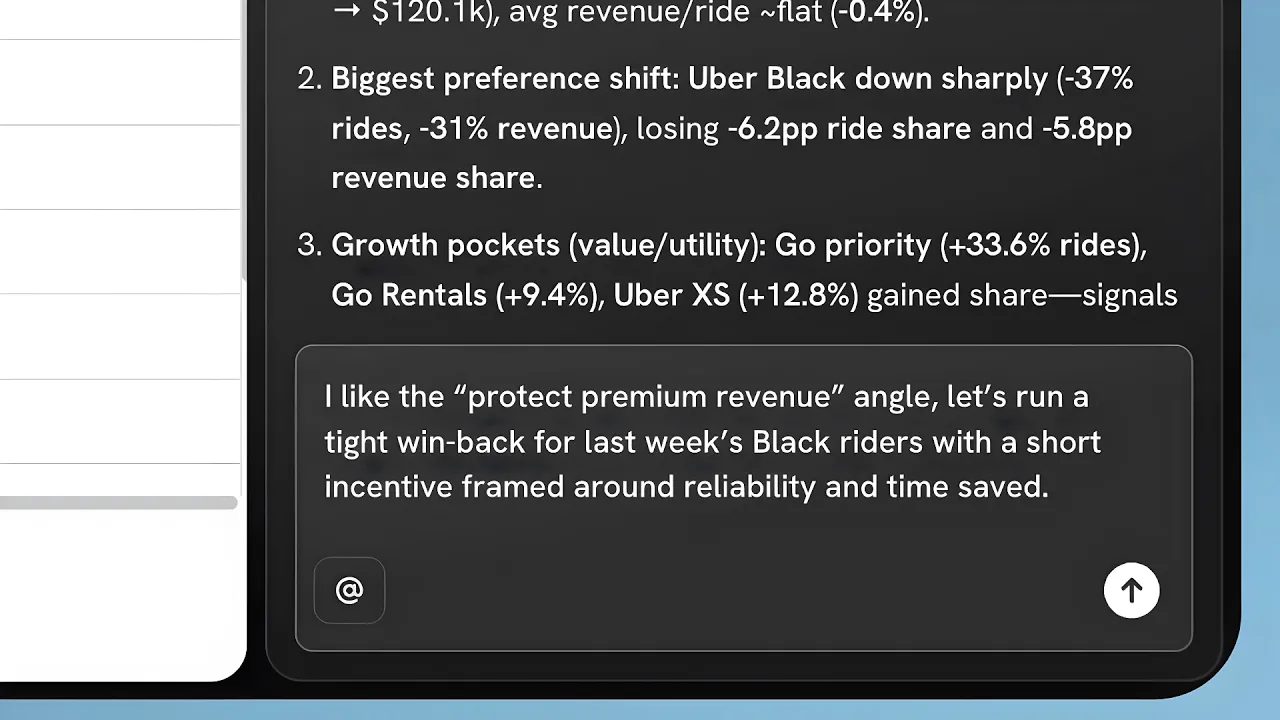
Figure: Watch the Background Agents in action
Background Agents are scheduled AI agents that run automatically in the background — no prompts needed, no one has to remember to check.
You set them up once. They run on a schedule — daily, every morning, twice a week, whatever fits your workflow. They look at your campaigns, your audiences, your performance data. When they find something worth surfacing, it shows up on your home screen.
Not a dashboard you have to open. Not a report you have to generate. A feed of insights, alerts, and opportunities that builds up while you're doing everything else.
When you want to go deeper on any of it, you just chat with the agent that ran it.
Setup omni-channel journeys with Sortment
Watch how omni-channel journeys can improve customer engagement and improve business outcomes.
Setup omni-channel journeys with Sortment
Watch how omni-channel journeys can improve customer engagement and improve business outcomes.
Setup omni-channel journeys with Sortment
Watch how journeys can improve customer engagement and improve business outcomes.
Why this matters more than anything we've built before
When we started building Sortment, the obvious thing to build was an AI that could execute — create campaigns, write copy, set up journeys.
And those things matter. We built them.
But the teams we talked to kept describing a different problem.
One customer manages 30-40 daily campaigns. Manually checking each one isn't possible. So they check the ones they remember. Issues in the others surface late — or not at all.
Another team spent a week troubleshooting low campaign reach before anyone identified the real cause: frequency capping was quietly excluding their best audience segments.
Execution was fine. Analysis was the bottleneck.
A strategist can tell you what to do. But only if they've actually looked at the data. And they can't look at everything.
So we built agents that do the looking. All the time.
What we've seen so far
We've been running these with early customers for a few weeks. A few examples.
A compliance company set up a daily campaign anomaly agent that runs every evening. It analyzes the previous day's performance across all active campaigns. One morning it flagged a campaign hitting very high open rates, well above their usual baseline, with enough context that the team could immediately understand why and replicate it.
For a consumer brand, the agent found audience exclusion issues that had been quietly shrinking campaign reach for weeks. Frequency capping was cutting into their main segments without triggering any obvious alert. Nobody had thought to look there.
For an app company, it identified a behavioral pattern in new user data that correlated strongly with downstream conversion. The kind of insight that usually takes a dedicated analyst a few days to pull. The agent surfaced it on its first scheduled run.
None of these required someone to write a query. Or remember to look. Or know exactly what question to ask.
The agent watched the data. The team acted on what it found.
How it works
You create a task. You describe what you want the agent to monitor, campaign performance, audience health, user behavior, KPIs, whatever matters to you.
You set the schedule. The agent runs, with access to your data warehouse, your campaign history, your audience definitions. It writes and runs its own SQL. It checks its own work.
When it finds something, it shows up in your home feed. You read the summary, and if you want more, you ask follow-up questions in the same thread.
That's the loop: agent watches → insight surfaces → you decide what to do next.
And the loop doesn't stop there. Background Agents can now act on what they find — drafting the campaign, the audience, the experiment to go after the opportunity. The insight-to-action step is live.
What one marketer built in a year
BryteBridge scaled a new brand from 2 states to 20 with one lifecycle marketer, no data engineering team, and Sortment.
10x
Revenue, year-over-year
2,000+
Campaigns shipped in 12 months
1
Marketer. No engineers.
What one marketer built in a year
BryteBridge scaled a new brand from 2 states to 20 with one lifecycle marketer, no data engineering team, and Sortment.
10x
Revenue, year-over-year
2,000+
Campaigns shipped in 12 months
1
Marketer. No engineers.
What one marketer built in a year
BryteBridge scaled a new brand from 2 states to 20 with one lifecycle marketer, no data engineering team, and Sortment.
10x
Revenue, year-over-year
2,000+
Campaigns shipped in 12 months
1
Marketer. No engineers.
The shift this represents
There's a version of AI for marketing that's just faster execution. Better autocomplete. Quicker copy.
That's useful. But it doesn't change how much a team can actually manage.
Background Agents change the ratio. One person can effectively oversee far more campaigns, more segments, more metrics — because the agent is doing the continuous monitoring they couldn't do themselves.
We've heard it described as having an analyst who never sleeps and never forgets to check something. That's close.
The more accurate version: an analyst who builds context on your workspace over time, your goals, your benchmarks, your brand, and doesn't start from scratch every run.
Getting started
Background Agents are available now for existing Sortment customers. If you're not on Sortment yet and you're managing campaigns at any real scale, this is the thing worth seeing a demo for.
The setup takes about ten minutes. The first interesting insight usually shows up within a day.
P.S. The customers getting the most out of this aren't the ones with the most sophisticated data setups. They're the ones who were honest about how much was slipping through the cracks. Well…turns out that's most teams.
See also
Content Agent: Turn Campaign Briefs Into Send-Ready Emails
Content Agent: Turn Campaign Briefs Into Send-Ready Emails
Content Agent: Turn Campaign Briefs Into Send-Ready Emails
Sortment's Content Agent learns your brand, generates personalized emails in minutes, and runs QA automatically. See how lifecycle teams are using it.
Sortment's Content Agent learns your brand, generates personalized emails in minutes, and runs QA automatically. See how lifecycle teams are using it.
See what Sortment can do for your goals.
See what Sortment can do for your goals.
Book a 30-minute call. We'll show you how the pilot works with your data and your stack.
Book a 30-minute call. We'll show you how the pilot works with your data and your stack.
AGENTS
CASE STUDIES
RESOURCES
AGENTS
CASE STUDIES
RESOURCES
There's a problem every marketing team hits at some point.
The campaigns are live. The data is there. But nobody has time to actually look at it.
Not because the team is lazy. Because there's always something more urgent. A launch tomorrow. A copy brief due today. A channel that just broke.
So the campaigns run. Problems hide in the data. Opportunities sit untouched.
Most teams only catch issues when a customer complains or a metric drops hard enough to show up in a weekly review. By then, you've already lost the window.
What the Background Agents are
Figure: Watch the Background Agents in action
Background Agents are scheduled AI agents that run automatically in the background — no prompts needed, no one has to remember to check.
You set them up once. They run on a schedule — daily, every morning, twice a week, whatever fits your workflow. They look at your campaigns, your audiences, your performance data. When they find something worth surfacing, it shows up on your home screen.
Not a dashboard you have to open. Not a report you have to generate. A feed of insights, alerts, and opportunities that builds up while you're doing everything else.
When you want to go deeper on any of it, you just chat with the agent that ran it.
Setup omni-channel journeys with Sortment
Watch how omni-channel journeys can improve customer engagement and improve business outcomes.
Setup omni-channel journeys with Sortment
Watch how omni-channel journeys can improve customer engagement and improve business outcomes.
Setup omni-channel journeys with Sortment
Watch how journeys can improve customer engagement and improve business outcomes.
Why this matters more than anything we've built before
When we started building Sortment, the obvious thing to build was an AI that could execute — create campaigns, write copy, set up journeys.
And those things matter. We built them.
But the teams we talked to kept describing a different problem.
One customer manages 30-40 daily campaigns. Manually checking each one isn't possible. So they check the ones they remember. Issues in the others surface late — or not at all.
Another team spent a week troubleshooting low campaign reach before anyone identified the real cause: frequency capping was quietly excluding their best audience segments.
Execution was fine. Analysis was the bottleneck.
A strategist can tell you what to do. But only if they've actually looked at the data. And they can't look at everything.
So we built agents that do the looking. All the time.
What we've seen so far
We've been running these with early customers for a few weeks. A few examples.
A compliance company set up a daily campaign anomaly agent that runs every evening. It analyzes the previous day's performance across all active campaigns. One morning it flagged a campaign hitting very high open rates, well above their usual baseline, with enough context that the team could immediately understand why and replicate it.
For a consumer brand, the agent found audience exclusion issues that had been quietly shrinking campaign reach for weeks. Frequency capping was cutting into their main segments without triggering any obvious alert. Nobody had thought to look there.
For an app company, it identified a behavioral pattern in new user data that correlated strongly with downstream conversion. The kind of insight that usually takes a dedicated analyst a few days to pull. The agent surfaced it on its first scheduled run.
None of these required someone to write a query. Or remember to look. Or know exactly what question to ask.
The agent watched the data. The team acted on what it found.
How it works
You create a task. You describe what you want the agent to monitor, campaign performance, audience health, user behavior, KPIs, whatever matters to you.
You set the schedule. The agent runs, with access to your data warehouse, your campaign history, your audience definitions. It writes and runs its own SQL. It checks its own work.
When it finds something, it shows up in your home feed. You read the summary, and if you want more, you ask follow-up questions in the same thread.
That's the loop: agent watches → insight surfaces → you decide what to do next.
And the loop doesn't stop there. Background Agents can now act on what they find — drafting the campaign, the audience, the experiment to go after the opportunity. The insight-to-action step is live.
What one marketer built in a year
BryteBridge scaled a new brand from 2 states to 20 with one lifecycle marketer, no data engineering team, and Sortment.
10x
Revenue, year-over-year
2,000+
Campaigns shipped in 12 months
1
Marketer. No engineers.
What one marketer built in a year
BryteBridge scaled a new brand from 2 states to 20 with one lifecycle marketer, no data engineering team, and Sortment.
10x
Revenue, year-over-year
2,000+
Campaigns shipped in 12 months
1
Marketer. No engineers.
What one marketer built in a year
BryteBridge scaled a new brand from 2 states to 20 with one lifecycle marketer, no data engineering team, and Sortment.
10x
Revenue, year-over-year
2,000+
Campaigns shipped in 12 months
1
Marketer. No engineers.
The shift this represents
There's a version of AI for marketing that's just faster execution. Better autocomplete. Quicker copy.
That's useful. But it doesn't change how much a team can actually manage.
Background Agents change the ratio. One person can effectively oversee far more campaigns, more segments, more metrics — because the agent is doing the continuous monitoring they couldn't do themselves.
We've heard it described as having an analyst who never sleeps and never forgets to check something. That's close.
The more accurate version: an analyst who builds context on your workspace over time, your goals, your benchmarks, your brand, and doesn't start from scratch every run.
Getting started
Background Agents are available now for existing Sortment customers. If you're not on Sortment yet and you're managing campaigns at any real scale, this is the thing worth seeing a demo for.
The setup takes about ten minutes. The first interesting insight usually shows up within a day.
P.S. The customers getting the most out of this aren't the ones with the most sophisticated data setups. They're the ones who were honest about how much was slipping through the cracks. Well…turns out that's most teams.